
Harbor is now
Start for $99No results? No chargeSame-day approvalNo price increases — everBuy now, pay later

Sermorelin shots vs HGH supplements

Sermorelin is a prescription peptide that signals your pituitary. HGH supplements are over-the-counter products with no growth hormone in them. Here is how the two compare.

Clinically reviewed
Medically reviewed by Harbor Health TeamMedical Content Team8 min read

At a glance

FDA records, product labels and published trials
Prescription peptide
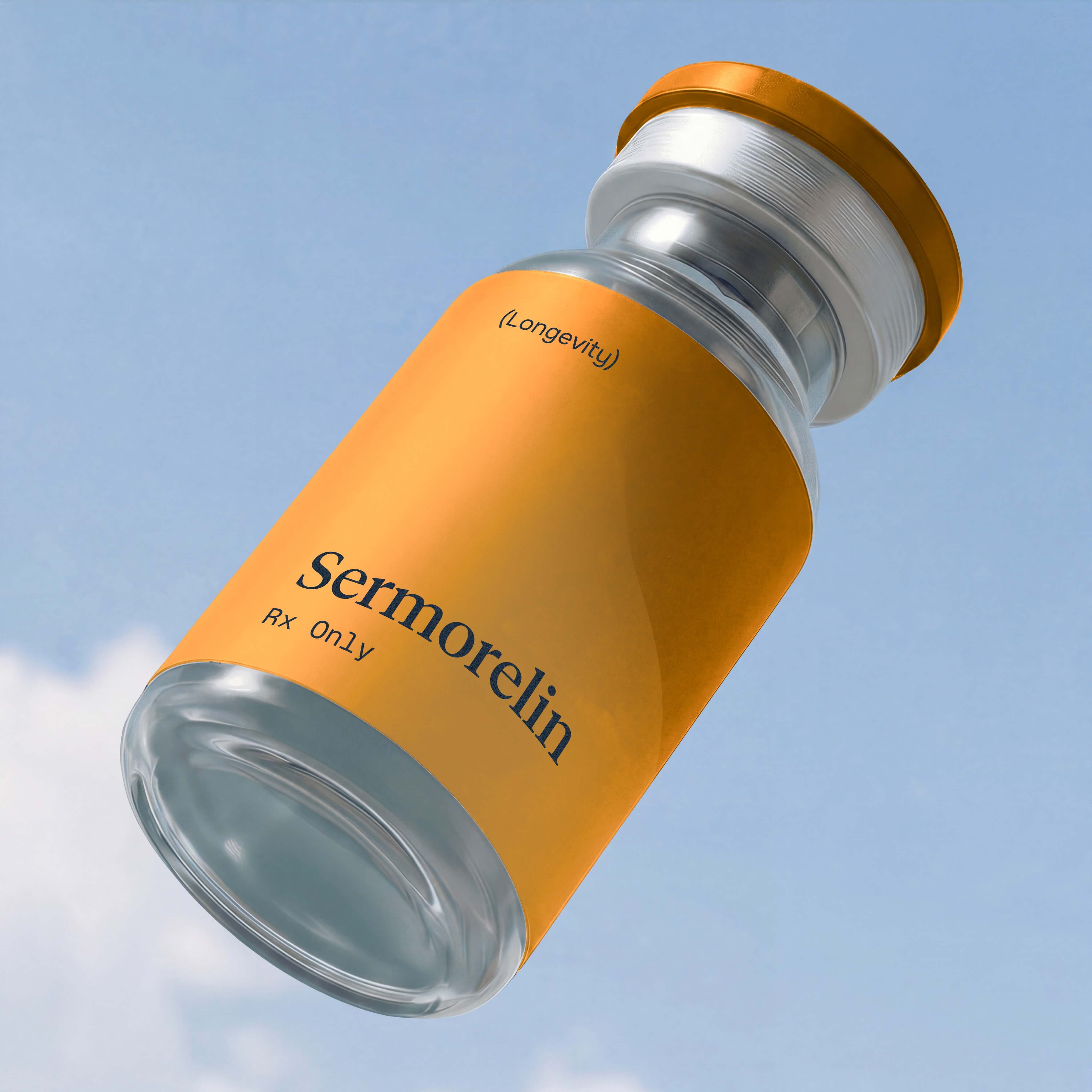
Sermorelin vial

Sermorelin shots

Prescription peptide, compounded via Harbor

  • What it isGHRH analog peptide
  • How it is takenSmall injection at home
  • FDA statusCompounded, not FDA approved
  • Through HarborFrom $99/mo, flat

HGH supplements

Over-the-counter boosters

0Key figureGrowth hormone in an over-the-counter supplement

  • What it isAmino acid or herbal blend
  • How it is takenBy mouth
  • FDA statusSupplement, no premarket approval
  • Through HarborNot an Harbor program

The verdict: Sermorelin is a prescription peptide with an FDA approval history, prepared by a licensed pharmacy and started only after a physician review. HGH supplements need no prescription or needle, but they contain no growth hormone and FDA does not approve them before sale. Compounded sermorelin is not FDA approved.

Sermorelin vs HGH supplements verdict

Sermorelin shots and HGH supplements are sold on the same hope, more of your own growth hormone, but they are different products. Sermorelin is a prescription peptide, a copy of the active part of growth hormone-releasing hormone, given as a small injection after a physician reviews your health. HGH supplements are over-the-counter products with no growth hormone in them, and FDA does not approve them before they are sold (FDA).

Sermorelin leads on the criteria that decide this choice. It has an FDA approval history as Geref, human trials that measured growth hormone over weeks of dosing, a pharmacy-prepared product and a clinician involved from the start. Compounded sermorelin is not FDA approved today.

HGH supplements win on convenience. They need no prescription and no needle, and you can buy them today.

Sermorelin vs HGH boosters at a glance

An HGH booster and a sermorelin shot both aim at the pituitary, the gland that makes and releases growth hormone. Neither one is growth hormone itself.

From the 2013 Federal Register notice on Geref, Drugs@FDA, FDA's compounding and dietary supplement pages, a somatropin label and published trials. Compounded sermorelin is not FDA approved.
AttributeSermorelin shotsHGH supplements
What it isA peptide copy of GHRH, the pituitary's release signalA blend of amino acids or herbal extracts sold as a growth hormone releaser
Contains growth hormoneNo, it signals the pituitary to release its ownNo
How you take itSmall injection under the skinBy mouthNo needle
Where you get itBy prescription, shipped after reviewOver the counter, in stores or onlineNo prescription needed
Physician review before you startA board-certified physician reviews every intake at HarborPhysician reviewNone
FDA historyApproved as Geref in 1990 and 1997, discontinued in 2008, not for safety or effectiveness reasons. Compounded today, not FDA approvedApproval historyDietary supplement. FDA has no authority to approve supplements before sale
Human growth hormone dataRaised growth hormone over 2 to 6 weeks of dosing in small trials of older menRepeated dosing studiedRaised growth hormone at 2 hours after one dose in a 16-person trial
Who prepares itA licensed U.S. pharmacy, on a prescriptionPharmacy-preparedThe supplement maker
Ongoing careClinician check-ins and 24/7 licensed clinician supportClinician careNone included
Monthly cost$99 at Harbor, flat, care includedSet by each seller, product only

Scroll the table sideways to see both columns →

Sermorelin shots vs HGH supplements side by side

What is in an HGH supplement

An HGH supplement is a dietary supplement, not a drug. Many are built on amino acids such as arginine, lysine and ornithine, which can prompt growth hormone release when infused or taken in large oral doses, and they are sold as growth hormone releasers or boosters (Nutrition, 2002).

None of them can legally contain growth hormone. Prescription HGH, somatropin, is a recombinant protein given by injection under the skin, and its labeled adult uses are limited to specific diagnosed conditions, such as growth hormone deficiency (somatropin prescribing information). Federal law makes it a crime to distribute HGH for any use other than an FDA-authorized treatment ordered by a physician (21 U.S.C. 333(e)).

Natural HGH supplements also reach shelves without FDA approval. Under the Dietary Supplement Health and Education Act of 1994, FDA does not have the authority to approve supplements before they are marketed, and a label that claims to support a body function, such as growth hormone release, must say FDA has not evaluated the claim and that the product is not intended to diagnose, treat, cure or prevent any disease (FDA). MK-677, sold online as a research chemical, was never approved and is on FDA's list of compounding substances with significant safety risks (FDA), as covered in sermorelin vs MK-677 compared.

How sermorelin peptide therapy works

The sermorelin peptide is the first 29 amino acids of growth hormone-releasing hormone (GHRH), the signal the hypothalamus sends to the pituitary. A published review calls it the shortest synthetic peptide with the full biological activity of GHRH, and it acts on the anterior pituitary to release growth hormone (BioDrugs, 1999). The guide to what sermorelin therapy involves walks through the process.

Because the pituitary still makes the hormone, its own feedback stays in place. A 2006 sermorelin review in adults argued that this feedback keeps release episodic rather than constant, unlike injected growth hormone. That piece is an editorial, not a trial. Related peptides are covered in growth hormone peptides explained.

What the evidence shows

Sermorelin's approved treatment use was in children. A 1999 review found limited data that it helped some prepubertal children with idiopathic growth hormone deficiency grow faster, and it was never compared directly with somatropin at its recommended dose (BioDrugs, 1999).

Adult trials are small and decades old. In a 1992 National Institute on Aging study of 10 healthy older men, two weeks of twice-daily injections of GHRH 1-29 at the higher dose raised 24-hour growth hormone and IGF-1 to levels that no longer differed from young men (J Clin Endocrinol Metab, 1992). In a 1997 study of 11 men aged 64 to 76, six weeks of nightly injections raised overnight growth hormone release but not IGF-1, and body composition did not change (Metabolism, 1997).

For HGH supplements, a 2020 randomized crossover trial tested one amino acid blend in 16 healthy adults. One dose raised growth hormone 682% from baseline at 120 minutes, significantly more than placebo, in an investigator-led study funded by a commercial sponsor (Am J Ther, 2020). It tracked two hours, not weeks, and did not measure body composition. A 2002 review found no well-conducted study in which oral amino acids before strength training added muscle or strength beyond training alone.

Neither option is approved to treat aging. Sermorelin is best understood as clinician-guided support for your own growth hormone signaling, not a guaranteed result.

Prescription & FDA status

FDA approved sermorelin as Geref twice: in 1990 as a diagnostic test of pituitary function, and in 1997 to treat idiopathic growth hormone deficiency in children with growth failure. The maker discontinued both products in 2008, FDA withdrew the approvals in 2009 at its request, and in 2013 FDA determined they were not withdrawn for reasons of safety or effectiveness (Federal Register, 2013). Drugs@FDA lists both Geref products as discontinued and no other sermorelin product (Drugs@FDA).

The sermorelin prescribed today is compounded, prepared by a licensed pharmacy on a prescription. Compounded drugs are not FDA approved, so FDA does not verify their safety, effectiveness or quality before they are marketed (FDA).

Cost per month

Harbor lists its sermorelin program at $99 a month, flat as your dose changes, with the medication, clinician care and check-ins in one price.

HGH supplement prices are set by each seller and vary by product. The price buys the product only, with no prescriber and no follow-up.

Who should choose sermorelin or growth hormone supplements

Growth hormone supplements and a prescription peptide suit different people. Harbor sermorelin shots are for adults who want clinician-guided support for their own growth hormone signaling, with a board-certified physician reviewing their health history and goals first.

Sermorelin shots may suit you when:

  • You want a physician to review your history first
  • You prefer a pharmacy-prepared prescription to an unreviewed supplement
  • You are comfortable with a small injection at home
  • You want check-ins and a clinician to message

An over-the-counter booster may suit you when:

  • You want to avoid needles and prescriptions entirely
  • You accept evidence limited to short studies of hormone levels
  • You do not need a clinician involved

With signs of a pituitary condition or a diagnosed growth hormone deficiency, neither is the answer. FDA-approved somatropin is the labeled treatment once the diagnosis is confirmed, usually with a growth hormone provocative test, and an endocrinologist is the usual specialist to see first.

Sermorelin is not started without a physician review of your health history and goals. If it is not the right fit, you are not charged. For anything else, message your Harbor clinician.

Bottom line on HGH pills vs a sermorelin injection

HGH pills and a sermorelin injection sit on opposite sides of the prescription line. The pills contain no growth hormone, and their evidence stops at short-term hormone levels.

A sermorelin injection has an FDA approval history, human trials of repeated dosing and a physician review before the first vial ships. Compounded sermorelin is not FDA approved and the adult data are small, so what it offers is clinician-guided support, not a result. A licensed clinician reviews your history before anything is prescribed.

This article is for general education and is not medical advice. It is not a substitute for evaluation, diagnosis, or treatment by a licensed clinician. Talk with a qualified clinician about your individual situation.

Harbor is a technology platform. Medical evaluations are conducted by independent, licensed healthcare providers who determine whether treatment is appropriate. Providers may prescribe FDA-approved or compounded medications based on clinical judgment and patient needs. Compounded medications are not FDA approved and are not reviewed by the FDA for safety or effectiveness.

Frequently asked questions

Not as growth hormone. The answer to "do hgh supplements work" depends on what you measure. One randomized trial found a single dose of an amino acid blend raised growth hormone over two hours in 16 adults, and a 2002 review advised athletes against using amino acids as growth hormone releasers. As supplements, they are not FDA approved for any use.

No. Sermorelin vs HGH is a signal versus the hormone itself. Sermorelin, a GHRH fragment, prompts your pituitary to release its own growth hormone. Prescription HGH, somatropin, is recombinant growth hormone injected directly and labeled for specific diagnosed conditions, such as growth hormone deficiency.

Yes. No FDA-approved sermorelin product is sold today. Under federal law, a 503A pharmacy compounds a drug for an identified patient on a valid prescription (FDA). Compounded sermorelin is not FDA approved. At Harbor, a board-certified physician reviews your history before prescribing it. HGH supplements, by contrast, are sold without a prescription as dietary supplements, and they contain no growth hormone.

Sources

  1. Federal Register. Determination that GEREF (sermorelin acetate) injection was not withdrawn from sale for reasons of safety or effectiveness. 78 FR 14095 (March 4, 2013).
  2. U.S. Food and Drug Administration. Drugs@FDA: GEREF, NDA 020443.
  3. U.S. Food and Drug Administration. Compounding and the FDA: questions and answers (content current as of September 16, 2025).
  4. U.S. Food and Drug Administration. FD&C Act provisions that apply to human drug compounding.
  5. U.S. Food and Drug Administration. Questions and answers on dietary supplements (content current as of August 27, 2026).
  6. U.S. Food and Drug Administration. Bulk drug substances used in compounding under section 503A of the FD&C Act (categories updated May 14, 2026).
  7. DailyMed. Genotropin (somatropin) for injection, prescribing information (revised July 2026).
  8. 21 U.S.C. 333(e). Prohibited distribution of human growth hormone. Legal Information Institute, Cornell Law School.
  9. Prakash A, Goa KL. Sermorelin: a review of its use in the diagnosis and treatment of children with idiopathic growth hormone deficiency. BioDrugs. 1999;12(2):139-157.
  10. Walker RF. Sermorelin: a better approach to management of adult-onset growth hormone insufficiency? Clin Interv Aging. 2006;1(4):307-308.
  11. Corpas E, et al. Growth hormone (GH)-releasing hormone-(1-29) twice daily reverses the decreased GH and insulin-like growth factor-I levels in old men. J Clin Endocrinol Metab. 1992;75(2):530-535.
  12. Vittone J, et al. Effects of single nightly injections of growth hormone-releasing hormone (GHRH 1-29) in healthy elderly men. Metabolism. 1997;46(1):89-96.
  13. Tam CS, et al. Increased human growth hormone after oral consumption of an amino acid supplement: results of a randomized, placebo-controlled, double-blind, crossover study in healthy subjects. Am J Ther. 2020;27(4).
  14. Chromiak JA, Antonio J. Use of amino acids as growth hormone-releasing agents by athletes. Nutrition. 2002;18(7-8):657-661.
  • Longevity

    Glutathione benefits get big claims online. Here are ten, each graded by the human evidence behind it and the route that was actually tested, so you can see where the research is solid and where it stops.

    By Harbor Health Team

  • Longevity

    Most longevity peptides are sold on promise rather than proof. Here are six of the most discussed, what each one is actually approved or studied for, how much human evidence stands behind it, and where the FDA has raised concerns.

    By Harbor Health Team