
Harbor is now
Start for $99No results? No chargeSame-day approvalNo price increases — everBuy now, pay later

Sermorelin vs Ipamorelin: Mechanism, Evidence and Which One You Can Actually Be Prescribed

Two peptides that both prompt your pituitary to release its own growth hormone, through two different receptors, with very different regulatory records. Here is the honest comparison, and how our clinicians think about it.

Clinically reviewed
Medically reviewed by Harbor Health TeamMedical Content Team9 min read

At a glance

Figures from FDA compounding records, the Federal Register and published trials

Ipamorelin

Ghrelin-receptor agonist, 5 amino acids

Sept 2023 (added to FDA's 503B Category 2)Key number

  • FDA statusNever approved
  • ReceptorGhrelin (GHS-R)
  • Through HarborNot offered
  • Who prepares itNo FDA-recognized pathway
Offered by Harbor
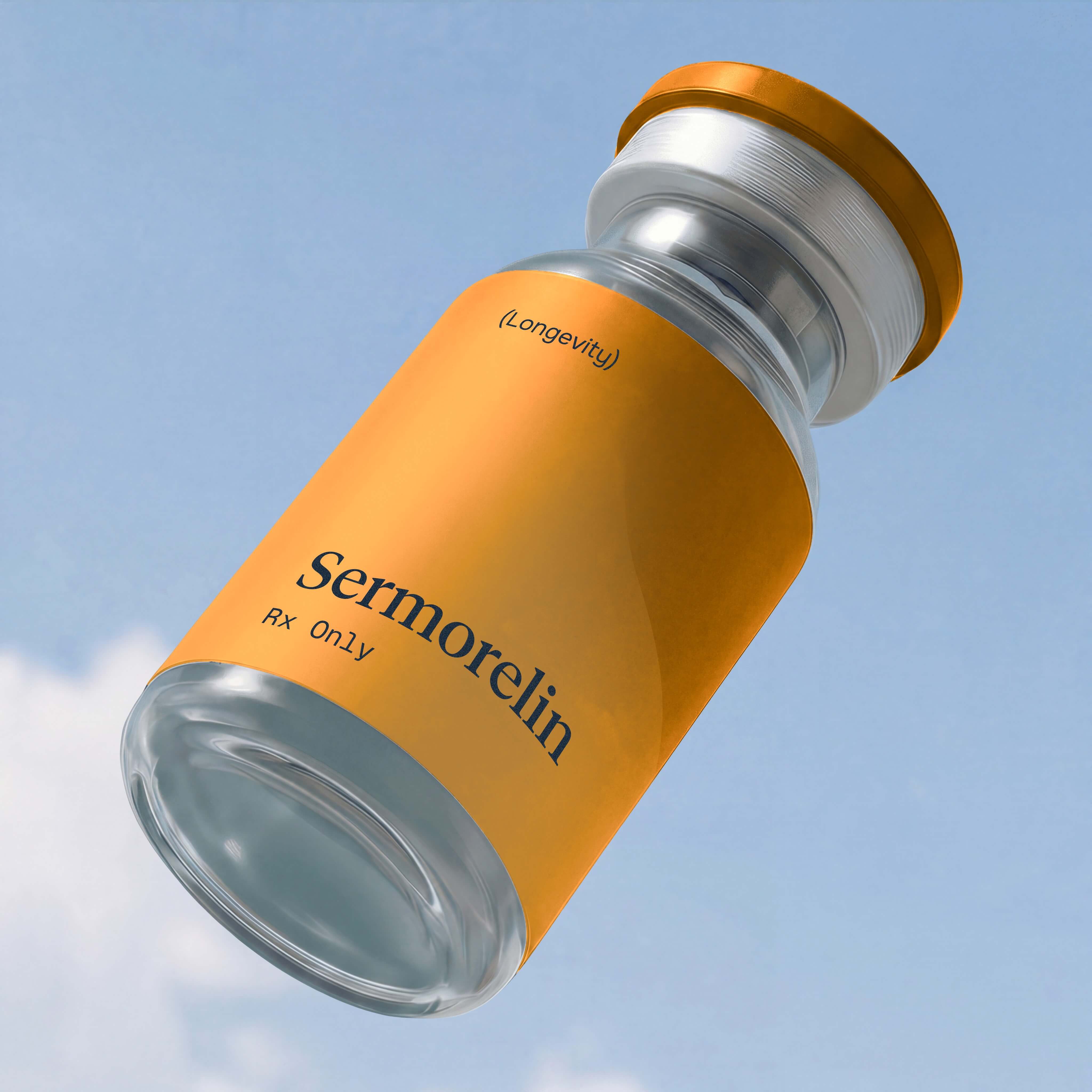
Sermorelin vial

Sermorelin

GHRH analog, 29 amino acids

  • FDA statusCompounded, not approved
  • ReceptorGHRH receptor
  • Through HarborFrom $99/mo
  • Who prepares itLicensed U.S. pharmacy

The verdict: Sermorelin is the one our clinicians can prescribe: the active ingredient of an FDA-approved drug, prepared by licensed U.S. pharmacies and offered at Harbor from $99 a month. Ipamorelin has never been approved, and FDA placed it in Category 2 under its 503B interim policy in September 2023.

The short answer

Sermorelin is the one a licensed U.S. clinician can prescribe for you today. It is the active ingredient of Geref, a drug FDA approved, it is prepared by licensed U.S. pharmacies for the individual patient, and it is the growth hormone-releasing peptide Harbor offers, from $99 a month.

Ipamorelin has never been approved for any use. On September 29, 2023, FDA placed ipamorelin acetate in Category 2 under its 503B interim policy, the category for substances that raise significant safety risks. Its nomination under the 503A policy was withdrawn, so it does not appear in FDA's current 503A categories document at all.

Everything below is the detail behind those two paragraphs.

How each one works

Both peptides end in the same place: your own pituitary releasing growth hormone in the pulsing pattern it already uses. Neither is growth hormone. The difference is which signal each sends, and which receptor receives it.

Sermorelin: the GHRH signal

Sermorelin is a 29 amino acid fragment of growth hormone-releasing hormone (GHRH), the signal your hypothalamus sends to tell the pituitary to make and release growth hormone. A published review describes it as the shortest synthetic peptide with the full biological activity of GHRH (Prakash and Goa, 1999). Because it works through the body's existing GHRH receptor, the pituitary stays in charge of how much comes out and when (our sermorelin explainer).

Ipamorelin: the ghrelin signal

Ipamorelin is a five amino acid peptide developed at Novo Nordisk in the 1990s. It does not imitate GHRH. It acts on a second pituitary receptor, the growth hormone secretagogue receptor, whose natural ligand is ghrelin, the stomach hormone better known for hunger. In the original pharmacology paper, ipamorelin released growth hormone with potency similar to the older peptide GHRP-6. Unlike GHRP-6 and GHRP-2, it did not raise ACTH or cortisol in pigs beyond what GHRH itself produced, even at doses more than 200 times its ED50 for growth hormone release (Raun et al., 1998). The authors described its selectivity as similar to GHRH's. That is an animal finding; the human studies measured growth hormone release and surgical recovery, not stress hormones. Because it uses a different receptor, ipamorelin is often paired with CJC-1295, a GHRH analog.

Why timing comes up

Both act briefly. In healthy men, ipamorelin had a half-life of about 2 hours and produced a single growth hormone pulse that peaked about 40 minutes after dosing (Gobburu et al., 1999). In the pediatric studies, sermorelin was given once daily at bedtime (Prakash and Goa, 1999). Neither peptide has a label dose for adults, so your Harbor clinician sets the sermorelin dose and schedule.

What the evidence shows

Ipamorelin: a phase 2 program, no approval

Ipamorelin's human trials were not about aging or body composition. It was studied as a hospital infusion to speed bowel recovery after surgery. The published phase 2 trial enrolled 117 adults having bowel resection; median time to the first tolerated solid meal was 25.3 hours on ipamorelin and 32.6 hours on placebo (p = 0.15), not a statistically significant difference (Beck et al., 2014). No ipamorelin product has ever been approved by FDA.

Sermorelin: an approved history, thin adult data

Sermorelin was approved as Geref, in 1990 as a test of pituitary function and in 1997 to treat children with idiopathic growth hormone deficiency. EMD Serono discontinued it in 2008, and FDA determined in 2013 that it was not withdrawn for reasons of safety or effectiveness (Federal Register, 2013). In children, once-daily treatment produced significant gains in height velocity that held over 12 months (Prakash and Goa, 1999).

Adult evidence is thinner. Both of Geref's approvals were for children or for diagnosis, never for adults, so no FDA review has established adult use. A program supports your levels under clinician guidance rather than promising a specific result, and individual responses vary.

Side by side

Ipamorelin figures from Raun 1998 (animal), Gobburu 1999, Beck 2014 and FDA's compounding category pages; sermorelin history from the 2013 Federal Register notice and Prakash and Goa 1999. Sermorelin price and care are Harbor's published program.
AttributeIpamorelinSermorelin
What it is5 amino acid ghrelin-receptor agonist29 amino acid fragment of GHRH
SelectivityNo ACTH or cortisol rise in pigsSpecifically stimulates growth hormone release
FDA historyNever approvedApproved as Geref in 1990 and 1997; discontinued 2008, not for safety
Human trial recordPhase 2 for postoperative ileus, no significant differencePediatric data with sustained height gains
Compounding status503B Category 2 since Sept 29, 2023; 503A nomination withdrawnComponent of an FDA-approved drug
FDA safety flagImmunogenicity, impurities, serious IV adverse eventsNot on FDA's Category 2 list
Who prepares itNo FDA-recognized compounding pathwayLicensed 503A or 503B U.S. pharmacy, for you
Price and careNot offered by HarborFrom $99/mo, flat, with physician review and 24/7 clinicians

Scroll the table sideways to see both columns →

Which one you can actually be prescribed

Neither peptide is sold as an FDA-approved product today, so both reach patients through compounding, which has rules about the raw ingredients a pharmacy may use. Those rules are where the two separate.

The rules a compounding pharmacy follows

A state-licensed 503A pharmacy may only compound with a bulk drug substance that has a USP or NF monograph, is a component of an FDA-approved drug, or appears on FDA's 503A bulks list (FDA, bulk drug substances under 503A). While FDA evaluates nominated substances, it does not intend to act against compounders using those in Category 1. Category 2 holds substances with significant safety risks, and FDA says it would consider taking action against a compounder that uses them. FDA keeps a parallel set of categories for 503B outsourcing facilities.

Ipamorelin is in FDA's 503B Category 2

On September 29, 2023, FDA added ipamorelin acetate to Category 2 under its 503B interim policy (FDA, substances that may present significant safety risks). Its reasons: compounded ipamorelin may pose an immunogenicity risk from aggregation or peptide-related impurities, its unnatural amino acids make it harder to characterize, a published study identified serious adverse events, including death, when it was given intravenously for gastric motility, and FDA lacks safety information for other injectable routes.

Under the 503A policy that covers state-licensed pharmacies, the nomination for ipamorelin acetate was withdrawn, and it is absent from FDA's current 503A categories document (503A categories, updated May 14, 2026). It is not a component of any approved drug either. FDA's published policy gives a U.S. pharmacy no clear pathway to compound it for you.

Sermorelin: the ingredient of an approved drug

Sermorelin acetate is the active ingredient of Geref, an FDA-approved drug (Federal Register, 2013), which meets the 503A condition for compounding with a component of an approved drug. The compounded product is still not FDA-approved and is not reviewed by FDA for safety or effectiveness, which is part of why it costs less (how compounded medications work).

At Harbor, a board-certified physician reviews your intake before anything ships, and if sermorelin is not the right fit, it is not prescribed. The program starts from $99 a month at one flat price that covers the medication, clinician check-ins and 24/7 licensed clinician support. We do not offer ipamorelin, and we would rather explain why than sell you something FDA has flagged.

Side effects and safety

Both are given by injection, and the most common effects of sermorelin happen at the injection site. Beyond that, the real difference is how much is documented, not which one has more side effects.

Sermorelin

In the published pediatric data, transient facial flushing and pain at the injection site were the most commonly reported effects (Prakash and Goa, 1999). Some people also notice headache or nausea early on, which tends to fade as the body adjusts.

Ipamorelin

In the phase 2 ileus trial it was given intravenously in a hospital and was well tolerated at the dose studied (Beck et al., 2014). FDA's concern with compounded ipamorelin is about the product as much as the molecule: peptides can aggregate or carry impurities that may trigger immune reactions, and FDA has not identified safety information for certain other injectable routes.

Monitoring

Your Harbor clinician decides what monitoring fits your history and reviews how you respond at each check-in. Tell your clinician before starting if you have diabetes or prediabetes, a history of cancer, or if you are pregnant or planning to be.

Message us instead of guessing

Swelling of the face, lips or throat, trouble breathing, or a widespread rash after an injection means stop and seek emergency care. Everything else, including a sore site, flushing, a headache or new numbness and tingling in your hands, is a message to your Harbor clinician.

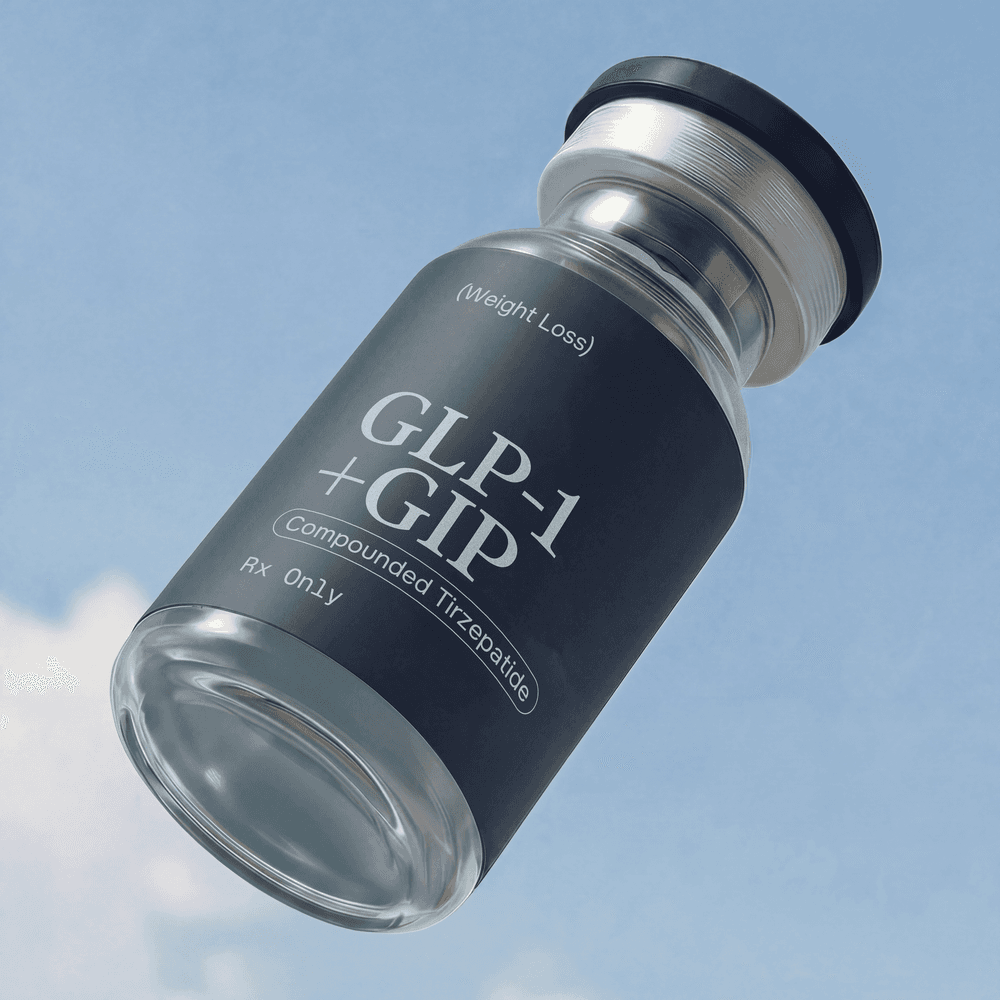
Tirzepatide vial
Weight lossTirzepatide

Dual-action GLP‑1/GIP for faster results

From
$149/mo
Taken
Once-weekly injection
Type
Dual GLP‑1/GIP agonist
Learn more

How Harbor clinicians choose

Our clinicians start from one fact: sermorelin has a clear compounding pathway and ipamorelin does not. So the real decision is whether sermorelin fits you, and a physician makes it after reviewing your goals and full health history.

Set expectations before you start. No trial pins a timeline on either peptide, and nothing is promised. Your check-ins review how you respond over the first few months, and your clinician adjusts or stops the plan.

Start with sermorelin when

  • You are a generally healthy adult interested in clinician-guided support for recovery, sleep or body composition, and you understand the adult evidence is limited
  • You want a peptide with an FDA-approved history and a clear compounding pathway, prepared by a licensed U.S. pharmacy for you
  • You want an at-home routine on a schedule your clinician sets, with physician review, one flat monthly price and licensed clinicians you can message 24/7

Consider other options when

  • You are set on ipamorelin: ask which pharmacy compounds it and under which FDA policy, then weigh the answer against what FDA published in September 2023
  • Your goal is weight loss: sermorelin is not a weight-loss drug, and a GLP-1 program is the better-studied option
  • You have a history of cancer, uncontrolled diabetes, or you are pregnant or planning to be: growth-hormone-releasing peptides are not appropriate without specialist input

Every Harbor program starts with the same short online health questionnaire, and a physician reviews it before deciding whether any peptide is appropriate.

Harbor does not prescribe ipamorelin, CJC-1295 or tesamorelin. If a clinic offers you ipamorelin, ask which pharmacy is compounding it and under what FDA policy. If the answer is vague, that is your answer.

This article is for general education and is not medical advice. It is not a substitute for evaluation, diagnosis, or treatment by a licensed clinician. Talk with a qualified clinician about your individual situation.

Harbor is a technology platform. Medical evaluations are conducted by independent, licensed healthcare providers who decide whether treatment is appropriate. Compounded medications are prepared by licensed U.S. pharmacies for individual patients and are not reviewed by the FDA for safety or effectiveness.

Frequently asked questions

No. Both make your pituitary release its own growth hormone, but through different receptors. Sermorelin is a 29 amino acid GHRH analog acting on the GHRH receptor. Ipamorelin is a five amino acid peptide acting on the ghrelin receptor. The result is a growth hormone pulse either way; the signal, the receptor and the regulatory status differ.

The main downside is regulatory. Ipamorelin has never been FDA-approved, and its published phase 2 trial for postoperative ileus found no significant difference from placebo. On September 29, 2023, FDA placed ipamorelin acetate in Category 2 under its 503B interim policy, citing immunogenicity, impurity and safety concerns, and its 503A nomination was withdrawn.

No controlled trial in adults has tested that. Ipamorelin's published human studies measured growth hormone release in healthy men and bowel recovery in 117 surgical patients. Sermorelin is not a weight-loss drug either. If losing fat is your main goal, our clinicians will point you to a GLP-1 program such as semaglutide, the better-studied option for weight loss.

For a U.S. patient, sermorelin is the one with a pathway. Ipamorelin acetate is in Category 2 under FDA's 503B interim policy and its 503A nomination was withdrawn. CJC-1295's nomination was also withdrawn, and FDA lists serious adverse events for it, including increased heart rate and a systemic vasodilatory reaction. Sermorelin is the active ingredient of Geref, an FDA-approved drug, which is why our clinicians can prescribe it.

Not today. It was approved as Geref in 1990 and 1997, and EMD Serono discontinued it in 2008. FDA determined in 2013 that it was not withdrawn for safety or effectiveness reasons. Sermorelin is now prescribed as a compounded medication, which FDA does not review for safety or effectiveness.

Sources

  1. U.S. Food and Drug Administration. Certain bulk drug substances for use in compounding that may present significant safety risks (Category 2). Content current as of April 22, 2026.
  2. U.S. Food and Drug Administration. Bulk drug substances used in compounding under section 503A of the FD&C Act. Content current as of May 14, 2026.
  3. U.S. Food and Drug Administration. Bulk drug substances nominated for use in compounding under section 503A of the FD&C Act: categories 1, 2 and 3. Updated May 14, 2026.
  4. Food and Drug Administration. Determination that GEREF (sermorelin acetate) injection was not withdrawn from sale for reasons of safety or effectiveness. Federal Register, March 4, 2013.
  5. Raun K, Hansen BS, Johansen NL, et al. Ipamorelin, the first selective growth hormone secretagogue. Eur J Endocrinol. 1998;139(5):552-61.
  6. Gobburu JV, Agerso H, Jusko WJ, Ynddal L. Pharmacokinetic-pharmacodynamic modeling of ipamorelin, a growth hormone releasing peptide, in human volunteers. Pharm Res. 1999;16(9):1412-6.
  7. Beck DE, Sweeney WB, McCarter MD; Ipamorelin 201 Study Group. Prospective, randomized, controlled, proof-of-concept study of the ghrelin mimetic ipamorelin for the management of postoperative ileus in bowel resection patients. Int J Colorectal Dis. 2014;29(12):1527-34.
  8. Prakash A, Goa KL. Sermorelin: a review of its use in the diagnosis and treatment of children with idiopathic growth hormone deficiency. BioDrugs. 1999;12(2):139-57.