




Start for $99No results? No chargeSame-day approvalNo price increases — everBuy now, pay later

How to Switch From Tirzepatide to Semaglutide Without Losing Momentum

Switching is one of the most common changes Harbor's clinicians manage, and it does not mean starting over. Here is the standard approach, what the first weeks usually feel like, and how to keep your routine steady while the new medication builds.

Clinically reviewed
Medically reviewed by Harbor Health TeamMedical Content Team8 min read

What you’ll need

Have these ready before your clinician writes the switch
  • Your last dose dateThe day you took your final tirzepatide injection
  • Your current doseThe strength you are on now, not the vial size
  • A new prescriptionSemaglutide at a starting dose your clinician sets
  • A dose logThe Harbor app, or anything you will actually use
  • A protein planTwo or three go-to meals for the low-dose weeks
  • A check-in dateBooked for the end of your first four weeks

Plan on four weeks at each step. The switch itself takes one decision. The weeks that follow are about letting the new medication build while your habits carry the load.

Why people switch in this direction

Most switches go the other way, from semaglutide to tirzepatide, usually because of a plateau. Moving from tirzepatide to semaglutide is less common, but it is a normal clinical decision, and the reasons are usually practical rather than a sign that something failed.

  • Cost. Semaglutide is the less expensive of the two at most programs, and a lower monthly cost is easier to sustain over a long program.
  • Side effects. Some people find tirzepatide harder to tolerate at their current dose and want to try a different medication rather than keep adjusting.
  • Heart history. In the SELECT trial, semaglutide 2.4 mg lowered the risk of major cardiovascular events by 20% in adults with established heart disease and overweight or obesity. Tirzepatide's completed outcomes trial (SURPASS-CVOT, 2025) showed it was no worse than dulaglutide in adults with type 2 diabetes and heart disease, but no tirzepatide trial has yet shown cardiovascular risk reduction in people with obesity without diabetes, so a clinician may favor semaglutide for this group.
  • Supply and preference. A pharmacy change, a new insurance situation, or simply wanting the medication with the longer track record can all lead here.

Neither medication is better for everyone. Harbor's clinical comparison of tirzepatide and semaglutide walks through how the two differ. The switch is a decision you make with your clinician, based on your goals, your history and how you have responded so far.

What to settle before the switch

There is no validated dose equivalence between tirzepatide and semaglutide. The two medications act on different receptors, so a milligram of one does not translate into a milligram of the other. The Pharmaceutical Journal's review of switching puts it plainly: the safest approach is to restart semaglutide at its lowest dose and titrate up, regardless of the tirzepatide dose you were on.

That is why the first message to your care team matters. Tell your Harbor clinician the date of your last tirzepatide injection, the dose you were taking, any side effects you have had, and why you want to switch. With that, they can choose the start date and the schedule that fits you, instead of a generic one.

If you take insulin or a sulfonylurea for diabetes, say so up front. Clinicians watch blood sugar more closely during any GLP-1 switch for people on those medications, because the doses of both may need adjusting as the new medication builds.

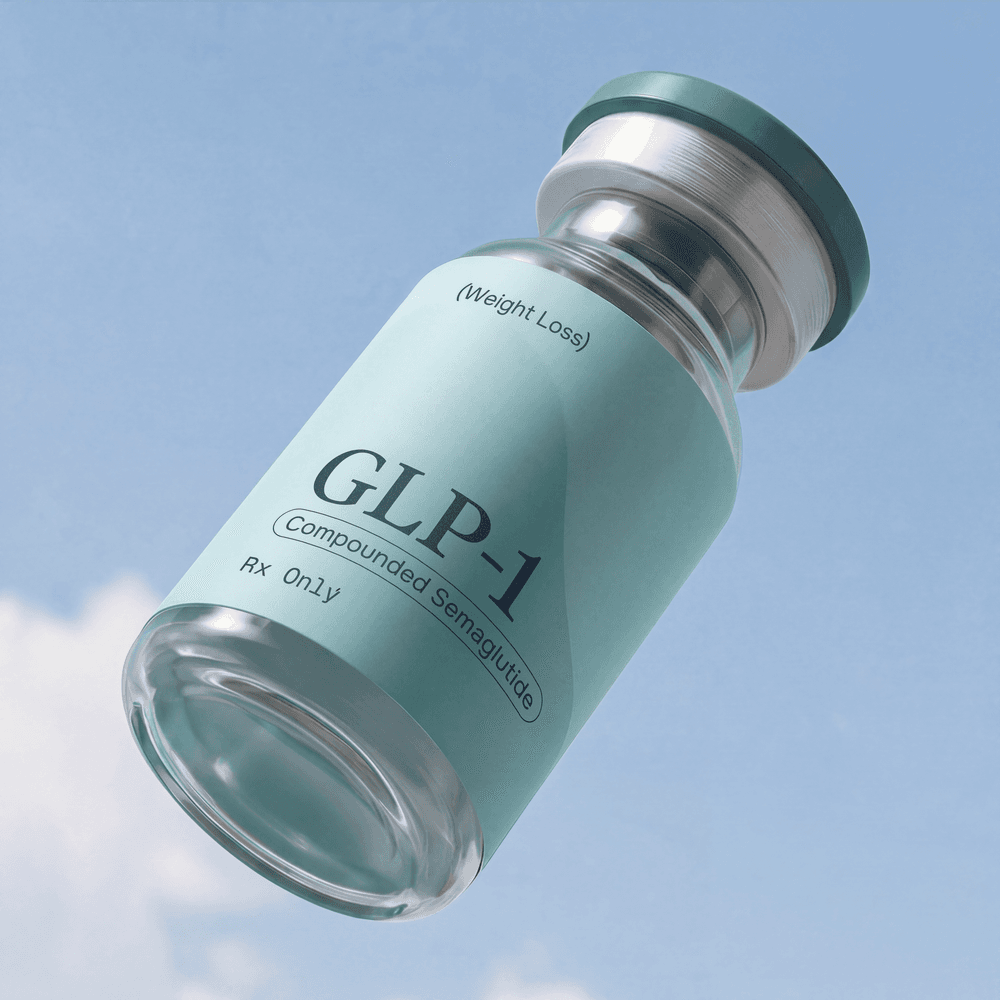
One more thing to settle: whether you are switching to a compounded medication or a brand. Compounded semaglutide is prepared by a licensed pharmacy for you as an individual and is not an FDA-approved drug product. The FDA's page on unapproved GLP-1 drugs explains why the source and the prescriber matter.

The switch, step by step

This is the standard label-based approach. Your clinician may adjust it for you, and their instructions come first.

  1. Step 1: Take your last tirzepatide dose on your usual day

    Do not stop early or skip ahead. Finishing on schedule gives your clinician a clean date to plan from.

    The last dose date anchors everything that follows.

  2. Step 2: Wait one week

    Harbor's standard is a one-week gap before the first semaglutide dose. Some clinicians use a same-day switch for people who are stable and tolerating treatment well, and others use a one to two week washout when side effects have been a problem. Your clinician picks the gap.

    Taking both close together can stack the side effects.

  3. Step 3: Start semaglutide at 0.25 mg

    Start at the lowest dose even if you were on a high dose of tirzepatide. The Wegovy prescribing information starts every patient at 0.25 mg once weekly for four weeks.

    No dose equivalence exists, so the switch restarts the ladder.

  4. Step 4: Stay four weeks at each step

    Each dose gets four weeks before the next increase. That time lets your body adjust and keeps side effects predictable.

  5. Step 5: Step up as you tolerate it

    The label schedule moves from 0.25 mg to 0.5 mg, 1 mg, 1.7 mg, and then the 2.4 mg maintenance dose. If a step does not sit well, your clinician can hold you at the current dose for another four weeks rather than push on.

    Holding a step is a normal adjustment, not a setback.

  6. Step 6: Log every dose and how you feel

    Write down the date, the dose, and anything notable: appetite, nausea, energy. A few lines a week turns your next check-in into a precise conversation instead of a guess.

What the first weeks usually feel like

Tirzepatide fades gradually. According to the Zepbound prescribing information, its half-life is about five days, so it does not disappear the day you stop. Semaglutide builds slowly too, with a half-life of about one week, which is why the starting dose is low and the steps are long.

In practice, many people notice appetite and food noise creeping back during the low-dose weeks. That is expected: 0.25 mg is a starting dose chosen for tolerability, not the dose that does most of the work. In Harbor's clinical experience, weight loss often pauses or slows for one to two weeks around the switch and picks up again as the dose climbs, though every person responds differently.

In Harbor's clinical experience, side effects are often similar to or milder than when you first started tirzepatide, which clinicians attribute to prior exposure to this class of medication. Nausea is still most likely in the days after each step up. Nausea is most likely in the days after each step up, and it usually settles within that four-week window.

How to keep momentum in the low-dose weeks

The weeks at 0.25 mg and 0.5 mg are when your habits carry more of the load. None of this is complicated, and all of it protects the progress you have already made.

  • Anchor every meal with protein. It keeps you full longer and helps protect muscle while you are eating less.
  • Keep resistance training twice a week. Our guide on why muscle mass matters more than scale weight explains why this is the habit to protect first.
  • Drink water through the day. Dehydration makes nausea worse and is easy to mistake for hunger.
  • Plan meals ahead for the first four weeks. Returning appetite is easier to manage when the decision has already been made.
  • Weigh in once a week, not daily. A one to two week pause is normal during a switch, and daily numbers exaggerate it.

A stall after the first month is a reason to check in with your clinician, not a reason to change your dose. Our article on the semaglutide plateau covers what your clinician will look at and when a dose change makes sense.

Tirzepatide vial
Weight lossTirzepatide

Dual-action GLP‑1/GIP for faster results

From
$149/mo
Taken
Once-weekly injection
Type
Dual GLP‑1/GIP agonist
Learn more

If something goes wrong

Nausea comes back

Eat smaller meals, slow down, and avoid greasy or very rich food for a few days. If nausea lasts beyond a week or stops you eating and drinking normally, message your Harbor clinician. They may hold your current dose rather than step up on schedule.

Hunger returns faster than you expected

Do not add extra doses or step up early to chase it. Lean on the protein and meal-planning habits above and tell your clinician at your check-in. Returning appetite in the first weeks is common and usually eases as the dose climbs.

You missed your first semaglutide day

The Wegovy label says to take a missed weekly dose as soon as possible if your next scheduled dose is more than two days away, and to skip it if it is less than two days away. For a first dose after a switch, message your clinician before you take it, so they can confirm the new schedule. Our guide to a missed GLP-1 dose covers the rest.

Message us instead of guessing

Severe abdominal pain that spreads to your back, vomiting you cannot keep ahead of, signs of dehydration such as dizziness and very dark urine, or any swelling of the face or throat means stop and seek care right away. Everything else on this page is a message to your Harbor clinician, not an emergency.

Frequently asked questions

In almost every case, yes. There is no validated dose equivalence between tirzepatide and semaglutide, so the standard approach is to start at 0.25 mg and titrate up every four weeks, whatever tirzepatide dose you were on. Your clinician makes the final call.

Some clinicians use a same-day switch for people who are stable and tolerating treatment well, starting semaglutide on the day the next tirzepatide dose would have been due. The standard is a one-week gap. Your clinician will choose based on your side effects and history.

A short pause is common. A slowdown of roughly one to two weeks is common in Harbor's clinical experience and usually eases as the semaglutide dose climbs. Individual results vary. Keeping protein, resistance training and meal planning steady during those weeks matters more than usual. Individual results vary.

Tirzepatide has a half-life of about five days, according to the Zepbound prescribing information, so it tapers off gradually over the weeks after your last dose rather than stopping all at once. That gradual fade is why the switch does not need a long break.

Possibly. Semaglutide is also approved as a daily tablet for weight management, taken on an empty stomach each morning and titrated up every 30 days, according to the Wegovy prescribing information . Coming from tirzepatide, the same start-low approach applies. Whether a tablet suits your routine is a question for your clinician.

It contains the same active ingredient, but compounded semaglutide is prepared by a licensed pharmacy for an individual patient and is not an FDA-approved drug product. Brand Wegovy is FDA-approved. Your clinician can explain which option you are being prescribed and why.

Sources

  1. Novo Nordisk. Wegovy (semaglutide) prescribing information.
  2. Eli Lilly and Company. Zepbound (tirzepatide) prescribing information.
  3. Lincoff AM, et al. Semaglutide and Cardiovascular Outcomes in Obesity without Diabetes (SELECT). N Engl J Med. 2023.
  4. The Pharmaceutical Journal. Switching between weight-loss medications.
  5. US Food and Drug Administration. FDA's concerns with unapproved GLP-1 drugs used for weight loss.
  6. National Institute of Diabetes and Digestive and Kidney Diseases. Prescription medications to treat overweight and obesity.
  7. Nicholls SJ, et al. Cardiovascular Outcomes with Tirzepatide versus Dulaglutide in Type 2 Diabetes (SURPASS-CVOT). N Engl J Med. 2025.