

Why your vial and your syringe speak different languages
The first time most people hold a compounded tirzepatide vial next to its syringe, the numbers do not match. The prescription says 2.5 mg. The syringe has no milligram marks at all, only lines labeled in units. That gap is where almost every dosing mistake starts, and it closes once you know what each number measures.
Milligrams (mg) are the amount of tirzepatide itself. Your prescribed dose is always in milligrams, and on the FDA-approved label it follows a fixed ladder: start at 2.5 mg once a week, then increase in 2.5 mg steps after at least four weeks on each dose, up to a maximum of 15 mg.
Units are something else. On a U-100 insulin syringe, a unit is a measure of liquid volume: 100 units equals 1 milliliter (mL). On most 1 mL syringes each small line is 2 units and the numbers run every 10; on 0.5 mL syringes each line is 1 unit. Check the scale printed on the syringe your pharmacy sent before you count lines. The syringe measures volume only. It does not tell you how much tirzepatide that volume contains.
The link between the two is the concentration printed on your vial, written as milligrams per milliliter (mg/mL). Compounding pharmacies prepare vials at different concentrations, and it is why the FDA has warned about dosing errors with compounded GLP-1 vials: in reports involving compounded semaglutide, patients drew five to 20 times their intended dose after mixing up milliliters, milligrams, and units. The number on your label is the one that decides your units, not a chart you found online.
The math in plain terms
Every conversion comes from one formula:
The formula
Units to draw = (your dose in mg / your vial's concentration in mg/mL) x 100
Here it is with a 5 mg dose from a vial labeled 10 mg/mL. Divide 5 by 10 and you get 0.5 mL. Multiply by 100 and you get 50 units. On a 1 mL U-100 syringe, you would draw to the 50 line.
Now the part that matters most. Suppose a different pharmacy prepared a vial labeled 20 mg/mL (a hypothetical number, used only to show the math). The same 5 mg dose is 5 divided by 20, which is 0.25 mL, or 25 units. Same dose, half the units. And 25 units from the 10 mg/mL vial would have delivered only 2.5 mg.
That is why a unit count on its own tells you nothing. When your dose or your vial changes, your units change, and the only safe source for the new number is your prescriber's written instructions checked against the concentration on the new label.
Example chart for a 10 mg/mL vial
The chart below applies the formula to the label dose ladder for one example concentration, 10 mg/mL. Use it to understand how the numbers relate, and check your own figures against your vial and your written instructions before every dose.
- 2.5 mg — Liquid to draw: 0.25 mL; Units on a 1 mL U-100 syringe: 25 units; Notes: Starting dose on the label; usually four weeks before the first increase, as your prescriber directs
- 5 mg — Liquid to draw: 0.50 mL; Units on a 1 mL U-100 syringe: 50 units; Notes: First maintenance dose on the label
- 7.5 mg — Liquid to draw: 0.75 mL; Units on a 1 mL U-100 syringe: 75 units; Notes:
- 10 mg — Liquid to draw: 1.00 mL; Units on a 1 mL U-100 syringe: 100 units; Notes: A completely full 1 mL syringe
- 12.5 mg — Liquid to draw: 1.25 mL; Units on a 1 mL U-100 syringe: 125 units; Notes: More than one 1 mL syringe holds
- 15 mg — Liquid to draw: 1.50 mL; Units on a 1 mL U-100 syringe: 150 units; Notes: More than one 1 mL syringe holds; label maximum
Example only, for a vial labeled 10 mg/mL. Your vial's concentration decides your units. If your label shows a different concentration, none of these unit numbers apply to you.
Look at the last two rows. At 10 mg/mL, doses above 10 mg need more liquid than a 1 mL syringe can hold. If your prescription ever lands there, your prescriber will give you a vial concentration or written instructions that fit. Do not split a dose into two draws on your own.
Drawing a dose from the vial, step by step
The routine takes a few minutes. Do it somewhere calm with good light the first few times, until the lines on the syringe feel familiar.
- 01
Step 1: Confirm three numbers
Before you open anything, look at your written dose in mg, the concentration on your vial label in mg/mL, and the units your prescriber wrote, if they did. Run the formula yourself. The three should agree.
If they do not agree, stop here and message your care team.
- 02
Step 2: Wash your hands and check the vial
Wash with soap and water and dry fully. Check the label for your name, the medication, the concentration and the expiry date. The liquid should be clear. If it is cloudy, discolored or has particles, do not use it.
- 03
Step 3: Wipe the stopper
Remove the plastic cap if there is one, wipe the rubber stopper with an alcohol wipe, and let it dry on its own. Do not blow on it.
- 04
Step 4: Draw in air to your line
Take the cap off the needle without touching it. Pull the plunger back until the syringe holds as much air as the dose you are about to draw, for example to the 50 line for 50 units.
- 05
Step 5: Push the air into the vial
Push the needle straight through the stopper and press the plunger so the air goes into the vial. This keeps the vial from building a vacuum that fights you on the next step.
- 06
Step 6: Turn the vial over and draw to your line
Keep the needle in and turn the vial upside down. With the needle tip in the liquid, pull the plunger back slowly to your unit line.
Draw slowly. A fast pull is how people overshoot.
- 07
Step 7: Remove bubbles and re-check
Tap the syringe so bubbles rise, push them back into the vial, then pull back to your line again. Hold the syringe at eye level and read the line against the edge of the plunger nearest the needle.
- 08
Step 8: Inject, then dispose
Take the needle out of the vial and inject into your chosen site as your care team showed you. Put the syringe straight into a sharps container. Use a new syringe for every dose.
If something goes wrong
You think you drew or injected the wrong amount
Do not take a second dose to correct it, and do not skip ahead on your schedule. Message your care team with what you drew, the concentration on your vial, and the time you injected. We will tell you whether to adjust the next dose or simply wait. A second dose taken to correct an error is the most common way a small mistake becomes a serious one.
Your label and your instructions do not match
This happens most often when a refill arrives at a new concentration or your dose has just changed. Do not guess which one is right, and do not convert on your own. Message your Harbor clinician before you draw anything, with a photo of the label if you can.
You cannot read the line with confidence
Push the liquid back into the vial and draw again in better light. If the markings are too small to read comfortably, tell your care team. A different syringe size or a magnifier that clips to the syringe can help.
You missed a dose
Missing a weekly dose has its own timing rules. Harbor's guide to what to do after a missed GLP-1 dose walks through them.
Message us instead of guessing
Never switch to a different concentration or syringe size without new written instructions, and never draw above your prescribed line. Severe nausea or vomiting you cannot keep ahead of, severe abdominal pain that may spread to your back, fainting, or signs of low blood sugar such as shakiness, sweating or confusion after a possible overdose mean stop and seek urgent care. Everything else on this page is a message to your Harbor clinician.
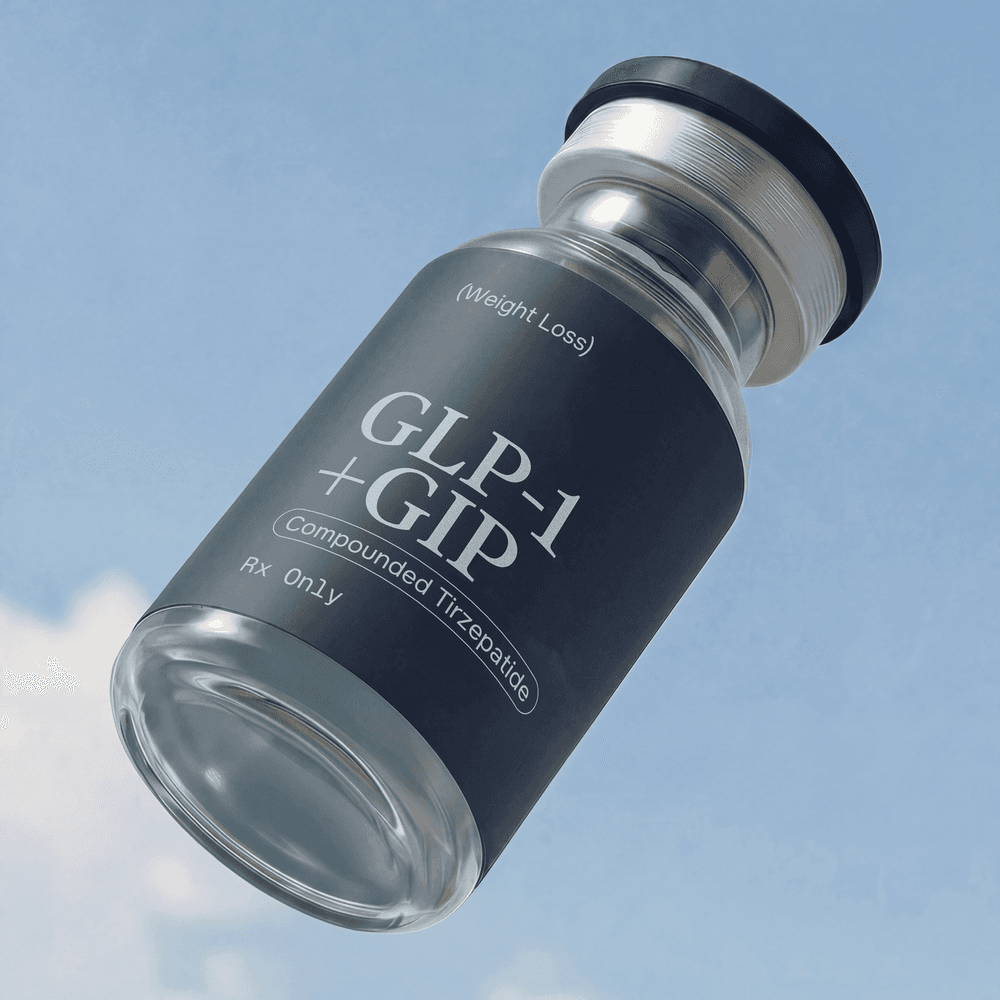
Dual-action GLP‑1/GIP for faster results
- From
- $149/mo
- Taken
- Once-weekly injection
- Type
- Dual GLP‑1/GIP agonist
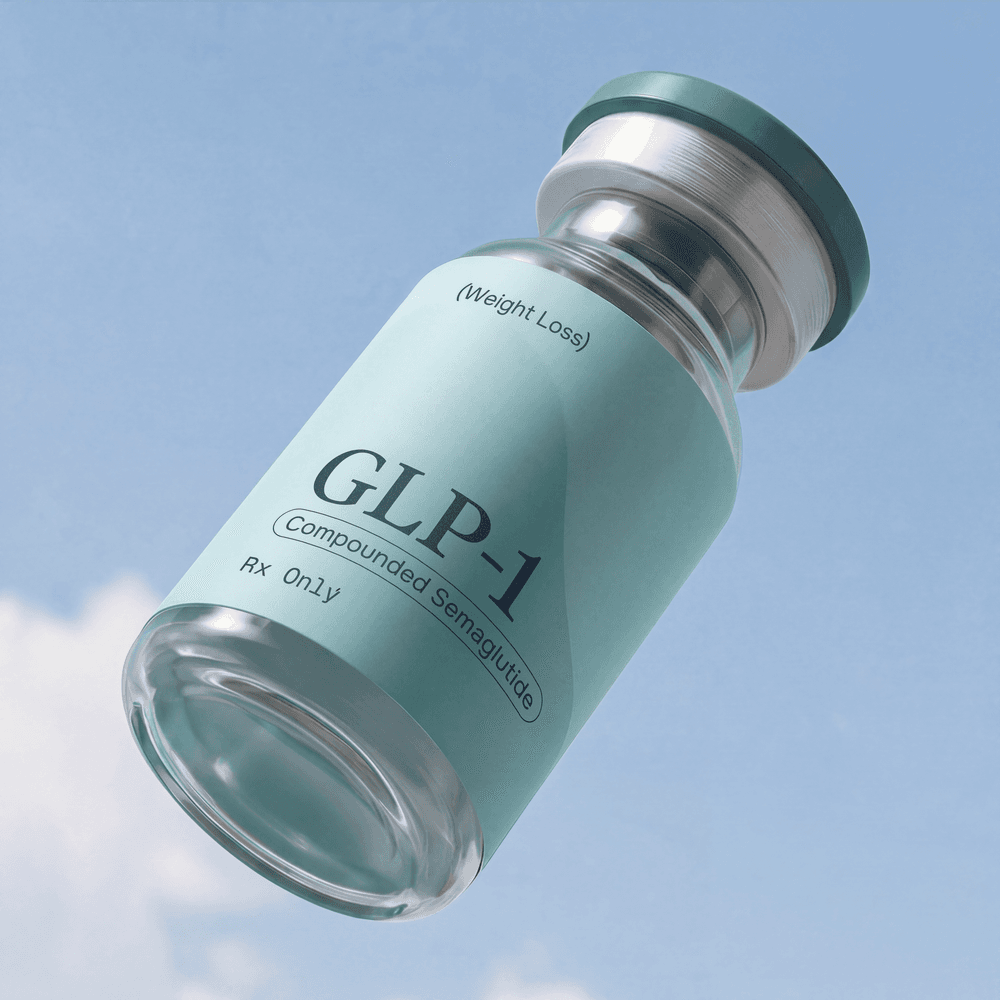
GLP‑1 for steady results
- From
- $99/mo
- Taken
- Once-weekly injection
- Type
- GLP‑1 receptor agonist
Cellular energy & healthy aging
- From
- Pricing soon
- Taken
- Self-injected at home
- Type
- Coenzyme found in every cell
Growth hormone support
- From
- Pricing soon
- Taken
- Self-injected at home
- Type
- Growth hormone-releasing peptide
Antioxidant support
- From
- Pricing soon
- Taken
- Self-injected at home
- Type
- Your body’s primary antioxidant
Habits that prevent dosing errors
Dosing errors are prevented by routine rather than arithmetic. The habits below make a mistake hard to make.
- Write your dose on the vial box in both mg and units the day it arrives, and cross it out when your dose changes.
- Check the concentration on every new vial, even when the box looks identical to the last one.
- Use only the syringes your pharmacy sent with your prescription.
- Keep a simple dose log with the date, mg, units and injection site.
- Treat a new dose or a new vial as a new first injection: slow down and confirm all three numbers.
Store the vial as your pharmacy directs, usually in the refrigerator, and if a shipment arrives warm, message your care team before you use it. The FDA's page on unapproved GLP-1 drugs advises against using any injectable GLP-1 medication that arrives warm or without enough refrigeration. Your Harbor clinician is available around the clock through the patient portal, and a question before a dose is always a better use of that access than a question after one. For more on how Harbor matches patients to a medication in the first place, see our tirzepatide vs semaglutide comparison, and for the regulatory background, what compounded medications are.
Frequently asked questions
It depends entirely on your vial's concentration. On a vial labeled 10 mg/mL, 2.5 mg is 0.25 mL, which is 25 units on a U-100 syringe. On a vial with a different concentration the unit number changes, so use the formula with the number on your label and confirm it with your prescriber.
Divide your dose in milligrams by the vial's concentration in mg/mL to get milliliters, then multiply by 100 to get units on a U-100 syringe. For example, 7.5 mg from a 10 mg/mL vial is 0.75 mL, or 75 units.
The number your prescriber wrote for your current dose and your current vial. Tirzepatide doses start at 2.5 mg a week and increase in 2.5 mg steps no sooner than every four weeks, but the units that match each dose depend on concentration, so never take a unit number from a chart meant for a different vial.
Use the syringe your pharmacy sent. U-100 syringes come in more than one size, and a mismatched syringe or a U-500 syringe changes what each line means. If you run out or receive a different style, message your care team before your next dose. Check the scale too: on most 1 mL syringes each small line is 2 units, while on 0.5 mL syringes each line is 1 unit.
At 10 mg/mL, doses above 10 mg need more liquid than a 1 mL syringe holds. Your prescriber will provide a concentration or instructions that fit. Do not split a dose into two draws or switch syringes on your own.
Sources
- U.S. Food and Drug Administration. FDA alerts health care providers, compounders and patients of dosing errors associated with compounded injectable semaglutide products.
- MedlinePlus, U.S. National Library of Medicine. Giving an insulin injection.
- U.S. Food and Drug Administration. Zepbound (tirzepatide) prescribing information.
- U.S. Food and Drug Administration. FDA's concerns with unapproved GLP-1 drugs used for weight loss.
- U.S. Food and Drug Administration. Safely using sharps (needles and syringes) at home, at work and on travel.
Keep reading
All 129 articles → Tirzepatide
Tirzepatide vs Retatrutide: What You Can Start Today vs What's Still in Trials
One is an approved medication you can start this month. The other is a promising investigational drug still working through phase 3. Here is how they compare, and what the retatrutide headlines leave out.
By Harbor Health Team
 Tirzepatide
Tirzepatide vs Semaglutide: The Definitive Clinical Comparison
The two leading GLP-1 weight loss medications compared at the molecule level. Mechanism, clinical-trial efficacy, side effects, cost, cardiovascular outcomes, and the framework Harbor's clinical team uses to choose between them.
By Harbor Health Team
 Tirzepatide
Tirzepatide vs Zepbound: The Brand vs Compounded Cost Question
Zepbound is brand-name tirzepatide for weight loss. Compounded tirzepatide is the same molecule prepared differently. The choice in 2026 comes down to cost, insurance coverage, and tolerance for the trade-offs of each path. Written by Harbor's medical team.
By Harbor Health Team