

Start for $99No results? No chargeSame-day approvalNo price increases — everBuy now, pay later

Tirzepatide vs Retatrutide: What You Can Start Today vs What's Still in Trials

One is an approved medication you can start this month. The other is a promising investigational drug still working through phase 3. Here is how they compare, and what the retatrutide headlines leave out.

Clinically reviewed
Medically reviewed by Harbor Health TeamMedical Content Team8 min read

At a glance

Retatrutide phase 2 (NEJM 2023) vs tirzepatide SURMOUNT-1 (NEJM 2022)

Retatrutide

Investigational triple agonist

−24.2%Mean weight loss in trials48 weeks, phase 2

  • ReceptorsGIP + GLP-1 + glucagon
  • FDA statusNot approved
  • Phase 3 obesity dataNot yet published
  • Harbor priceNot available
Available today
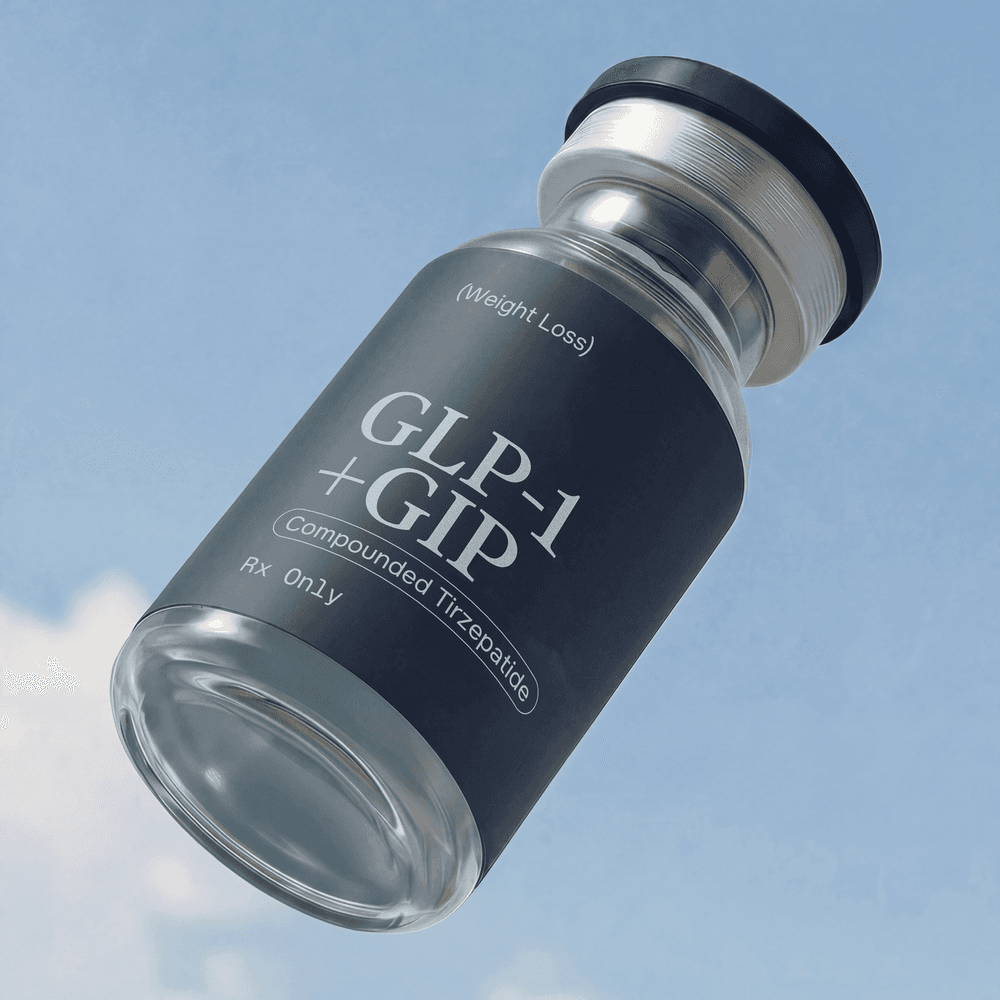
Compounded tirzepatide vial

Tirzepatide

Dual GIP and GLP-1 agonist

  • ReceptorsGIP + GLP-1
  • FDA statusApproved (Zepbound, Mounjaro)
  • Phase 3 obesity dataPublished
  • Harbor priceFrom $149/mo (compounded)

The verdict: Retatrutide has produced larger average weight loss in trials so far, but it is not approved and cannot be legally prescribed outside a study. Tirzepatide is approved, has years of real-world use, and is available today. Harbor prescribes compounded tirzepatide, which is not itself an FDA-approved product.

The short answer

If the question is which molecule has produced more weight loss in a trial, the answer right now is retatrutide. In its phase 2 study, adults on the highest dose lost an average of 24.2% of their body weight over 48 weeks.

If the question is which one you can start this month, with a prescription and a safety record behind it, the answer is tirzepatide (approved as Zepbound and Mounjaro; Harbor's compounded version is not FDA-approved). Retatrutide is investigational. It is not FDA-approved, and outside a clinical trial there is no legal way to be prescribed it.

That is the whole trade. Everything below is detail underneath it, including why a bigger trial number today does not automatically mean retatrutide will be the better choice for you when, and if, it is approved.

How each one works

Both medications copy hormones your gut releases after a meal. The difference is how many of those signals each one sends.

Tirzepatide: two receptors

Tirzepatide activates the GLP-1 and GIP receptors. Together they slow how quickly the stomach empties, turn down appetite signaling in the brain and improve how the body handles blood sugar. Patients often describe the effect as food noise going quiet.

Retatrutide: three receptors

Retatrutide does what tirzepatide does and adds a third target, the glucagon receptor. Glucagon is thought to raise energy expenditure and pull fat out of the liver, which is the leading explanation for why retatrutide's weight-loss numbers run higher in early trials.

A third mechanism is also a third set of effects to understand. The glucagon component is the part with the least long-term human data behind it, and it is one reason regulators want the full phase 3 program before approval.

What the trials show

There is no completed head-to-head trial yet, so every comparison today lines up numbers from different studies with different people and different lengths. Treat the gap as a direction, not a precise measurement.

Tirzepatide

In SURMOUNT-1, 2,539 adults with obesity or overweight took tirzepatide or placebo for 72 weeks. Average weight loss was 15.0% on 5 mg, 19.5% on 10 mg and 20.9% on 15 mg, against 3.1% on placebo. That trial, and the ones that followed it, are why tirzepatide is approved for chronic weight management as Zepbound. For how it compares with semaglutide, see our tirzepatide vs semaglutide comparison.

Retatrutide, phase 2

The phase 2 trial, published in the New England Journal of Medicine in 2023, followed 338 adults for 48 weeks. Average weight loss at 48 weeks was 17.1% on 4 mg, 22.8% on 8 mg and 24.2% on 12 mg, against 2.1% on placebo.

Retatrutide, phase 3 so far

The first peer-reviewed phase 3 result is in type 2 diabetes. In TRANSCEND-T2D-1 (The Lancet, 2026), 537 adults took retatrutide or placebo for 40 weeks. HbA1c fell by up to 1.94 points and body weight by up to 15.3% at 12 mg, against 2.6% on placebo.

The obesity trials make up the TRIUMPH program. The manufacturer has reported that in TRIUMPH-4, in adults with obesity and knee osteoarthritis, the 12 mg dose produced about 28.7% average weight loss at 68 weeks. Those results have not yet been published in a peer-reviewed journal, so read them as a headline rather than a settled figure.

The trial that will answer this article's question directly is TRIUMPH-5, which compares retatrutide with tirzepatide in adults with obesity. Its primary completion is listed for November 2026.

Side by side

Retatrutide figures from the phase 2 obesity trial (NEJM 2023); tirzepatide figures from SURMOUNT-1 (NEJM 2022) and the Zepbound prescribing information. The trials differ in length and population, so the weight-loss row is not a head-to-head result. Harbor pricing is compounded tirzepatide and varies by plan.
AttributeRetatrutideTirzepatide
FDA statusInvestigational, not approvedApproved for weight management (Zepbound) and type 2 diabetes (Mounjaro) Approved
Can you start it todayOnly inside a clinical trialYes, with a prescription Available now
Receptors targetedGIP, GLP-1 and glucagonGIP and GLP-1
Mean weight loss, obesity trial−24.2% at 48 weeks (phase 2, 12 mg) Larger in trials−20.9% at 72 weeks (SURMOUNT-1, 15 mg)
Peer-reviewed phase 3 obesity dataNot yet publishedPublished, several trials Deeper evidence
Real-world useTrial participants onlyOn the market since 2022 Longer record
DosingOnce weekly injection (in trials)Once weekly injection, 2.5 to 15 mg
Notable safety signalDose-related heart rate rise, peaking around week 24Boxed warning for thyroid C-cell tumors (rodent data)
Harbor priceNot availableFrom /mo (compounded, not FDA-approved) Offered by Harbor

Scroll the table sideways to see both columns →

Side effects and safety

The side-effect profiles look more alike than the weight-loss numbers do. Both are mainly gastrointestinal, both depend on dose, and both are worst in the weeks after a dose increase.

What they share

Nausea, diarrhea, constipation and vomiting are the most common effects of both. In the retatrutide phase 2 trial they were mostly mild to moderate and were eased by starting at a lower dose, the same approach used with tirzepatide.

Where retatrutide differs

Retatrutide raised resting heart rate in a dose-dependent way, with the increase peaking around week 24 and declining afterward. That is a signal researchers are watching in the larger trials. A body composition substudy in type 2 diabetes found the share of lean mass lost was similar to other obesity treatments, which answers one common worry but not every long-term question.

What tirzepatide carries

Tirzepatide's prescribing information includes a boxed warning for thyroid C-cell tumors seen in rodents, and it is not appropriate with a personal or family history of medullary thyroid carcinoma or MEN2. The difference is that these risks are documented on a label, backed by years of reporting, rather than still being mapped.

Why not buy retatrutide online?

Because the headlines have run ahead of approval, retatrutide is now sold online as a "research peptide" labeled not for human use. Those products are not approved, are not made for people, and come with no independent check on what is actually in the vial.

The FDA has published its concerns about unapproved GLP-1 drugs used for weight loss, including products sold online without a prescription. A drug with no approved dose, no prescriber and no pharmacy standing behind it is the one situation in this category where the risk is genuinely unknown.

Message us instead of guessing

If you have injected a product bought online and have severe abdominal pain that spreads to your back, vomiting you cannot keep fluids down through, a racing or irregular heartbeat, or swelling of the face or throat, seek emergency care. For anything else, message your Harbor clinician before your next dose.

Tirzepatide vial
Weight lossTirzepatide

Dual-action GLP‑1/GIP for faster results

From
$149/mo
Taken
Once-weekly injection
Type
Dual GLP‑1/GIP agonist
Learn more

How Harbor clinicians think about it

In practice our clinicians are not choosing between these two, because only one of them can be prescribed. The real decision is whether to start effective treatment now or wait for a drug that may be approved later.

Starting tirzepatide now makes sense when

  • Your weight is already affecting your health, sleep, joints or blood sugar, and a year of waiting has a real cost
  • You want a medication with published phase 3 obesity data and a known safety profile
  • You want the option to adjust dose, switch medications or stop with a clinician involved throughout
  • You would rather be well down the road on an approved treatment when retatrutide's results are published

Waiting can make sense when

  • You are enrolled in, or eligible for, a retatrutide clinical trial through a research site
  • Your health is stable, your goals are not time-sensitive, and you prefer to see the full phase 3 results first

Starting tirzepatide does not close the door on retatrutide. If it is approved, switching from one incretin medication to another is routine, and your clinician can reassess with the full evidence in hand. For how our clinicians match people to a first medication, see how to choose the right GLP-1 medication.

Compounded tirzepatide is prepared by licensed U.S. pharmacies for individual patients and is not an FDA-approved product (here is how compounded medications work). Tirzepatide as a molecule is approved; retatrutide in any form is not.

This article is for general education and is not medical advice. It is not a substitute for evaluation, diagnosis, or treatment by a licensed clinician. Talk with a qualified clinician about your individual situation.

Harbor is a technology platform. Medical evaluations are conducted by independent, licensed healthcare providers who decide whether treatment is appropriate. Compounded medications are prepared by licensed U.S. pharmacies for individual patients and are not reviewed by the FDA for safety or effectiveness.

Frequently asked questions

No. Retatrutide is an investigational drug in phase 3 trials. It is not FDA-approved for any use, and outside a clinical trial it cannot be legally prescribed. Products sold online as retatrutide are not approved for human use.

No approval date has been set. Several phase 3 TRIUMPH trials are still running, including the head-to-head comparison with tirzepatide, whose primary completion is listed for November 2026. Approval would follow a regulatory review of the full data, so any date you see is a forecast.

It has produced larger average weight loss in trials so far, but there is no completed head-to-head study yet and its long-term safety is still being established. Tirzepatide is approved, well studied and available now, which makes it the stronger practical choice today. Harbor prescribes compounded tirzepatide, which is not an FDA-approved product.

No. They act on overlapping hormone pathways, retatrutide is not approved, and no study has tested them together. Combining them would add side effects without any evidence of benefit.

Mostly fat. In a phase 2 body composition substudy, the share of lean mass lost was similar to other obesity medications. As with tirzepatide, protein and resistance training help protect muscle during weight loss.

If retatrutide is approved and it is right for you, yes. Switching between incretin medications is a routine change your clinician manages. Starting tirzepatide now does not rule anything out.

Sources

  1. Jastreboff AM, et al. Triple-Hormone-Receptor Agonist Retatrutide for Obesity: A Phase 2 Trial. N Engl J Med. 2023;389:514-526.
  2. Bajaj HS, et al. Efficacy and safety of retatrutide in type 2 diabetes (TRANSCEND-T2D-1): a phase 3 trial. Lancet. 2026;407:2402-2413.
  3. Coskun T, et al. Effects of retatrutide on body composition in type 2 diabetes: a phase 2 substudy. Lancet Diabetes Endocrinol. 2025.
  4. Giblin K, et al. Retatrutide for obesity, obstructive sleep apnea and knee osteoarthritis: rationale and design of the TRIUMPH program. Diabetes Obes Metab. 2026;28:83-93.
  5. ClinicalTrials.gov. TRIUMPH-4: Retatrutide in obesity or overweight with knee osteoarthritis (NCT05931367).
  6. ClinicalTrials.gov. TRIUMPH-5: Retatrutide compared with tirzepatide in adults with obesity (NCT06662383).
  7. Jastreboff AM, et al. Tirzepatide Once Weekly for the Treatment of Obesity (SURMOUNT-1). N Engl J Med. 2022;387:205-216.
  8. DailyMed. Zepbound (tirzepatide) injection, prescribing information.
  9. U.S. Food and Drug Administration. FDA's Concerns with Unapproved GLP-1 Drugs Used for Weight Loss.
  • Tirzepatide

    The two leading GLP-1 weight loss medications compared at the molecule level. Mechanism, clinical-trial efficacy, side effects, cost, cardiovascular outcomes, and the framework Harbor's clinical team uses to choose between them.

    By Harbor Health Team

  • Tirzepatide

    Zepbound is brand-name tirzepatide for weight loss. Compounded tirzepatide is the same molecule prepared differently. The choice in 2026 comes down to cost, insurance coverage, and tolerance for the trade-offs of each path. Written by Harbor's medical team.

    By Harbor Health Team