
How long does it take for tirzepatide to work at a glance
How long does it take for tirzepatide to work depends on what you measure. In trials of brand tirzepatide, people ate less at a test lunch by week 3, weight pulled away from placebo by week 5 in a second trial, and the label's main weight figures come at week 72.
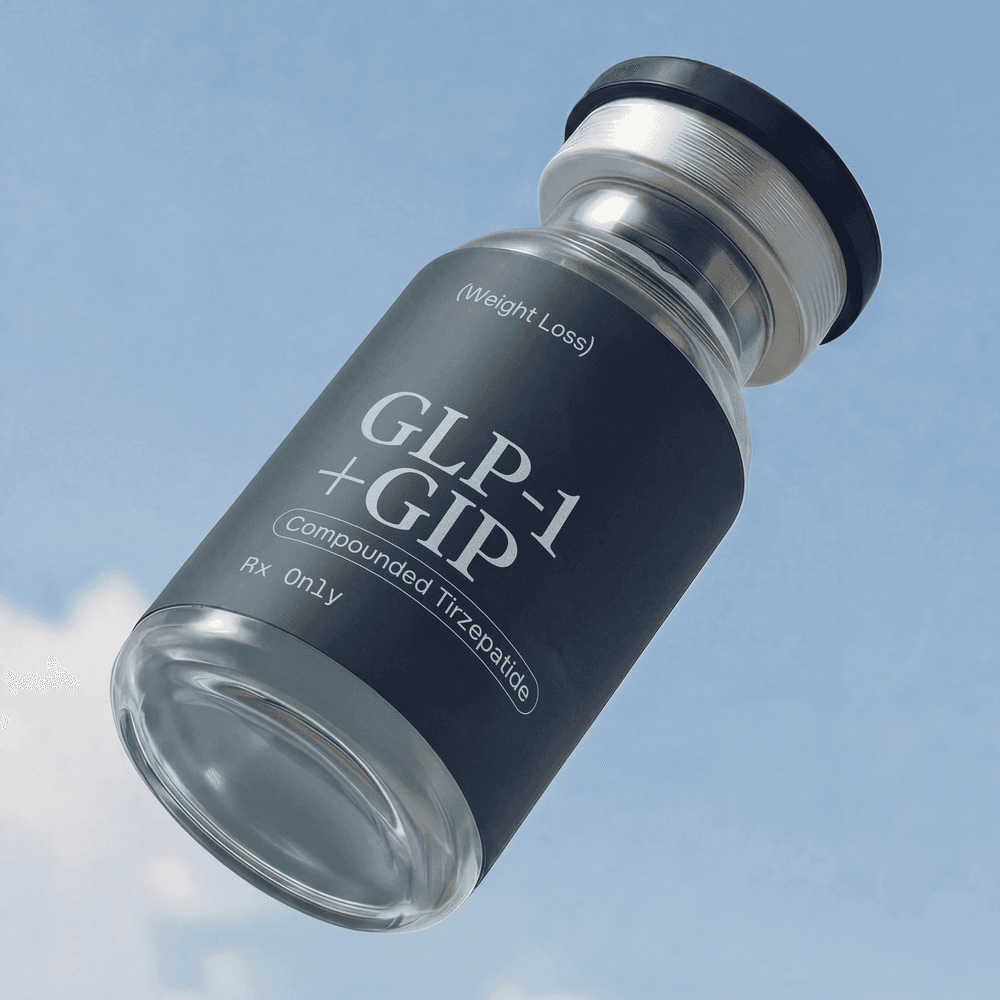
Harbor's tirzepatide program is built around that step-by-step climb. It is one injection a week at home, at one flat price as the dose goes up, with a board-certified physician who reviews your intake before anything ships. The drug in that program is compounded tirzepatide, which is not FDA approved and was not tested in any of the trials below.
The first month is a starter dose. The Zepbound label calls 2.5 mg a dose "for treatment initiation" that "is not approved as a maintenance dosage," so early weeks are a ramp rather than a verdict.
| Sign | When trials measured it | Source |
|---|---|---|
| Less food noise | Not measured directly yet | 2026 review of food-noise research |
| Smaller portions | Week 3 | Martin 2025, 114 adults |
| Weight on the scale | Week 5, then week 72 | Heise 2023, SURMOUNT-1 |
| Smaller waist | Week 72 | Zepbound label, Study 1 |
| Blood sugar numbers | Week 72 | Zepbound label, Studies 1 and 2 |
| Fewer cravings | Within a 6-week trial | Martin 2025 |
All trials used brand tirzepatide, made by Eli Lilly, and Lilly staff co-wrote each paper. Read November 19, 2026.
Signs your tirzepatide shots are working
The signs tirzepatide is working fall into two groups: changes you notice at the table, such as appetite and portion size, and changes you can measure, such as weight, waist size and lab results. Each sign below gives what trials of brand tirzepatide found and the limit of that evidence.
Write each one down as it happens. Notes on appetite, portions and cravings give your clinician something to read beside the scale at your next check-in.
Less food noise
Fewer unwanted thoughts about food
Food noise is a term patients coined for frequent, intrusive thoughts about food. A 2026 review found that randomized trials show GLP-1-based drugs reduce appetite, cravings and reactions to food cues, while direct evidence on food noise itself is limited to retrospective and cross-sectional work so far.
Where it wins
What it costs you
A sign to describe in your own words
Smaller portions feel like enough
Fewer calories at a meal
The Zepbound label says tirzepatide decreases calorie intake and that the effect is likely driven by appetite. In a 2025 trial of 114 adults without diabetes, the 37 people on brand tirzepatide ate 524.6 kcal less than the placebo group at a free-choice lunch at week 3.
Where it wins
What it costs you
A sign you notice at meals
Steady weight loss on the scale
A downward trend over months
A 28-week trial of 117 adults with type 2 diabetes, comparing tirzepatide 15 mg with semaglutide and placebo, saw weight separate from placebo as early as week 5: 2.6 kg lost against 1.0 kg. In SURMOUNT-1, mean weight change at 72 weeks on brand Zepbound was 15.0% to 20.9% by dose, against 3.1% on placebo.
Where it wins
What it costs you
Read the trend with your clinician
Looser clothes & a smaller waist
Change you can measure in inches
In SURMOUNT-1, mean waist size fell 14.0 cm to 18.5 cm by dose at week 72 on brand Zepbound, against 4.0 cm on placebo, according to Table 3 of the Zepbound label. That works out to about 5.5 to 7.3 inches.
Where it wins
What it costs you
A tape check alongside the scale
Better blood sugar numbers
A1C and fasting glucose on lab tests
Blood sugar is a sign you read on a lab report, not in the mirror. In Study 2 of the Zepbound label, adults with type 2 diabetes who started at an A1C of about 8.0% saw it fall 2.1 points on 10 mg or 15 mg at week 72, against 0.5 points on placebo.
Where it wins
What it costs you
Readers with prediabetes or type 2 diabetes
Fewer cravings between meals
Less pull toward snacks
In the 2025 trial of 114 adults without diabetes, which ran 6 weeks, brand tirzepatide lowered food cravings, perceived hunger and the tendency to overeat on questionnaires, compared with placebo. It did not change how much people deliberately held back from eating.
Where it wins
What it costs you
Note when snacking urges ease
Tirzepatide weight loss timeline
Tirzepatide weight loss results build in stages, and the stages follow the dose. On the Zepbound label, treatment starts at 2.5 mg once a week for 4 weeks, then rises in 2.5 mg steps, each after at least 4 weeks on the current dose, to a maintenance dose of 5 mg, 10 mg or 15 mg.
Anyone asking how long does tirzepatide take to work should know the answer comes in layers. Blood levels reach steady state after 4 weeks of weekly doses, appetite changes were measured within weeks, and weight change ran for more than a year.
| When | What the source reports | Source |
|---|---|---|
| Weeks 1 to 4 | 2.5 mg once a week, a starter dose the label does not approve for maintenance. Steady-state blood levels after 4 weekly doses. | Zepbound label |
| Week 3 | 524.6 kcal less eaten at a test lunch than on placebo, on 5 mg | Martin 2025, 114 adults without diabetes |
| Week 5 | 2.6 kg lost against 1.0 kg on placebo | Heise 2023, type 2 diabetes |
| Week 20 | End of the longest dose climb. Pooled 10 mg and 15 mg groups lost 13.2 kg, against 2.5 kg on placebo. | SURMOUNT-1 record |
| Week 72 | Mean loss of 15.0%, 19.5% and 20.9% on 5, 10 and 15 mg, against 3.1% on placebo | Zepbound label, Study 1 |
Brand tirzepatide only. The week 20 figure is the mixed-model estimate posted on ClinicalTrials.gov, and the week 72 figures are from the Zepbound label.
SURMOUNT-1 enrolled 2,539 adults with obesity, or with overweight and a weight-related condition, and no type 2 diabetes. People were assigned to 5 mg, 10 mg, 15 mg or placebo, with a dose climb of up to 20 weeks, and everyone got counseling on a diet about 500 kcal a day below their needs and at least 150 minutes of activity a week. The SURMOUNT-1 trial record posts the full results.
Read this tirzepatide weight loss timeline as a map of when researchers looked, not a schedule your body has to keep. Every result came from brand Zepbound with diet and activity counseling, and no compounded tirzepatide, which is not FDA approved, was studied.
When results are slower than expected
A common worry is tirzepatide not working in the first month, so check the calendar first. Weeks 1 to 4 are the 2.5 mg starter dose, which the label does not approve for maintenance, and maintenance doses begin at 5 mg.
NIDDK sets its yardstick later. If you do not lose at least 5% of your starting weight after 12 weeks on the full dose of a weight management medicine, NIDDK says your health care professional will probably advise stopping it, and may change the treatment plan or try a different medicine. That 12-week clock starts at the full dose, not at the first shot.
Even in SURMOUNT-1, 9.1% of people on the 15 mg dose had not reached 5% weight loss by week 72. A slower response is a reason to talk with your clinician.
Here is what a clinician looks at when progress stalls:
- Your current dose and how long you have been on it, since each step lasts at least 4 weeks on the label
- Missed doses: the Zepbound label allows a late dose within 4 days (96 hours), and your own prescription's instructions come first
- Other medicines, supplements and vitamins, which NIDDK says to raise with your health care professional
- Eating and activity, since the trial results came with diet and activity counseling
Related reading: dosing at every level on the Zepbound label.
Before you change anything
Do not raise, skip or double a dose on your own. Message your clinician through the patient portal, which offers 24/7 access to licensed clinicians for medical questions.
Tirzepatide shots with Harbor
Harbor tirzepatide shots are compounded tirzepatide, which is not FDA approved, taken as one injection a week at home from a vial with U-100 insulin syringes. The program puts medication, clinician care and check-ins in one price, from $119 a month, and the product page describes that price as flat as your dose goes up.
A board-certified physician licensed in your state reviews your health history, goals and prior treatment response before deciding whether a dual-pathway option fits, and nothing ships until then. If a clinician does not approve treatment, the payment is refunded in full. No insurance is required, HSA and FSA cards are accepted, and outside lab tests such as an A1C are not part of the monthly fee.
Kendra Freeman described the dose steps on Trustpilot in August 2026: "Needing to up your dose great no problem costs stay the same."
These tirzepatide shots also come in a program designed to end. When you reach your goal, a structured, clinician-guided taper and registered-dietitian aftercare help you hold your new baseline. The online quiz takes about 90 seconds and is the first step toward a physician review.
Medical disclaimer
This article is for general education and is not medical advice. It is not a substitute for evaluation, diagnosis, or treatment by a licensed clinician. Talk with a qualified clinician about your individual situation.
Compounded medications
Harbor is a technology platform. Medical evaluations are conducted by independent, licensed healthcare providers who determine whether treatment is appropriate. Compounded medications are not FDA approved and are not reviewed by the FDA for safety or effectiveness.
Frequently asked questions
In trials of brand tirzepatide, appetite effects were measured within weeks: a 2025 trial found 524.6 kcal less eaten at a test lunch at week 3, on 5 mg. In a separate 28-week trial, weight separated from placebo by week 5. The Zepbound label's first 4 weeks are a 2.5 mg starter dose, so early tirzepatide results are a ramp, not the full picture.
In a 6-week trial of 114 adults without diabetes, brand tirzepatide lowered intake at a test lunch by week 3 and lowered hunger and craving scores, compared with placebo. That trial started at 5 mg, above the label's 2.5 mg starting dose. Timing differs from person to person, and your clinician sets the pace of each dose step.
In SURMOUNT-1, adults without diabetes on brand Zepbound lost an average of 15.0% to 20.9% of their body weight at 72 weeks, by dose, against 3.1% on placebo, alongside diet and activity counseling. Those figures belong to the brand drug. For compounded tirzepatide, which is not FDA approved and was not in that trial, a licensed clinician reviews your history and decides whether treatment fits you.
Sources
- Zepbound (tirzepatide) prescribing information, revised 08/2026, DailyMed.
- SURMOUNT-1, tirzepatide in adults with obesity or overweight (NCT04184622), ClinicalTrials.gov.
- Martin CK et al. Tirzepatide on ingestive behavior in adults with overweight or obesity: a randomized 6-week phase 1 trial. Nat Med, 2025.
- Heise T et al. Tirzepatide reduces appetite, energy intake, and fat mass in people with type 2 diabetes. Diabetes Care, 2023.
- Ortiz-Martinez Y. Food noise in obesity: current evidence, measurement, and clinical implications. Cureus, 2026.
- Prescription medications to treat overweight and obesity, NIDDK.
- Maintaining a healthy weight: measuring waist circumference, NHLBI.
- FDA's concerns with unapproved GLP-1 drugs used for weight loss.
Keep reading
All 199 articles →- Tirzepatide
7 Mounjaro & Zepbound Alternatives, Including Compounded Tirzepatide Shots
Seven options when Mounjaro or Zepbound is out of reach, led by compounded tirzepatide, which is not FDA approved, then Zepbound vials, Wegovy, Foundayo and three more. What each is and how a clinician chooses.
By Harbor Health Team
- Tirzepatide
Contrave vs Injectable Tirzepatide for Weight Loss
Contrave is a twice-daily tablet. Tirzepatide is a once-weekly injection. Here is how they compare on trial results, routine, FDA status and cost, and what a licensed clinician checks before prescribing either one.
By Harbor Health Team
- Tirzepatide
Mounjaro vs Trulicity for weight loss & A1C
Mounjaro and Trulicity are weekly type 2 diabetes shots. SURPASS-CVOT compared them directly for about four years. Here is what it found for A1C, weight and heart events.
By Harbor Health Team

