
Contrave vs tirzepatide verdict
Contrave vs tirzepatide is a choice between two different kinds of medicine. Contrave is an extended-release tablet that pairs naltrexone with bupropion, approved in 2014 for long-term weight management. Tirzepatide acts on the GIP and GLP-1 receptors and, as the brand Zepbound, is approved for the same use (Zepbound prescribing information).
In separate label trials, tirzepatide produced the larger average loss. In SURMOUNT-1, adults without diabetes on Zepbound 15 mg lost an average of 20.9% of their body weight over 72 weeks, against 3.1% on placebo. In COR-I, adults on full-dose Contrave lost 5.4% over 56 weeks, against 1.3% on placebo (Contrave prescribing information). Neither label reports a trial of one drug against the other, so read the gap as a direction, not an exact difference.
Contrave has real strengths. It is a tablet, so there is no needle, and it is an FDA-approved product. For readers who want one dose a week, no food rule and one flat monthly price that includes clinician care, Harbor's tirzepatide program leads. Its tirzepatide is compounded, is not Zepbound and is not FDA approved, and the trial results here come from the brand drug. A licensed clinician decides whether it fits.
Contrave vs injectable tirzepatide side by side
Injectable tirzepatide and Contrave differ on mechanism, trial results, routine, regulatory status and price. Each point below is taken from the current prescribing information.
How each one works
Contrave has two components. Naltrexone is an opioid antagonist, and bupropion is a relatively weak inhibitor of dopamine and norepinephrine reuptake. Its label says nonclinical studies suggest the pair acts on two brain areas involved in food intake, the hypothalamus and the mesolimbic dopamine circuit, and that the exact effects leading to weight loss are not fully understood. The MedlinePlus naltrexone-bupropion facts page says it in plainer words: the two work together on the hunger center and the reward system.
Tirzepatide binds to and activates the GIP and GLP-1 receptors. GLP-1 is a physiological regulator of appetite and calorie intake, and both receptors are found in brain areas involved in appetite regulation, according to the Zepbound label. Contrave is not a GLP-1 medicine, and tirzepatide contains neither naltrexone nor bupropion.
Weight loss results in trials
The Contrave label rests on four 56-week trials with 4,536 patients. In COR-I, average weight change was 5.4% on Contrave 32 mg/360 mg and 1.3% on placebo, and 42% of people on Contrave lost at least 5% of their weight, against 17%. In COR-BMOD, which added 28 group counseling sessions, the figures were 8.1% and 4.9%.
SURMOUNT-1 enrolled 2,539 adults with obesity, or with overweight and a weight-related condition, and no type 2 diabetes. Over 72 weeks, average weight change was 15.0% on Zepbound 5 mg, 19.5% on 10 mg and 20.9% on 15 mg, against 3.1% on placebo. At the top dose, 90.9% of people lost at least 5%.
These are separate trials of different lengths. A 2025 network meta-analysis pooled 56 randomized trials and 60,307 patients, including six tirzepatide trials and five naltrexone-bupropion trials. Every drug outperformed placebo, with more than 10% total weight loss for semaglutide and tirzepatide (Nature Medicine, 2025). None of these trials studied compounded tirzepatide. A trial average is not a personal forecast.
How each one is taken
Contrave is taken by mouth, morning and evening. The label starts at one tablet each morning in week 1 and adds a tablet a week, reaching two tablets twice a day at the start of week 4. That is a daily total of 32 mg of naltrexone and 360 mg of bupropion. Tablets are swallowed whole and are not taken with a high-fat meal. The guide to Contrave week-by-week titration lays out the schedule.
The label also sets a checkpoint. After 12 weeks at the full dose, Contrave is stopped if weight is not down at least 5%.
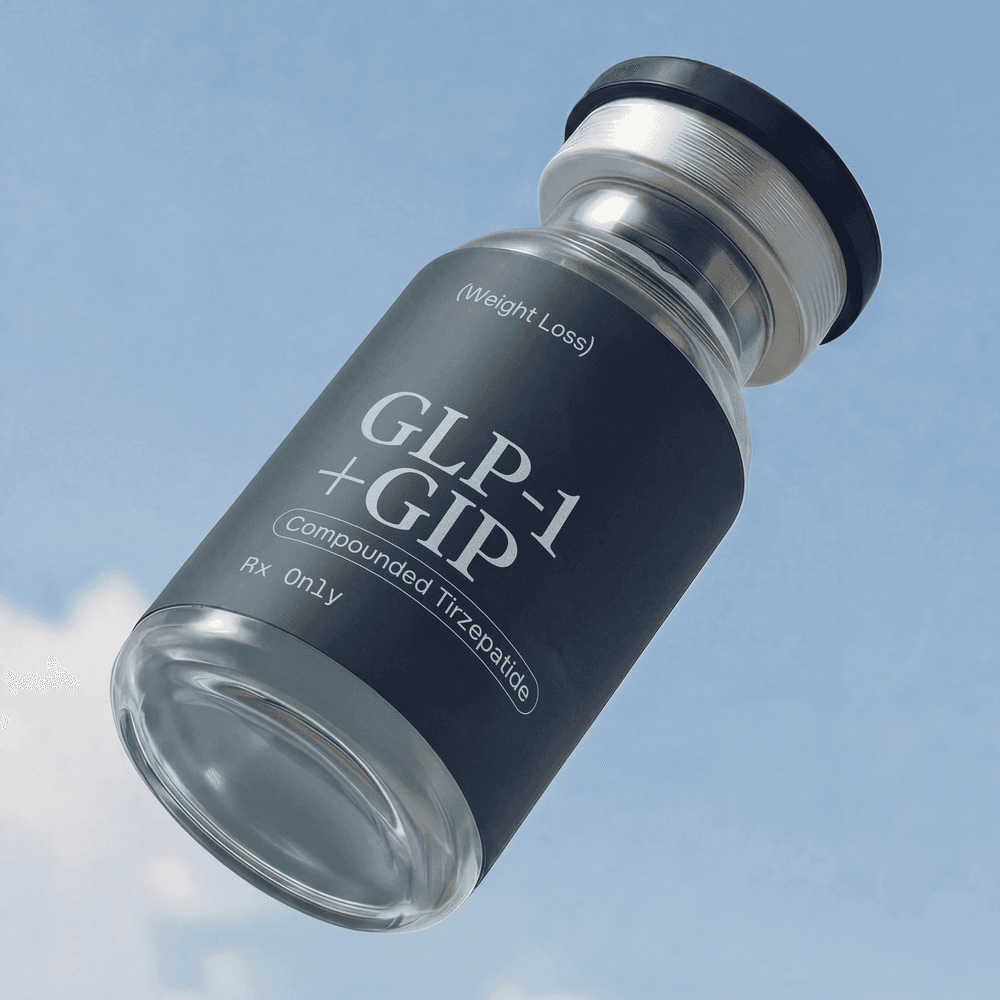
Tirzepatide is injected under the skin once a week, at any time of day, with or without meals. On the Zepbound label, dosing starts at 2.5 mg for 4 weeks, moves to 5 mg, and can rise in 2.5 mg steps at least 4 weeks apart, with maintenance doses of 5, 10 or 15 mg. Through Harbor, compounded tirzepatide, which is not FDA approved, ships as a multi-dose vial with U-100 insulin syringes, alcohol prep pads and a sharps container, not as a pen. Your clinician sets the dose, and the guide to injecting tirzepatide from a vial shows the routine.
Prescription & FDA status
Both need a prescription. The FDA approved Contrave in 2014. It approved tirzepatide for chronic weight management, as Zepbound, on November 8, 2023 (FDA), and the Zepbound label now also covers moderate to severe obstructive sleep apnea in adults with obesity.
Compounded tirzepatide sits in a different category. It is not FDA approved, and the FDA does not review compounded drugs for safety, effectiveness or quality before they are marketed (FDA). The agency determined the tirzepatide shortage was resolved on December 19, 2024. On April 1, 2026 it reminded compounders that, under section 503A, a drug is compounded for an individual patient based on a prescription (FDA).
Contrave cost vs compounded tirzepatide
Contrave cost depends on how you pay. The ADA's 2026 Standards of Care list a median average wholesale price of $750 for a month of Contrave at the maintenance dose, at July 2025 prices, and note that such figures do not account for coverage or discounts (ADA, 2026). The guide to Contrave pricing & insurance covers the coverage and savings routes. Brand tirzepatide lists higher: the same table puts a month of tirzepatide pens at a median average wholesale price of $1,304.
Harbor lists compounded tirzepatide, which is not FDA approved, at $119 a month. That one price covers medication, clinician care and check-ins, with no insurance required, and the product page describes it as flat as your dose goes up. One member, Fran da Silva, wrote in a May 6, 2026 Trustpilot review: "Their price plans are excellent with prices staying the same no matter what dosage you go up to." The Contrave figure above is a wholesale benchmark for the tablets alone, and many people pay less through insurance, savings cards or the manufacturer's self-pay program.
| Attribute | Tirzepatide shots | Contrave |
|---|---|---|
| Active ingredient | Tirzepatide | Naltrexone and bupropion |
| How it works | GIP and GLP-1 receptor agonist | Opioid antagonist plus an antidepressant |
| How you take it | Injection under the skin | Extended-release tablets by mouth |
| Doses a week at full dose | 1 injection Fewer doses | 28 tablets, two in the morning and two in the evening |
| Needle | Yes, a small injection | None No needle |
| Food rules | Any time of day, with or without meals No food rule | Not with a high-fat meal |
| Mean weight change, own trial | −20.9% at 72 weeks (Zepbound 15 mg, SURMOUNT-1) Larger | −5.4% at 56 weeks (COR-I) |
| Approved for long-term use | Yes, as Zepbound | Yes |
| FDA status | Approved as Zepbound in 2023. Compounded tirzepatide is not FDA approved | Approved in 2014 FDA approved |
| Monthly price | $119 through Harbor (compounded, not FDA approved), with clinician care and check-ins included Care included | $750 median wholesale price for a month at full dose (July 2025), before insurance, savings cards or the manufacturer's self-pay program |
Scroll the table sideways to see both columns →
Who should choose Contrave or tirzepatide for weight loss
Choosing Contrave or tirzepatide for weight loss starts with what each label covers. Both cover adults with obesity, or with overweight and at least one weight-related condition, alongside a reduced-calorie diet and more physical activity.
Harbor compounded tirzepatide is a weekly program for adults seeking medically supervised weight loss, typically those with a BMI of 27 or higher. It is not FDA approved. A board-certified physician reviews your health history, goals and prior treatment response before deciding whether it is appropriate. The program does not include Contrave.
Tirzepatide shots may suit you when:
- You want a medicine that acts on both GIP and GLP-1
- You would rather take one dose a week than tablets twice a day
- A seizure history, uncontrolled high blood pressure or chronic opioid use rules Contrave out
- You want medication, clinician care and check-ins in one flat price
Contrave may suit you when:
- Needles have kept you from starting treatment
- You want an FDA-approved tablet
- A personal or family history of medullary thyroid carcinoma or MEN 2 rules tirzepatide out
- Your insurance plan covers it
Eligibility comes first
A clinician will not prescribe Contrave with uncontrolled high blood pressure, a seizure disorder, bulimia or anorexia, chronic opioid use, another bupropion product or an MAOI in the past 14 days. Contrave also carries a boxed warning on suicidal thoughts and behaviors in young people taking antidepressants, and it is not approved for children. Tirzepatide is not prescribed to anyone with a personal or family history of medullary thyroid carcinoma or MEN 2. Both are stopped when a pregnancy is recognized. The full lists are on each label. For your own history, message your Harbor clinician.
Bottom line on Contrave weight loss vs a GLP-1
Contrave weight loss averaged 5.4% of body weight over 56 weeks in its main label trial. Tirzepatide, which acts on GIP as well as GLP-1, averaged 20.9% at the top Zepbound dose over 72 weeks in a separate trial. The tablet keeps two advantages: no needle and full FDA approval.
If Contrave has not reached the label's 5% mark after 12 weeks at the full dose, or your history rules it out, a GLP-1 medicine is a reasonable next conversation with a clinician. Other routes are in the guide to Contrave alternatives.
Harbor's tirzepatide program is designed to end. A board-certified physician confirms it is appropriate before anything ships, one flat price covers the medication and clinician care, and the program's stages run through a clinician-guided taper when you reach your goal and registered-dietitian aftercare. Compounded tirzepatide is not FDA approved. The online quiz starts the physician review.
Medical disclaimer
This article is for general education and is not medical advice. It is not a substitute for evaluation, diagnosis, or treatment by a licensed clinician. Talk with a qualified clinician about your individual situation.
Compounded medications
Harbor is a technology platform. Medical evaluations are conducted by independent, licensed healthcare providers who determine whether treatment is appropriate. Providers may prescribe FDA-approved or compounded medications based on clinical judgment and patient needs. Compounded medications are not FDA approved and are not reviewed by the FDA for safety or effectiveness.
Frequently asked questions
Partly. Contrave vs Ozempic is also a tablet against a weekly injection, but Ozempic is semaglutide, a GLP-1 receptor agonist approved for type 2 diabetes and not for weight management ( Ozempic prescribing information ). Semaglutide's weight-management brand is Wegovy. Tirzepatide acts on a second receptor, GIP, as well as GLP-1.
Nearly. Mounjaro and Zepbound both contain tirzepatide, but Mounjaro is approved for type 2 diabetes, not weight management ( Mounjaro prescribing information ). Contrave vs Mounjaro therefore sets a weight-management tablet against a diabetes injection. The label-to-label match for weight is Zepbound.
Neither label describes using the two together. The Zepbound label advises against combining tirzepatide with another tirzepatide product or with any GLP-1 receptor agonist, and Contrave is neither. The Contrave label's own limits concern other naltrexone and bupropion products. That leaves the decision to a prescriber. The guide to Contrave with a GLP-1 covers what is known.
Sources
- DailyMed. Contrave (naltrexone hydrochloride and bupropion hydrochloride) extended-release tablets, prescribing information (label version dated November 10, 2025).
- DailyMed. Zepbound (tirzepatide) injection, prescribing information (label version dated August 28, 2026).
- MedlinePlus. Naltrexone and Bupropion. National Library of Medicine (last revised April 15, 2019).
- McGowan B, Ciudin A, et al. A systematic review and meta-analysis of the efficacy and safety of pharmacological treatments for obesity in adults. Nat Med. 2025;31(10):3317-3329.
- American Diabetes Association. 8. Obesity and Weight Management for the Prevention and Treatment of Diabetes: Standards of Care in Diabetes 2026, Table 8.2.
- U.S. Food and Drug Administration. FDA approves new medication for chronic weight management (November 8, 2023).
- U.S. Food and Drug Administration. FDA's concerns with unapproved GLP-1 drugs used for weight loss (content current as of October 1, 2026).
- U.S. Food and Drug Administration. FDA clarifies policies for compounders as national GLP-1 supply begins to stabilize (content current as of April 1, 2026).
- DailyMed. Ozempic (semaglutide) injection, prescribing information (label version dated June 1, 2026).
- DailyMed. Wegovy (semaglutide) injection, prescribing information (label version dated June 18, 2026).
- DailyMed. Mounjaro (tirzepatide) injection, prescribing information (label version dated August 27, 2026).
Keep reading
All 199 articles →- Tirzepatide
7 Mounjaro & Zepbound Alternatives, Including Compounded Tirzepatide Shots
Seven options when Mounjaro or Zepbound is out of reach, led by compounded tirzepatide, which is not FDA approved, then Zepbound vials, Wegovy, Foundayo and three more. What each is and how a clinician chooses.
By Harbor Health Team
- Tirzepatide
6 Signs Your Tirzepatide Shots Are Working & How Long It Takes
Six signs tirzepatide is working, what trials of the brand drug measured for each and when, where the evidence is thin, and what your clinician checks.
By Harbor Health Team
- Tirzepatide
Mounjaro vs Trulicity for weight loss & A1C
Mounjaro and Trulicity are weekly type 2 diabetes shots. SURPASS-CVOT compared them directly for about four years. Here is what it found for A1C, weight and heart events.
By Harbor Health Team

