
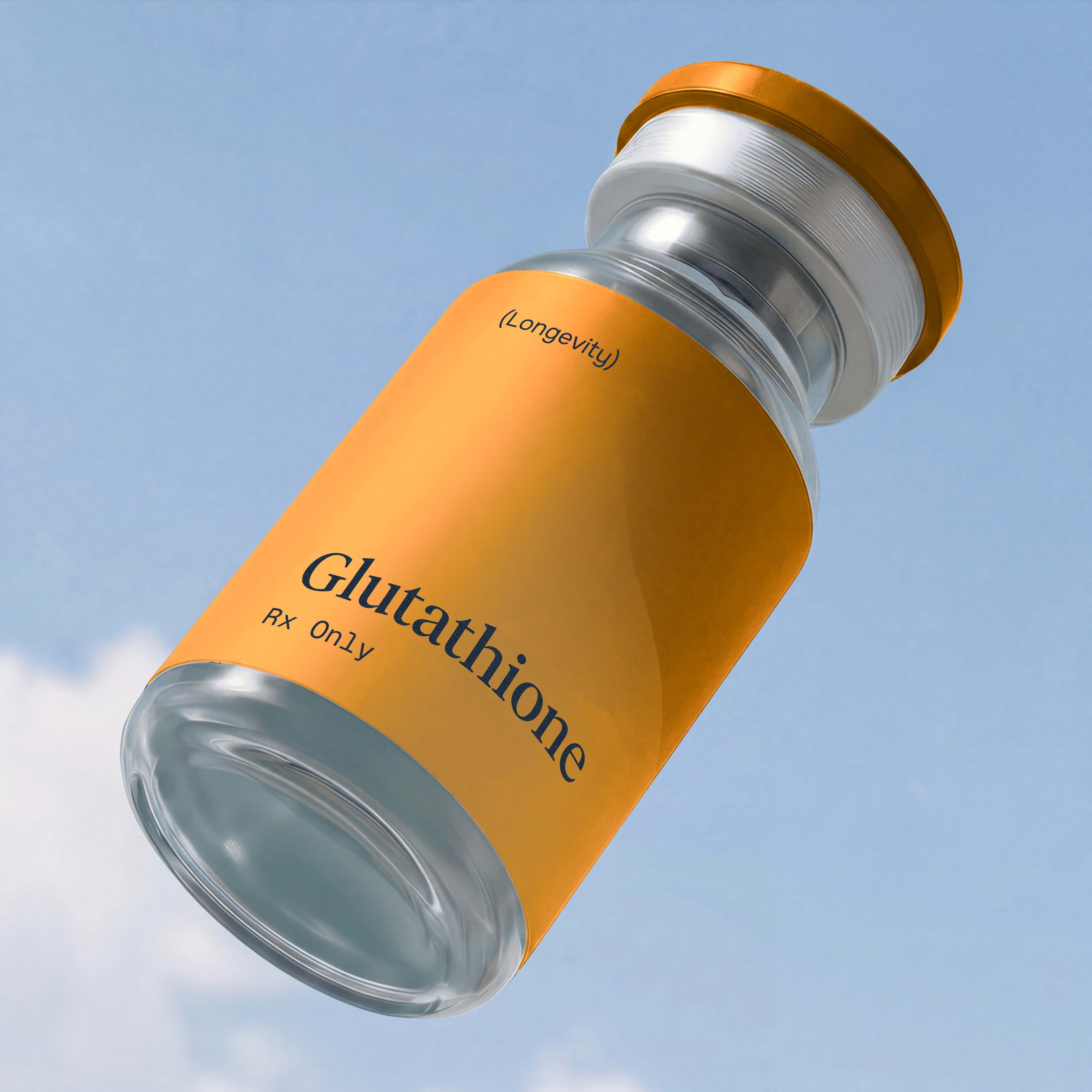
How to inject glutathione step by step
Learning how to inject glutathione comes in two parts. Giving the shot is standard technique, the same one MedlinePlus teaches for any medicine drawn from a vial. The dose is the harder part, because there is no established glutathione injection dosage to look up. The CDC states that there are no FDA-approved glutathione products in the United States, so every injectable form is compounded and there is no FDA label. The FDA also lists glutathione among the bulk substances it is still evaluating for compounding.
Published studies have used the doses below. They are study doses, not recommendations, and most went into a vein in a clinic.
| Study | Route | Study dose | Who took part |
|---|---|---|---|
| Blood-level study, 1991 | IV infusion | 2 g per square meter of body surface, once | 10 healthy volunteers |
| Infertility trial, 1993 | Into a muscle | 600 mg every other day for 2 months | 20 men with infertility |
| Chemotherapy trial, 1995 | IV, then into a muscle | 1.5 g per square meter by IV before cisplatin, then 600 mg into a muscle on days 2 to 5 | 50 patients with advanced gastric cancer, assigned to glutathione or placebo |
| Parkinson's pilot, 2009 | IV | 1,400 mg three times a week for 4 weeks | 21 adults with Parkinson's disease, 11 of them given glutathione |
Study doses only, from Aebi 1991, Lenzi 1993, Cascinu 1995 and Hauser 2009. None is a dose for you. Your clinician sets your dose.
Three of the four studies enrolled people with a specific medical condition, and none gave glutathione under the skin. A PubMed search on November 13, 2026 for clinical trials of subcutaneous glutathione returned none that tested glutathione itself by that route. So the steps below help you follow a prescription well. They do not help you write one.
Step 1: Confirm your glutathione injection dosage with your clinician
Your dose, your route and your schedule come from your prescription. Before every draw, read the vial label for your name, the medication, the strength in milligrams per milliliter and the date. MedlinePlus also says to look at the liquid for a change in color, cloudiness or small floating pieces. If anything does not match, message your clinician before you draw. Your prescription may be written in milligrams, while your syringe is marked in milliliters or units. The strength on the label connects them: milliliters to draw = dose in mg / strength in mg per mL. On a U-100 syringe, 100 units equal 1 milliliter, so units = milliliters x 100. Ask your clinician or pharmacist to write the amount in the same marking your syringe uses. Instructions can differ from one vial to the next. In a September 19, 2026 Trustpilot review, Harbor member Sarah Cativo wrote, "I didn't realize until tonight that each bottle had different instructions and I was confused about the dosage." She asked the support chat that night instead of guessing.
The FDA has said confusion between milliliters, milligrams and units may have contributed to dosing errors with compounded semaglutide vials. If your numbers do not agree, stop and ask.
Step 2: Pick an injection site
For a shot under the skin, MedlinePlus names three areas. The belly works below the ribs and above the hip bones, at least 2 inches from the belly button. The outer side of the upper thighs is the second. The side or back of the upper arms is the third, at least 3 inches below the shoulder and 3 inches above the elbow. Choose skin that is healthy, with no redness, swelling, scarring or bruising. Move each new shot at least 1 inch from the last one.
MedlinePlus says changing sites keeps each injection site healthy and helps your body absorb the medicine well.
Step 3: Clean the vial & draw the dose
Wash your hands with soap and running water for at least 1 minute, then dry them with a clean paper towel. Wipe the rubber top of the vial with an alcohol pad. If this is the first draw from the vial, write the date on it. Pull the plunger back to your dose line to fill the syringe with air. Push the needle through the rubber top and press that air into the vial. Turn the vial upside down, keep the needle tip in the liquid and pull the plunger back to your line. Tap any bubbles to the top, push them back into the vial and check the line again. Use a new needle and syringe for every dose. The CDC's rule for safe injections is one needle, one syringe, only one time, and it applies each time a multi-dose vial is entered. If you are prescribed two longevity medications, each one gets its own syringe, as the guide on how to take NAD+ & glutathione together explains.
Air pushed in first keeps a vacuum from forming, MedlinePlus explains, which makes the medicine easier to draw out.
Step 4: Give the intramuscular or subcutaneous shot
The route is part of your prescription, not a choice made on the day. Harbor's glutathione program uses the subcutaneous route, a small injection under the skin that you give yourself at home. To give a subcutaneous shot, clean the site with an alcohol pad, starting where the needle will go and wiping outward in a circle, then let it air dry. Pinch about an inch of skin and fatty tissue, not the muscle. Insert the needle all the way at a 90-degree angle, or 45 degrees if there is not much fatty tissue. Release the skin, push the plunger in, then pull the needle out. Press clean gauze on the spot for a few seconds. Giving a glutathione intramuscular injection is a different technique. MedlinePlus describes a needle long enough to reach deep into the muscle, inserted straight in at 90 degrees at a site such as the middle of the thigh, and it advises showing your health care provider how you find the spot first. Use that route only if your prescription names it and your clinician has taught you.
The route changes the needle, the site and the angle, so it is never swapped at home.
Step 5: Log each dose
Put the needle and syringe straight into your sharps container without recapping. The FDA recommends following your community's disposal rules once the container is about three-quarters full. Then write down the date, the amount you drew and the site you used. Bring the log to each check-in, where your clinician reviews how you are responding and adjusts your program as needed. Do not change the dose or the schedule on your own between check-ins.
A log tells you which site comes next and gives your clinician a record to read.
Glutathione shot mistakes to avoid
Most glutathione shot mistakes come from borrowing: a dose from a study, a number from another route, a syringe used once already. Rule these out early.
- Copying a study dose. The doses in the table went to trial patients, most of them by IV. Only your prescription applies to you.
- Treating an IV dose as a shot dose. The 1,400 mg and per-square-meter figures were given into a vein in a clinic. They say nothing about a shot at home.
- Mixing up milligrams, milliliters and units. Check the strength on the label against your written dose every time.
- Reusing a needle or syringe. The CDC says reuse can contaminate the medicine left in a multi-dose vial.
- Changing the route. A dose prescribed for under the skin is not given into a muscle.
- Doubling the next shot after a missed one. Ask your clinician what to do instead.
One more check belongs before the first dose. On August 27, 2026, the FDA reminded compounders that glutathione labeled dietary supplement grade is not an appropriate ingredient for injectable drugs. The reminder followed reports of adverse events in at least 30 patients who received IV glutathione that several pharmacies had compounded from one lot of that grade.
A CDC notice updated September 11, 2026 added that every injection linked to its investigation so far was compounded with glutathione ingredients intended for dietary supplements, and that patients had received it by IV, under the skin or into a muscle. The CDC suggests asking your provider whether your product was made with ingredients intended for injection, who compounded it and whether that pharmacy is licensed. Those are fair questions for any prescriber, including your Harbor clinician through the patient portal.
Eligibility comes first
Glutathione has no FDA label, so there is no labeled list of who should not use it. Before prescribing, a clinician reviews your health history and every medication and supplement you take. If you think you injected more than you were prescribed, message your clinician right away, and call 911 in an emergency.
Injectable glutathione with Harbor
Harbor's injectable glutathione program starts with a 90-second online quiz. A board-certified physician licensed in your state reviews your health history and goals before deciding whether treatment is appropriate. If a clinician does not approve treatment, the payment is refunded in full. If one does, your medication is compounded by a licensed U.S. pharmacy and ships free. Compounded glutathione is not FDA approved.
From there, glutathione shots are a self-administered subcutaneous injection at home, on a schedule your clinician sets for you. Licensed clinicians are available 24/7 for medical questions through the patient portal, and regular check-ins let your clinician adjust the program as needed.
The program starts from $89, a flat monthly price with no increases as your dose changes. Medication, clinician care and check-ins sit in that one price, and no insurance is required. The program aims to support your glutathione levels under the guidance of a licensed clinician rather than promising a specific result. The online quiz starts the physician review.
Medical disclaimer
This article is for general education and is not medical advice. It is not a substitute for evaluation, diagnosis, or treatment by a licensed clinician. Talk with a qualified clinician about your individual situation.
Compounded medications
Harbor is a technology platform. Medical evaluations are conducted by independent, licensed healthcare providers who determine whether treatment is appropriate. Providers may prescribe FDA-approved or compounded medications based on clinical judgment and patient needs. Compounded medications are not FDA approved and are not reviewed by the FDA for safety or effectiveness.
Frequently asked questions
As often as your clinician prescribes, because no trial has set a standard schedule. Look up how often glutathione injection studies dosed and the answers vary: every other day into a muscle for 2 months in a 1993 trial, and three times a week by IV for 4 weeks in a 2009 pilot. Neither tested a long-term routine of shots at home. Keep the days fixed once your schedule is set.
MedlinePlus lists three areas for a shot under the skin: the belly at least 2 inches from the belly button, the outer upper thighs and the side or back of the upper arms. No FDA-approved glutathione label exists to name one best place to inject glutathione, so pick a healthy site you can reach and move at least 1 inch from the last one. An intramuscular prescription uses different sites, which your clinician should show you.
Mostly unproven so far. Glutathione is the body's primary antioxidant, and none of the injection studies cited here tested wellness outcomes in healthy adults. They measured results in specific patient groups, and the 2009 Parkinson's pilot found no significant difference from placebo on its rating scale. Glutathione shots are prescribed as antioxidant support under clinician guidance, not as a promised result.
Sources
- Adverse events linked to injectable glutathione compounded with dietary supplement grade ingredient: current situation. Centers for Disease Control and Prevention, updated September 11, 2026.
- FDA reminds compounders not to use dietary supplement grade glutathione for injectables. U.S. Food and Drug Administration, August 27, 2026.
- Bulk drug substances nominated for use in compounding under section 503A (categories 1, 2 and 3). U.S. Food and Drug Administration, updated May 14, 2026.
- Compounding and the FDA: questions and answers. U.S. Food and Drug Administration.
- Aebi S, Assereto R, Lauterburg BH. High-dose intravenous glutathione in man. Pharmacokinetics and effects on cyst(e)ine in plasma and urine. Eur J Clin Invest. 1991;21(1):103-110.
- Lenzi A, Culasso F, Gandini L, Lombardo F, Dondero F. Placebo-controlled, double-blind, cross-over trial of glutathione therapy in male infertility. Hum Reprod. 1993;8(10):1657-1662.
- Cascinu S, Cordella L, Del Ferro E, Fronzoni M, Catalano G. Neuroprotective effect of reduced glutathione on cisplatin-based chemotherapy in advanced gastric cancer: a randomized double-blind placebo-controlled trial. J Clin Oncol. 1995;13(1):26-32.
- Hauser RA, Lyons KE, McClain T, Carter S, Perlmutter D. Randomized, double-blind, pilot evaluation of intravenous glutathione in Parkinson's disease. Mov Disord. 2009;24(7):979-983.
- Subcutaneous (SQ) injections. MedlinePlus Medical Encyclopedia, reviewed October 19, 2025.
- Drawing medicine out of a vial. MedlinePlus Medical Encyclopedia, reviewed January 14, 2026.
- Giving an IM (intramuscular) injection. MedlinePlus Medical Encyclopedia, reviewed July 22, 2026.
- Preventing unsafe injection practices. Centers for Disease Control and Prevention, March 26, 2024.
- Safe injection practices and your health. Centers for Disease Control and Prevention, March 26, 2024.
- Best way to get rid of used needles and other sharps. U.S. Food and Drug Administration, content current as of August 10, 2023.
- FDA alerts health care providers, compounders and patients of dosing errors associated with compounded injectable semaglutide products. U.S. Food and Drug Administration, July 26, 2024.
Keep reading
All 199 articles →- Longevity
NAD+ vs NADH: What Each Form Does & Which One Injections Use
NAD+ and NADH are one coenzyme in two states. NAD+ is the empty carrier, NADH the loaded one. Here is what each does, what the evidence shows and why prescription injections use NAD+.
By Harbor Health Team
- Longevity
Sermorelin vs NAD+ Shots, Two Longevity Injections Compared
One is a peptide that signals a gland. The other is a coenzyme your cells already use. Both are prescription injections with a physician's review. Here is what each has shown, and where a clinician fits.
By Harbor Health Team
- Longevity
Sermorelin vs BPC-157: What Each Peptide Does & Which One Is Prescribed
Sermorelin is a prescription peptide with an FDA approval history. BPC‑157 has never been approved, and FDA and HHS both acted on it in 2026. Here is what each does and which one is prescribed.
By Harbor Health Team

