


Sermorelin vs NAD+ verdict
The sermorelin vs NAD+ question is less a contest than a sorting exercise. Sermorelin acts on one gland, the pituitary, and its studies measured growth hormone. NAD+ is a coenzyme that all tissues make from niacin, and its studies measured NAD-related markers in blood.
Both are offered through Harbor as prescription programs. In each one, a board-certified physician reviews your health history and goals before anything ships, your clinician sets the schedule and reviews how you are responding, and you have 24/7 access to licensed clinicians for medical questions. Each is offered as support under clinician guidance rather than a promise of a specific result.
Both are compounded drugs and are not FDA approved. Which one a clinician considers depends on your goals and your history, so the useful comparison is what each one is, what it has shown in people and who it tends to suit.
Sermorelin shots vs NAD+ shots side by side
Sermorelin shots and NAD shots share a format, a small injection under the skin at home, and little else. Here is how they differ on mechanism, evidence, routine and regulatory status.
What each one does in the body
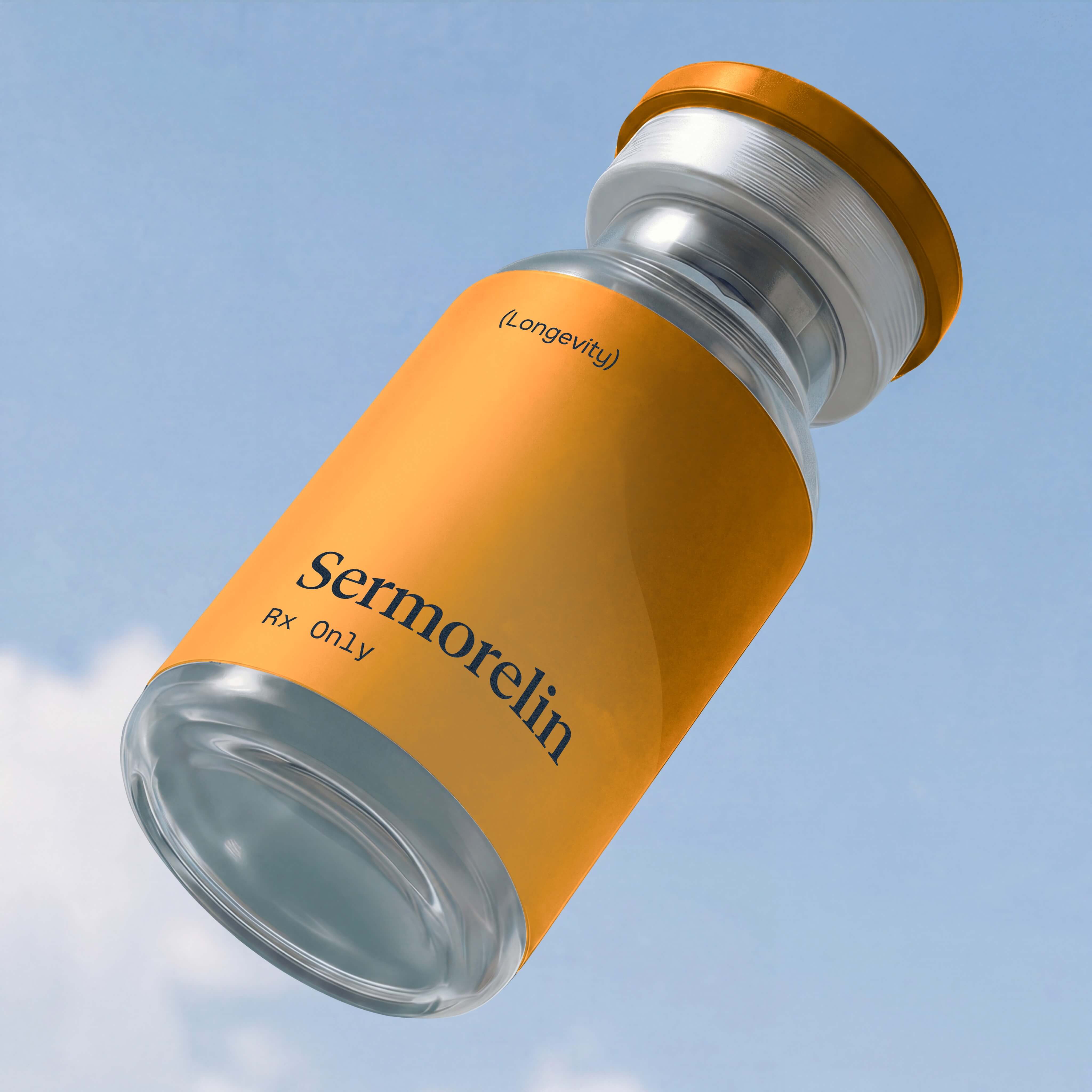
Sermorelin does not add growth hormone. It prompts the pituitary to secrete your own, which is how the product page describes it too: rather than introducing growth hormone directly, it signals the pituitary gland to produce and release it in the body's own rhythm. A 2006 editorial in Clinical Interventions in Aging, listed here as the sermorelin clinical review in PMC, argues that this keeps release under the body's own feedback, so it is episodic and not constant. That paper is one author's case for the approach, not a trial.
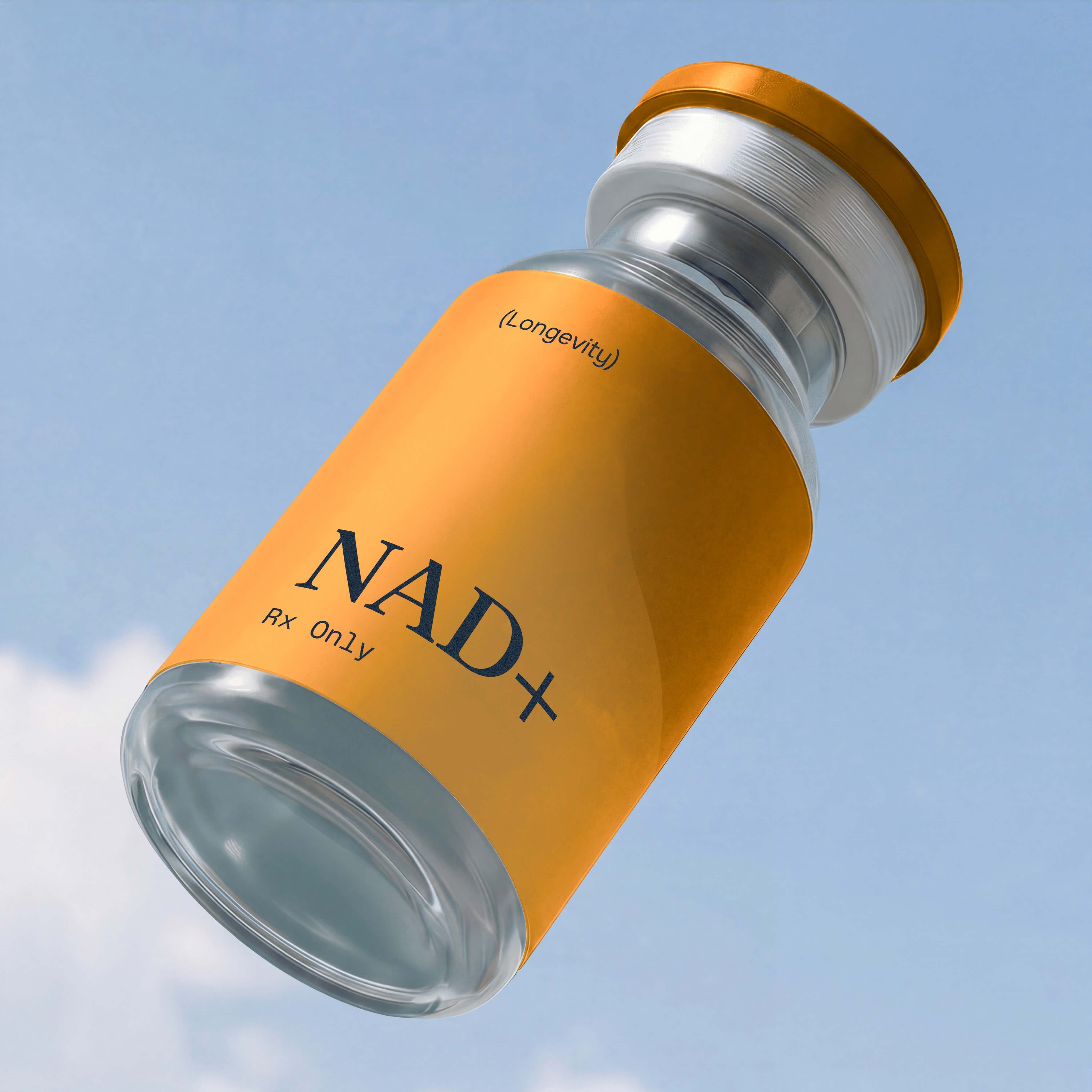
NAD+ works at a different level. NAD is required in most of the metabolic reactions in cells where substances are oxidized or reduced, and it is primarily involved in the reactions that transfer the potential energy in carbohydrates, fats and proteins to ATP, according to the NIH Office of Dietary Supplements. A 2021 review adds that NAD+ is also a cofactor for enzymes involved in DNA repair and immune cell function (Nat Rev Mol Cell Biol, 2021).
One is a signal to a gland. The other is a working part of cell chemistry. A role in the body is not the same as a result from taking more, and that second claim needs trials.
What the evidence supports
Most claims about sermorelin benefits trace back to a few small studies from the 1990s. In one, 10 healthy men with a mean age of 68 injected GHRH(1-29) twice a day for 14 days, and at the higher dose their 24-hour growth hormone and IGF-I no longer differed from those of young men (J Clin Endocrinol Metab, 1992). In another, 11 men aged 64 to 76 injected it nightly for 6 weeks. Nighttime growth hormone release rose and two of six strength measures improved, while IGF-I, weight and body composition on DEXA did not change (Metabolism, 1997).
A 16-week trial in 19 adults aged 55 to 71 used a closely related GHRH analog, not sermorelin itself. Lean body mass rose in men only, and sleep quality was unaffected in both sexes (J Clin Endocrinol Metab, 1997). Small, short and decades old. That is the honest size of the record.
For NAD+, the human work is newer and mostly about pills. A 2026 systematic review found 33 human intervention studies, in which the oral precursors NR and NMN consistently raised NAD-related markers while effects on function were mixed and often null. It found no eligible outcomes trials of intravenous or intramuscular NAD+ itself for anti-aging or wellness (Ageing Res Rev, 2026). A 2019 pilot that infused NAD+ into a vein for 6 hours saw no change in plasma NAD+ until after the second hour (Front Aging Neurosci, 2019).
Where the decline shows up depends on what is measured. The 2021 review describes a gradual decline in tissue and cellular NAD+ with age in rodents and humans, while a 2026 analysis of seven human cohorts found whole-blood NAD+ stable with age and questioned blood levels as a marker of aging (Nat Metab, 2026). Neither finding is a promised result, which is why NAD+ is offered as support under clinician guidance.
Injection routine & schedule
In practice the two routines look alike. Each is a self-administered subcutaneous injection at home, on a schedule your clinician sets for you. No FDA-approved NAD+ injections exist and the approved sermorelin products are discontinued, so neither has a current label to set a dose.
The studies above show how varied schedules have been: twice a day in one sermorelin study and nightly in another. Those are study schedules, not instructions. For the practical side, see the guide to the NAD+ shots dosing schedule and the program page on how to take sermorelin.
FDA status & how each is prescribed
Sermorelin has an FDA history. Geref (sermorelin acetate) was approved on December 28, 1990 for evaluating the pituitary's ability to secrete growth hormone, and on September 26, 1997 for idiopathic growth hormone deficiency in children with growth failure. The maker discontinued it in 2008, FDA withdrew the approvals effective June 18, 2009, and in 2013 FDA determined that Geref was not withdrawn from sale for reasons of safety or effectiveness (Federal Register, 2013). Drugs@FDA lists only those discontinued products, so sermorelin prescribed today is compounded and is not FDA approved.
NAD+ has no such history. A search of Drugs@FDA on November 16, 2026 returned no approved NAD+ product, and NAD sits in Category 1 of FDA's list of bulk substances nominated for compounding, the group still under evaluation (FDA 503A categories). Compounded drugs are not FDA approved, which means FDA does not verify their safety, effectiveness or quality before they are marketed (FDA).
Both therefore reach you the same way, through a prescription written for you by a licensed clinician. If either one is not the right fit, it is not prescribed.
| Attribute | Sermorelin | NAD+ |
|---|---|---|
| What it is | A 29 amino acid peptide, an analogue of growth hormone-releasing hormone | A coenzyme made from niacin (vitamin B3), not a peptide |
| Where it acts | The pituitary gland, which secretes your own growth hormone | Inside cells, in reactions that transfer energy from food to ATP |
| What human studies measured | Growth hormone and IGF-I, in small studies of older adults | NAD-related blood markers, mostly with oral precursors |
| How it is taken | Self-injected under the skin at home, on a schedule your clinician sets | Self-injected under the skin at home, on a schedule your clinician sets |
| FDA status | Compounded, not FDA approved. Brand Geref was approved in 1990 and 1997, and those approvals were withdrawn in 2009 | Compounded, not FDA approved. No NAD+ product is listed in Drugs@FDA |
| Prescription needed | Yes | Yes |
| Through Harbor | From $99 /mo, with medication, clinician care & check-ins | From $99 /mo, with medication, clinician care & check-ins |
Scroll the table sideways to see both columns →
Who should choose sermorelin injections or NAD injections
Start with the goal you would describe to a clinician. Sermorelin injections and NAD injections are built for different conversations, and each program page lists who it tends to suit.
Sermorelin may be the one to ask about when:
- You want a medically guided approach to recovery and vitality
- You are interested in supporting your body's own growth hormone
- You want clinician support and monitoring, not just a prescription
NAD+ may be the one to ask about when:
- You want a medically guided approach to energy and healthy aging
- You are interested in supporting your body at the cellular level
- You are comfortable with a simple at-home injection routine
Neither list is a diagnosis. In both programs the physician decides, and after you start, your clinician reviews how you are responding and adjusts the program as needed. That access matters to members. In an August 20, 2026 Trustpilot review, Harbor GLP-1 member Leah Nadel wrote that she was "happy that a medical provider is available to answer any questions about my medical health that might interfere with the medication."
Put your whole history on the intake
A physician reviews your health history and goals before either program is prescribed, so list every condition, medicine and supplement on your intake. For any question about sermorelin or NAD+ once you start, message your Harbor clinician.
Bottom line on sermorelin & NAD+ with Harbor
Sermorelin shots and NAD+ shots are two different tools, and neither replaces the other. The Harbor sermorelin program is built for adults seeking clinician-guided support for recovery, body composition, sleep and everyday vitality. The Harbor NAD+ program is built for adults seeking clinician-guided support for energy, recovery and healthy aging.
Each comes as one flat monthly price with medication, clinician care and check-ins included, no insurance required, and no long-term contract. Both are compounded and not FDA approved, and each is offered as support under clinician guidance rather than a promise of a specific result.
If one of them matches what you are looking for, the online quiz takes about 90 seconds and is the first step toward a physician review. The decision after that is the physician's.
Medical disclaimer
This article is for general education and is not medical advice. It is not a substitute for evaluation, diagnosis, or treatment by a licensed clinician. Talk with a qualified clinician about your individual situation.
Compounded medications
Harbor is a technology platform. Medical evaluations are conducted by independent, licensed healthcare providers who determine whether treatment is appropriate. Compounded medications are not FDA approved and are not reviewed by the FDA for safety or effectiveness.
Frequently asked questions
That is a clinician's decision, not a general rule. On the NAD+ vs sermorelin question the two act in different ways, one on the pituitary and one inside cells, but a PubMed search on November 16, 2026 found no human study of the two used together. If you are interested in both, say so on your intake so the physician reviewing it can weigh your history, goals and current medicines before prescribing either.
It is a peptide, and more precisely a synthetic analogue of a hormone. Sermorelin is made of 29 amino acids and is described as the shortest synthetic peptide with the full biological activity of growth hormone-releasing hormone ( BioDrugs, 1999 ). It is not growth hormone. It stimulates the pituitary to secrete growth hormone of its own.
As injections, yes. Both programs are prescription-only, and under federal law a pharmacy compounding under section 503A must do so based on a valid patient-specific prescription ( FDA ). A physician licensed in your state reviews your intake first. The NAD+ precursors NR and NMN that are taken by mouth are a different product from an NAD+ injection.
Sources
- Prakash A, Goa KL. Sermorelin: a review of its use in the diagnosis and treatment of children with idiopathic growth hormone deficiency. BioDrugs. 1999;12(2):139-57.
- Walker RF. Sermorelin: a better approach to management of adult-onset growth hormone insufficiency? Clin Interv Aging. 2006;1(4):307-8 (editorial).
- Corpas E, et al. Growth hormone (GH)-releasing hormone-(1-29) twice daily reverses the decreased GH and insulin-like growth factor-I levels in old men. J Clin Endocrinol Metab. 1992;75(2):530-5.
- Vittone J, et al. Effects of single nightly injections of growth hormone-releasing hormone (GHRH 1-29) in healthy elderly men. Metabolism. 1997;46(1):89-96.
- Khorram O, Laughlin GA, Yen SS. Endocrine and metabolic effects of long-term administration of [Nle27]growth hormone-releasing hormone-(1-29)-NH2 in age-advanced men and women. J Clin Endocrinol Metab. 1997;82(5):1472-9.
- NIH Office of Dietary Supplements. Niacin fact sheet for health professionals (updated November 18, 2022).
- Covarrubias AJ, et al. NAD+ metabolism and its roles in cellular processes during ageing. Nat Rev Mol Cell Biol. 2021;22(2):119-141.
- Gallagher C, Emmanuel OO. NAD+ supplementation for anti-aging and wellness: a PRISMA-guided systematic review of preclinical and clinical evidence. Ageing Res Rev. 2026;116:103057.
- Grant R, et al. A pilot study investigating changes in the human plasma and urine NAD+ metabolome during a 6 hour intravenous infusion of NAD. Front Aging Neurosci. 2019;11:257.
- Tretowicz MM, et al. Human whole-blood NAD+ levels do not vary with age or lifestyle interventions. Nat Metab. 2026;8(6):1282-1290.
- U.S. Food and Drug Administration. Determination that GEREF (sermorelin acetate) injection was not withdrawn from sale for reasons of safety or effectiveness. 78 FR 14095, March 4, 2013.
- U.S. Food and Drug Administration. Drugs@FDA: GEREF (sermorelin acetate), NDA 020443, discontinued.
- U.S. Food and Drug Administration. Drugs@FDA: FDA-approved drugs (searched November 16, 2026).
- U.S. Food and Drug Administration. Bulk drug substances nominated for use in compounding under section 503A (updated May 14, 2026).
- U.S. Food and Drug Administration. Compounding and the FDA: questions and answers (content current as of September 16, 2025).
- U.S. Food and Drug Administration. Human drug compounding laws (content current as of December 17, 2024).
Keep reading
All 199 articles →- Longevity
NAD+ vs NADH: What Each Form Does & Which One Injections Use
NAD+ and NADH are one coenzyme in two states. NAD+ is the empty carrier, NADH the loaded one. Here is what each does, what the evidence shows and why prescription injections use NAD+.
By Harbor Health Team
- Longevity
Sermorelin vs BPC-157: What Each Peptide Does & Which One Is Prescribed
Sermorelin is a prescription peptide with an FDA approval history. BPC‑157 has never been approved, and FDA and HHS both acted on it in 2026. Here is what each does and which one is prescribed.
By Harbor Health Team
- Longevity
8 Sermorelin Benefits & What the Evidence Actually Supports
Sermorelin benefits are claimed widely and tested rarely. Here are eight, each graded by the human study behind it, who was in that study and where the evidence stops.
By Harbor Health Team

