
Peptides for energy at a glance
A peptide is a short chain of amino acids. Five of the six compounds below fit that definition, and the sixth, NAD+, is a coenzyme that is often sold beside them. Three of the six are offered through Harbor, where a board-certified physician reviews your health history before anything ships, and each program offers support under clinician guidance rather than a promised result. For the basics of the coenzyme, start with what NAD+ therapy is.
Some searches pair two goals, peptides for energy and weight loss. None of the six here is a weight-loss treatment. Among the peptide medicines studied for weight are GLP-1 drugs such as semaglutide and tirzepatide, and their brand labels, Wegovy and Zepbound, describe a peptide backbone. Compounded versions of both are offered as separate weight-loss programs, and compounded semaglutide and tirzepatide are not FDA approved.
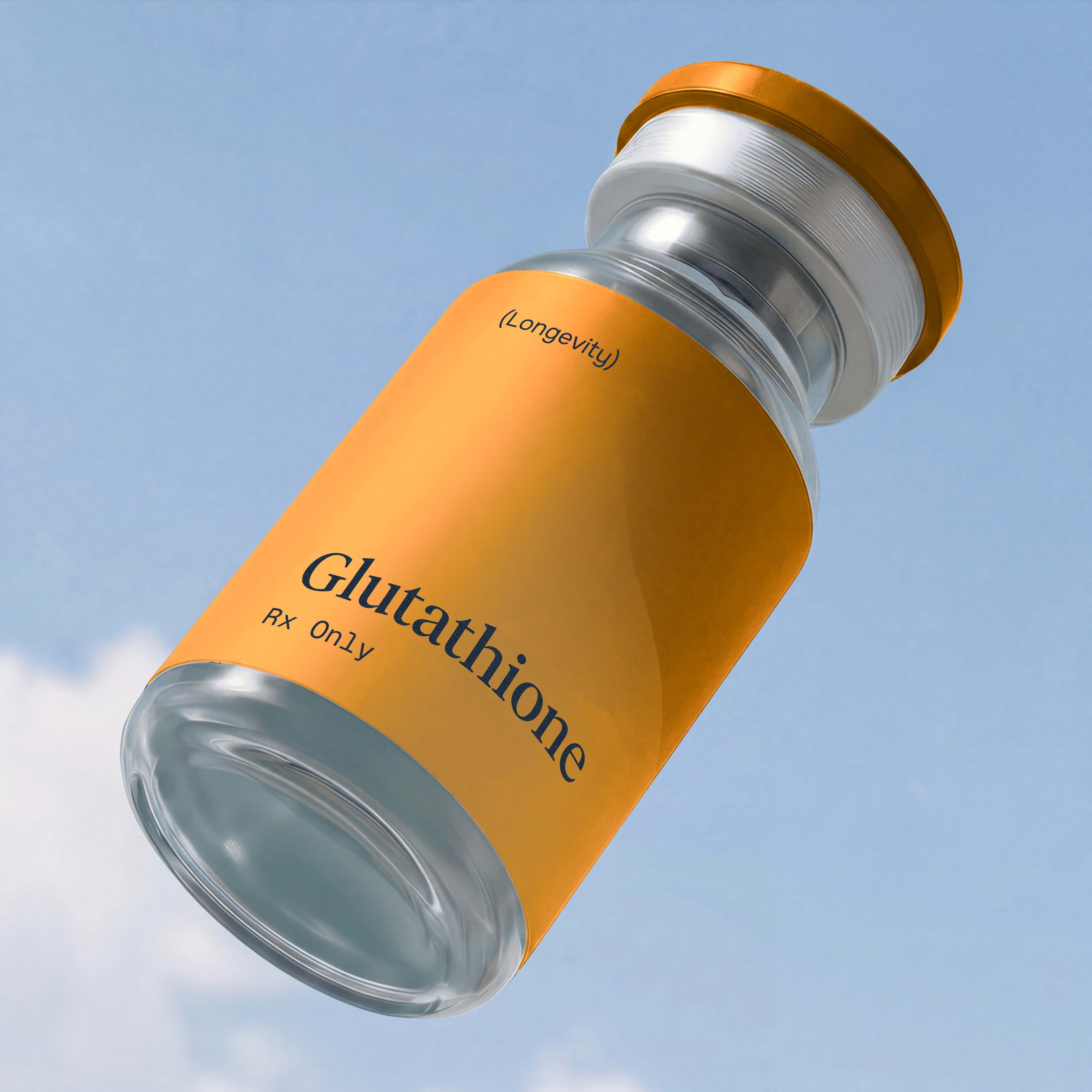
Glutathione for energy needs the same honesty. Glutathione is an antioxidant, and a PubMed search on November 19, 2026 found no randomized trial of injected glutathione that measured energy or fatigue.
| Compound | What it is | Human evidence on energy | Prescription option |
|---|---|---|---|
| NAD+ | Coenzyme, not a peptide | No outcome trial of NAD+ shots | Yes, compounded |
| Sermorelin | 29 amino acid GHRH peptide | Small, older hormone and sleep studies | Yes, compounded |
| Glutathione | Antioxidant tripeptide | No energy trial found | Yes, compounded |
| Carnosine | Dipeptide in meat and muscle | Indirect, through beta-alanine exercise trials | None |
| MOTS-c | Mitochondrial peptide | Mouse studies, one human trial recruiting | None |
| Humanin | Mitochondrial peptide | Lab and blood-level studies only | None |
Compounded means not FDA approved. From Drugs@FDA, ClinicalTrials.gov and PubMed searches on November 19, 2026, and the studies named in each entry.
Best peptides for energy & how each one works
Naming the best peptides for energy is harder than most lists admit, because none of these six has a trial showing more energy in healthy adults. They are ordered by how close each one sits to a prescription and a human study: the three prescription options first, then a food compound, then two research peptides.
Each entry says what the compound is, what its human studies measured and where that evidence stops. Claims about peptides for energy usually skip that last part. Only the first three are prescribed through the programs linked in this article.

NAD+, the cellular energy coenzyme
Coenzyme, not a peptide
NAD+ (nicotinamide adenine dinucleotide) is a coenzyme for redox reactions, which a 2021 review in Nature Reviews Molecular Cell Biology calls central to energy metabolism. It is built from two nucleotides and contains no amino acids, so it is not a peptide. Its job inside cells is clear. What extra NAD+ does for how people feel is not.
Where it wins
What it costs you
The energy coenzyme, with outcome trials still to come

Sermorelin & the sleep research
GHRH peptide, compounded
Sermorelin is the first 29 amino acids of growth hormone-releasing hormone (GHRH), and it signals the pituitary gland to release its own growth hormone. The sleep link comes from GHRH research. A 2001 review called GHRH the hormone with the best-documented sleep-promoting activity, noting that three independent laboratories had found it promotes sleep in healthy young adults.
Where it wins
What it costs you
A real hormone signal, with deeper sleep still unproven

Glutathione & cellular stress
Antioxidant tripeptide
Glutathione is made from three amino acids, glutamate, cysteine and glycine. Paired with its oxidized form, it is the major redox couple in animal cells, per a 2004 review in The Journal of Nutrition. That role in handling oxidative stress is well documented. A direct effect on energy is not.
Where it wins
What it costs you
Antioxidant support, not an energy treatment
Carnosine, a dietary dipeptide
Found in meat & muscle
Carnosine is a dipeptide of beta-alanine and histidine, found in excitable tissues such as muscle and in the meat people eat. A 2026 analysis measured it in chicken, pork, beef and buffalo meat, with pork highest at 3.59 mg per gram. Its known properties include antioxidant activity and proton buffering, per a 2015 review in Aging and Disease, though its precise biological role is still unsettled.
Where it wins
What it costs you
A food compound studied for exercise
MOTS-c, research only
Mitochondrial peptide
MOTS-c is a 16 amino acid peptide encoded in mitochondrial DNA, first reported in 2015. Most claimed MOTS-c benefits come from mice. In a 2015 Cell Metabolism study, MOTS-c treatment prevented diet-induced obesity and insulin resistance in mice, and a 2021 Nature Communications study found better physical performance in young, middle-aged and old mice.
Where it wins
What it costs you
Promising in mice, untested for energy in people
Humanin, research only
Mitochondrial peptide
Humanin is a short peptide encoded in mitochondrial DNA. A 2001 study in PNAS identified it in a lab screen for factors that protect nerve cells from damage linked to Alzheimer's disease genes. Its tie to energy is indirect: it comes from mitochondria, which a 2021 study called the cell's chief metabolic organelles.
Where it wins
What it costs you
A lab and blood-level story so far
NAD+ injections vs NAD+ supplements
NAD+ injections deliver the coenzyme itself, while most NAD+ supplements contain precursors such as nicotinamide riboside (NR) and nicotinamide mononucleotide (NMN) that the body converts. In human trials, oral NR and NMN consistently raised NAD-related markers in blood, yet effects on function and metabolism were mixed and often null, according to a 2026 systematic review of 113 studies, 33 of them in people.
For NAD+ IV therapy and shots, that review found no eligible outcome trial of intravenous or intramuscular NAD+ for anti-aging or wellness. A 2019 pilot ran 750 mg into a vein over 6 hours in 8 healthy men aged 30 to 55, to track how the body handles it. So the honest list of NAD+ injection benefits is short. The coenzyme's role in cells is clear, and the outcome data in people are still to come.
| Route | What it delivers | Human evidence | Prescription option |
|---|---|---|---|
| Injection under the skin | NAD+ itself, at home | No outcome trial yet | Yes, compounded |
| IV drip | NAD+ itself, in a clinic chair | Small pilot studies | Not offered |
| Oral NR or NMN | Precursors the body converts | Raise blood markers, mixed outcomes | Not offered |
From the 2026 Ageing Research Reviews systematic review and the 2019 Frontiers in Aging Neuroscience pilot. Compounded means not FDA approved.
Food is the everyday source. All tissues convert absorbed niacin into NAD, the NIH Office of Dietary Supplements notes.
Harbor NAD+ injections are a self-administered injection under the skin at home, on a schedule your clinician sets, with medication, clinician care and check-ins in one flat monthly price from $99. NAD+ by IV drip or as a supplement is not part of the program. A board-certified physician confirms it is appropriate before anything ships, and if it is not the right fit, it is not prescribed.
Questions before you commit are normal. In an October 2026 Trustpilot review, Karen Grau wrote, "I had questions after doing the intake form, but before making my payment." She got her answers in a support chat first, and the program includes 24/7 access to licensed clinicians for medical questions through the patient portal.
What a clinician checks first
None of these compounds has an FDA label for energy, so no labeled list says who should not use them. Before prescribing, a board-certified physician reviews your health history and goals and decides whether treatment is appropriate. For questions about your own history, message your Harbor clinician.
A program supports your NAD+ levels under a licensed clinician's guidance rather than promising more energy. To see whether it fits, the online quiz takes about 90 seconds and is the first step toward a physician review.
Medical disclaimer
This article is for general education and is not medical advice. It is not a substitute for evaluation, diagnosis, or treatment by a licensed clinician. Talk with a qualified clinician about your individual situation.
Compounded medications
Harbor is a technology platform. Medical evaluations are conducted by independent, licensed healthcare providers who determine whether treatment is appropriate. Compounded medications are not FDA approved and are not reviewed by the FDA for safety or effectiveness.
Frequently asked questions
No peptide has a trial showing more energy or sharper focus in healthy adults, so there is no proven best. The closest focus data come from a 6-month placebo-controlled trial of daily GHRH, the hormone sermorelin is drawn from, in 89 healthy adults with a mean age of 68, which found better scores on several thinking tests. Sermorelin and glutathione are the peptides on this list prescribed today as support, each a compounded drug that is not FDA approved.
That has not been shown in people. NAD+ is central to how cells turn food into energy, but a 2026 systematic review of 113 studies found no outcome trial of intravenous or intramuscular NAD+ for anti-aging or wellness, and a PubMed search on November 19, 2026 found no randomized trial of NAD+ shots that measured energy or fatigue. A clinician-guided NAD+ program supports your levels rather than promising a specific result.
No. Searches for an NAD+ peptide usually mean NAD+ sold beside peptides, but NAD+ is a coenzyme built from two nucleotides, with no amino acids, while a peptide is a chain of amino acids. It often appears on lists like this one, and like sermorelin and glutathione it is given as a prescription injection. NAD+ prescribed as longevity support is compounded and not FDA approved, and a licensed clinician decides whether it fits you.
Sources
- Covarrubias AJ, Perrone R, Grozio A, Verdin E. NAD+ metabolism and its roles in cellular processes during ageing. Nat Rev Mol Cell Biol. 2021;22(2):119-141.
- NIH Office of Dietary Supplements. Niacin: fact sheet for health professionals. Updated November 18, 2022.
- Gallagher C, Emmanuel OO. NAD+ supplementation for anti-aging and wellness: a PRISMA-guided systematic review of preclinical and clinical evidence. Ageing Res Rev. 2026;116:103057.
- Tretowicz MM, et al. Human whole-blood NAD+ levels do not vary with age or lifestyle interventions. Nat Metab. 2026;8(6):1282-1290.
- Grant R, et al. A pilot study investigating changes in the human plasma and urine NAD+ metabolome during a 6 hour intravenous infusion of NAD+. Front Aging Neurosci. 2019;11:257.
- Prakash A, Goa KL. Sermorelin: a review of its use in the diagnosis and treatment of children with idiopathic growth hormone deficiency. BioDrugs. 1999;12(2):139-157.
- Vitiello MV, et al. Treating age-related changes in somatotrophic hormones, sleep, and cognition. Dialogues Clin Neurosci. 2001;3(3):229-236.
- Merriam GR, Schwartz RS, Vitiello MV. Growth hormone-releasing hormone and growth hormone secretagogues in normal aging. Endocrine. 2003;22(1):41-48.
- Vitiello MV, et al. Growth hormone releasing hormone improves the cognition of healthy older adults. Neurobiol Aging. 2006;27(2):318-323.
- FDA. Determination that GEREF (sermorelin acetate) injection was not withdrawn from sale for reasons of safety or effectiveness. Federal Register, March 4, 2013 (78 FR 14095).
- Wu G, et al. Glutathione metabolism and its implications for health. J Nutr. 2004;134(3):489-492.
- CDC. Adverse events linked to injectable glutathione compounded with dietary supplement grade ingredient: current situation. Updated September 11, 2026.
- Kaewkhow C, et al. Quantification of carnosine and anserine in diverse meat matrices via optimized extraction and validated HPLC-DAD. Methods Protoc. 2026;9(5):131.
- Cararo JH, et al. Carnosine and related peptides: therapeutic potential in age-related disorders. Aging Dis. 2015;6(5):369-379.
- Hobson RM, et al. Effects of beta-alanine supplementation on exercise performance: a meta-analysis. Amino Acids. 2012;43(1):25-37.
- Lee C, et al. The mitochondrial-derived peptide MOTS-c promotes metabolic homeostasis and reduces obesity and insulin resistance. Cell Metab. 2015;21(3):443-454.
- Reynolds JC, et al. MOTS-c is an exercise-induced mitochondrial-encoded regulator of age-dependent physical decline and muscle homeostasis. Nat Commun. 2021;12(1):470.
- von Walden F, et al. Acute endurance exercise stimulates circulating levels of mitochondrial-derived peptides in humans. J Appl Physiol. 2021;131(3):1035-1042.
- ClinicalTrials.gov. MOTS-c for improving insulin sensitivity in adults with prediabetes and overweight/obesity (NCT07505745), recruiting.
- Hashimoto Y, et al. A rescue factor abolishing neuronal cell death by a wide spectrum of familial Alzheimer's disease genes and Abeta. Proc Natl Acad Sci U S A. 2001;98(11):6336-6341.
- Drugs@FDA: FDA-approved drugs (searched November 19, 2026).
- Wegovy (semaglutide) injection prescribing information, section 11. DailyMed.
- Zepbound (tirzepatide) injection prescribing information, section 12. DailyMed.
- FDA. Compounding and the FDA: questions and answers.
Keep reading
All 199 articles →- Longevity
NAD+ vs NADH: What Each Form Does & Which One Injections Use
NAD+ and NADH are one coenzyme in two states. NAD+ is the empty carrier, NADH the loaded one. Here is what each does, what the evidence shows and why prescription injections use NAD+.
By Harbor Health Team
- Longevity
Sermorelin vs NAD+ Shots, Two Longevity Injections Compared
One is a peptide that signals a gland. The other is a coenzyme your cells already use. Both are prescription injections with a physician's review. Here is what each has shown, and where a clinician fits.
By Harbor Health Team
- Longevity
Sermorelin vs BPC-157: What Each Peptide Does & Which One Is Prescribed
Sermorelin is a prescription peptide with an FDA approval history. BPC‑157 has never been approved, and FDA and HHS both acted on it in 2026. Here is what each does and which one is prescribed.
By Harbor Health Team

