
Start for $99No results? No chargeSame-day approvalNo price increases — everBuy now, pay later

Sermorelin vs CJC-1295: Why Prescription Status Matters More Than Half-Life

CJC-1295 stays in the body for days. Sermorelin clears in minutes. Only one of them can be prescribed and compounded for you by a licensed pharmacy, and that is the difference that decides this comparison.

Clinically reviewed
Medically reviewed by Harbor Health TeamMedical Content Team8 min read

At a glance

FDA status, published pharmacokinetics and how each one reaches patients

CJC-1295

Long-acting GHRH analog (with DAC)

DaysHalf-life

  • FDA approvalNever approved
  • 503A compoundingNot eligible
  • Dosing in studiesWeekly or every other week
  • Offered by HarborNo
  • Half-life source5.8 to 8.1 days in a 2006 human study
Prescription pathway
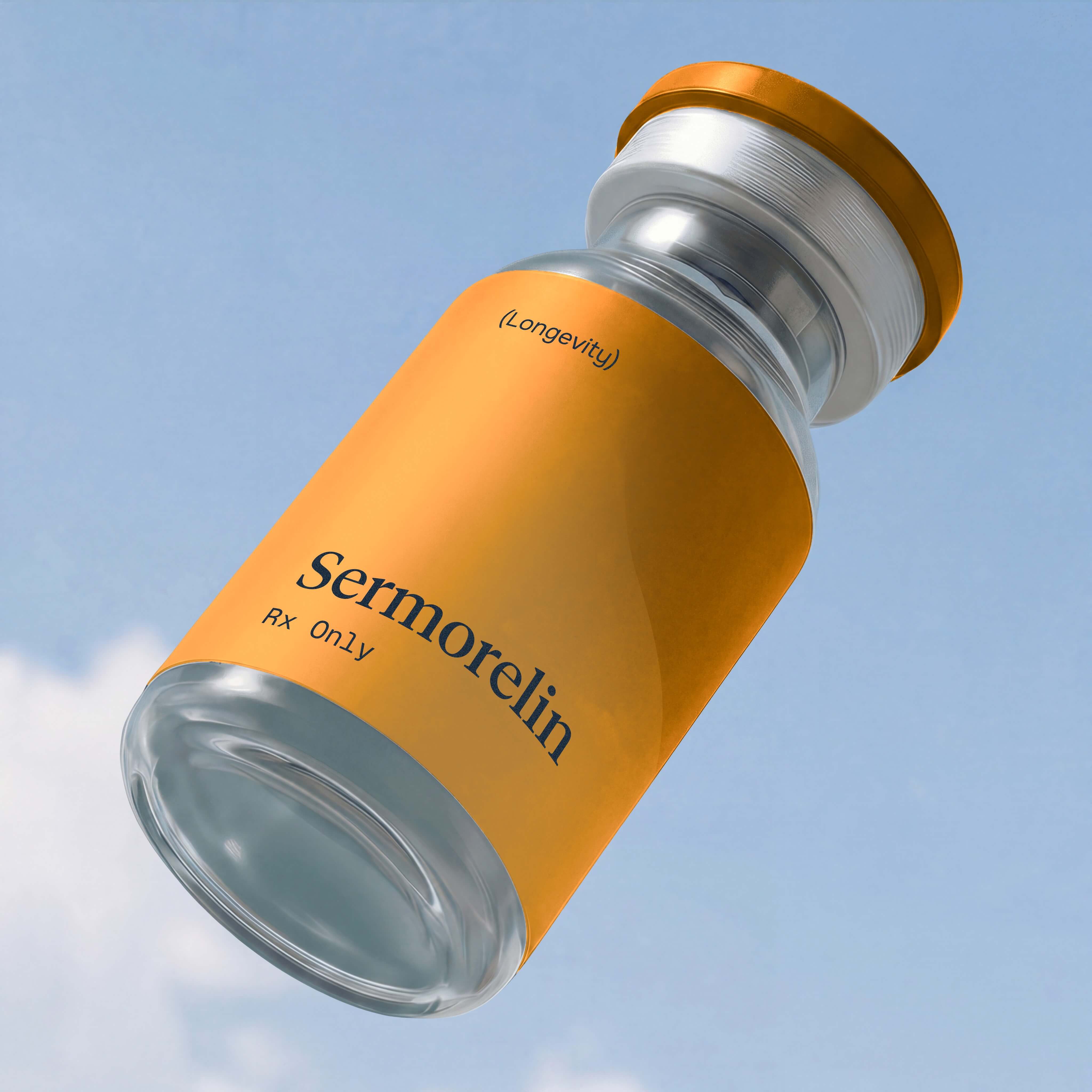
Sermorelin vial

Sermorelin

GHRH analog, formerly sold as Geref

  • FDA approvalPreviously, as Geref
  • 503A compoundingEligible with a prescription
  • Dosing in studiesNightly, set by your clinician
  • Offered by HarborFrom $99/mo
  • Half-life sourceGHRH 1-29 given by IV

The verdict: CJC-1295 lasts far longer in the body, but it has never been approved and does not qualify for pharmacy compounding. Sermorelin is shorter-acting and can be prescribed and compounded for you, which is why it is the one Harbor offers.

The short answer

If you only compare the molecules, CJC-1295 looks like the upgrade. It is built to last for days, where sermorelin is gone within minutes, so it can be injected far less often.

That comparison skips the question that comes first: can a licensed clinician legally prescribe it, and can a licensed pharmacy prepare it to a known standard? For sermorelin the answer is yes. For CJC-1295 it is no. It has never been approved by the FDA, it does not qualify for patient-specific pharmacy compounding, and the FDA has documented specific safety concerns about it.

A longer half-life does not help if the only way to get the product is from a website that sells it for research use. That is the article in two sentences. The rest is the detail behind it.

How each one works

Both are growth hormone releasing hormone (GHRH) analogs. Neither one is growth hormone. Each binds the GHRH receptor on the pituitary gland and prompts it to release more of your own growth hormone, which the liver then answers by making more IGF-1.

Sermorelin

Sermorelin is the first 29 amino acids of natural GHRH, the shortest fragment that keeps its full activity. A 1999 review in BioDrugs describes it stimulating growth hormone secretion from the pituitary and notes that it was used both to test for, and to treat, growth hormone deficiency in children, typically as a once-daily injection at bedtime (3). Harbor's sermorelin explainer covers how it is used in adults today.

CJC-1295

CJC-1295 is a modified GHRH fragment designed to attach to albumin in the blood after injection, a technology called drug affinity complex (DAC). Albumin protects it from being broken down, which is where its long life comes from. A version sold without DAC also circulates online; it is shorter acting and was not the form studied in the published human trial discussed below.

Half-life, in numbers

On half-life alone, CJC-1295 wins.

In a 1994 study in the Journal of Clinical Endocrinology and Metabolism, GHRH 1-29, the same peptide sequence as sermorelin, disappeared from the blood with a half-time of about 4.3 minutes when given by intravenous infusion (2). Subcutaneous injection spreads that out somewhat, but the order of magnitude stays in minutes.

In two randomized, placebo-controlled trials in healthy adults published in 2006, a single injection of CJC-1295 raised growth hormone 2 to 10 fold for 6 days or more and IGF-1 1.5 to 3 fold for 9 to 11 days. The estimated half-life was 5.8 to 8.1 days, and after repeated doses IGF-1 stayed above baseline for up to 28 days (1). Participants were dosed weekly or every other week.

The math in plain terms: minutes against days. That is a real pharmacological difference, and it is the reason CJC-1295 is so often presented online as the more convenient choice.

Why prescription status matters more

Under section 503A of the Food, Drug, and Cosmetic Act, a licensed pharmacy can compound a medication for an individual patient from a bulk ingredient only if that ingredient meets one of three conditions: it has an applicable USP or National Formulary monograph, it is a component of an FDA-approved drug, or it appears on the FDA's 503A bulks list (5).

Sermorelin qualifies

Sermorelin was the active ingredient in Geref, an FDA-approved drug that later left the market. In 2013 the FDA published its determination that Geref was not withdrawn from sale for reasons of safety or effectiveness (6). That history is why a licensed clinician can prescribe sermorelin and a licensed pharmacy can compound it for one patient at a time. Compounded sermorelin is still not an FDA-approved product: the FDA does not verify the safety, effectiveness or quality of compounded drugs before they are dispensed (8).

CJC-1295 does not

CJC-1295 has never been part of an FDA-approved drug and is not on the 503A bulks list. It was nominated for that list and placed by the FDA in category 2, the group of substances with potential significant safety risks, before the nomination was withdrawn. The FDA's page still records its concerns: a risk of immunogenicity for certain routes of administration, complexities with peptide-related impurities and characterization, serious adverse events including increased heart rate and a systemic vasodilatory reaction, and limited clinical data (4). The FDA's July 2026 compounding advisory committee, which reviewed several other peptides, did not take it up (9).

What "research use only" means

Most CJC-1295 sold today comes from websites that label it for research use and not for human consumption. The FDA has said in warning letters that this labeling does not change what a product is when the rest of the marketing makes clear it is meant for people, and it treats those products as unapproved new drugs (7). There is no pharmacy license, no prescription and no clinician behind them, and no way to confirm what is in the vial.

A convenient dosing schedule is only an advantage when the product is made to a known standard and prescribed by someone who is watching how you respond. CJC-1295 cannot currently offer either.

Side by side

Half-life figures from Teichman 2006 (CJC-1295 with DAC, subcutaneous) and Soule 1994 (GHRH 1-29, intravenous). Regulatory status from FDA pages current in 2026. Compounded sermorelin is not an FDA-approved product.
AttributeCJC-1295Sermorelin
What it isModified GHRH fragment that binds albumin (DAC)First 29 amino acids of natural GHRH
Half-life5.8 to 8.1 days Longer actingMinutes
Dosing in published studiesWeekly or every other week Fewer injectionsOnce daily at bedtime
Effect on growth hormoneRaised 2 to 10 fold for 6 or more days after one doseA short rise after each dose
FDA approval historyNever approvedApproved as Geref; not withdrawn for safety Approval history
503A pharmacy compoundingNot eligibleEligible for individual prescriptions Can be compounded
FDA safety concerns on recordImmunogenicity, impurities, raised heart rate, vasodilatory reactionNot listed on the FDA's category 2 page No FDA flag
Where it comes fromWebsites selling research peptidesLicensed U.S. pharmacies, by prescription Regulated supply
At HarborNot offeredFrom $99/mo

Scroll the table sideways to see both columns →

Side effects

The two share the effects you would expect from raising growth hormone, and the most common ones for sermorelin are mild. In the pediatric studies summarized in 1999, transient facial flushing and pain at the injection site were the most commonly reported adverse events (3). Harbor's own guidance adds redness, swelling, headache and nausea, especially early on.

For CJC-1295, the 2006 trials reported no serious adverse reactions in a small, short study (1). The FDA's later review lists serious adverse events it has identified, including increased heart rate and a systemic vasodilatory reaction, alongside the immunogenicity concern (4). A long half-life also cuts both ways: if a reaction does happen, the drug stays in the body for days.

Swelling of the face, lips or throat, trouble breathing, chest pain, a racing heartbeat that does not settle, or fainting after an injection means stop and get emergency care. Everything else is a message to your Harbor clinician.

What each one costs

There is no legitimate price for CJC-1295, because there is no legitimate way to be prescribed it. Online prices for research vials say nothing about purity, dose accuracy or sterility, and they do not include anyone reviewing your health history.

Sermorelin at Harbor starts at $99 a month, with no membership fee and no insurance required. That covers the physician review of your intake, the compounded medication from a licensed U.S. pharmacy, and 24/7 access to licensed clinicians, and plans are HSA and FSA eligible. If a physician decides it is not right for you, it is not prescribed and you are not charged.

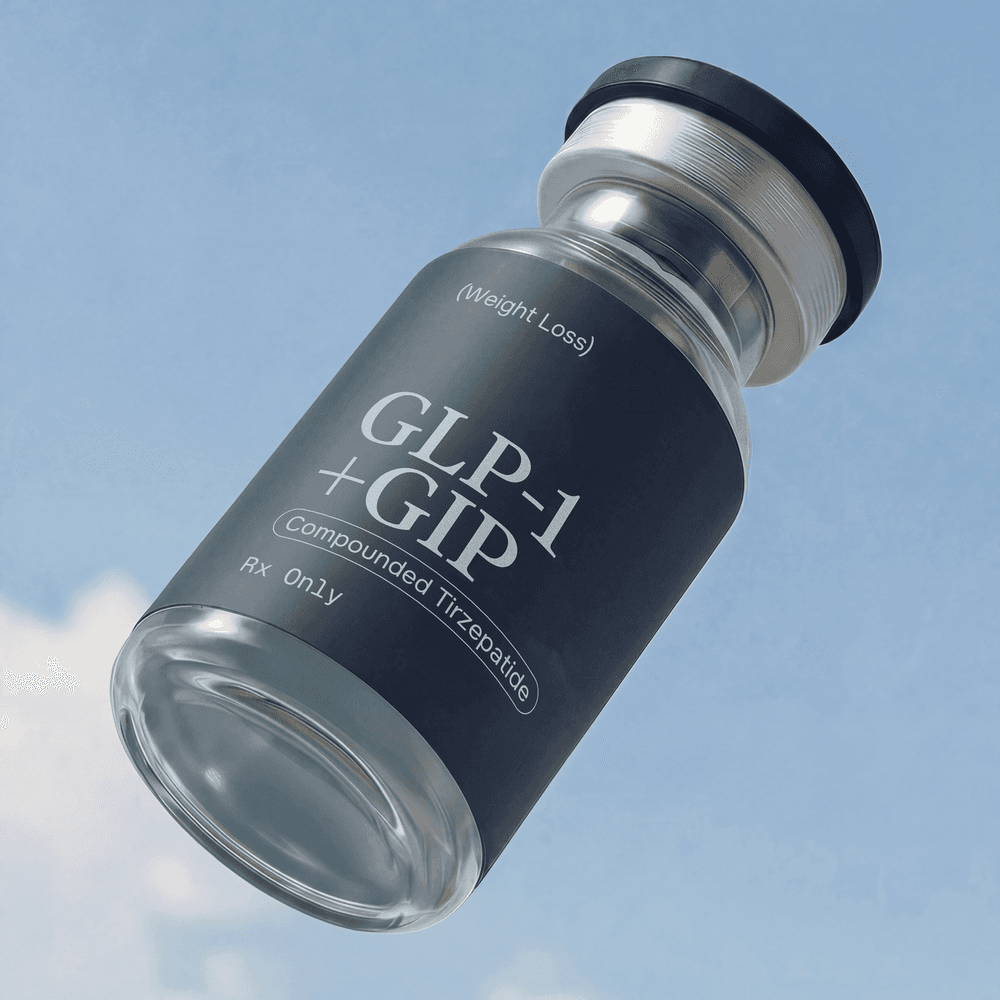
Tirzepatide vial
Weight lossTirzepatide

Dual-action GLP‑1/GIP for faster results

From
$149/mo
Taken
Once-weekly injection
Type
Dual GLP‑1/GIP agonist
Learn more

How Harbor clinicians decide

This is not a choice between two products on a shelf. In practice it is a decision about whether sermorelin is appropriate for you at all.

Sermorelin may be considered when

  • You are an adult looking for a medically guided approach to recovery, sleep or body composition, with realistic expectations
  • A physician has reviewed your full health history and finds no reason to avoid it
  • You are comfortable with a short nightly injection routine and regular check-ins
  • You understand that evidence in healthy adults is still limited and individual responses vary

Why Harbor does not prescribe CJC-1295

  • It has never been approved by the FDA and does not qualify for 503A compounding
  • The FDA has documented immunogenicity, impurity and cardiovascular-type safety concerns
  • Available clinical data are limited
  • The only current supply is unregulated research-use product

If you have been using a peptide bought online, tell your clinician at intake. It changes nothing about whether you can start a program, and it matters for your safety.

This article is for general education and is not medical advice. It is not a substitute for evaluation, diagnosis, or treatment by a licensed clinician. Talk with a qualified clinician about your individual situation.

Harbor is a technology platform. Medical evaluations are conducted by independent, licensed healthcare providers who decide whether treatment is appropriate. Compounded medications are prepared by licensed U.S. pharmacies for individual patients and are not reviewed by the FDA for safety or effectiveness.

Frequently asked questions

Harbor does not prescribe CJC-1295, and combining a prescribed medication with an unregulated research peptide adds unknowns you cannot measure. If you are already using CJC-1295 or a similar product, tell your clinician before starting sermorelin so your history can be reviewed properly.

It is not an FDA-approved drug, and it does not qualify for patient-specific compounding by a licensed 503A pharmacy. The FDA treats products marketed for human use under a research-use label as unapproved new drugs, as its 2026 warning letters to peptide sellers make clear.

The same problem applies to both halves of that combination. The FDA lists ipamorelin acetate among bulk substances with potential significant safety risks for 503B outsourcing facilities, and its 503A nomination was withdrawn, so neither ingredient has a standard compounding pathway today.

Half-life decides how often you inject and how long a dose stays active. A long half-life means fewer injections, but also that any reaction lasts longer. For sermorelin, a short half-life is one reason it is given as a daily injection on a schedule your clinician sets.

Sermorelin was approved as Geref and later taken off the market, and the FDA determined in 2013 that it was not withdrawn for safety or effectiveness reasons. Sermorelin prescribed today is compounded for individual patients, and compounded medications are not FDA-approved products.

There is no reliable timeline, and responses vary from person to person. A program supports your body's own signaling under clinician guidance rather than promising a specific result. Your Harbor clinician reviews how you are responding at check-ins and adjusts the plan if needed.

Sources

  1. Teichman SL, et al. Prolonged stimulation of growth hormone and IGF-I secretion by CJC-1295, a long-acting analog of GH-releasing hormone, in healthy adults. J Clin Endocrinol Metab. 2006;91(3):799-805.
  2. Soule S, King JA, Millar RP. Incorporation of D-Ala2 in growth hormone-releasing hormone-(1-29)-NH2 increases the half-life and decreases metabolic clearance in normal men. J Clin Endocrinol Metab. 1994;79(4):1208-11.
  3. Prakash A, Goa KL. Sermorelin: a review of its use in the diagnosis and treatment of children with idiopathic growth hormone deficiency. BioDrugs. 1999;12(2):139-57.
  4. Food and Drug Administration. Certain bulk drug substances for use in compounding that may present significant safety risks (category 2).
  5. Food and Drug Administration. Bulk drug substances used in compounding under section 503A of the FD&C Act.
  6. Food and Drug Administration. Determination that GEREF (sermorelin acetate) injection was not withdrawn from sale for reasons of safety or effectiveness. Federal Register, March 4, 2013.
  7. Food and Drug Administration. Warning letter to Gram Peptides, March 31, 2026.
  8. Food and Drug Administration. Compounding and the FDA: questions and answers.
  9. Food and Drug Administration. July 23-24, 2026: Meeting of the Pharmacy Compounding Advisory Committee.
  10. Harbor. What is sermorelin peptide therapy?