

Tirzepatide vs metformin verdict
On tirzepatide vs metformin for weight loss, the trial records sit far apart. In SURMOUNT-1, adults with obesity or overweight and no diabetes lost an average of 20.9% of their body weight on Zepbound 15 mg a week over 72 weeks, against 3.1% on placebo (Zepbound prescribing information). In the Diabetes Prevention Program, adults at high risk of type 2 diabetes lost about 2.1% on metformin (Diabetes Care, 2012).
No trial has compared the two drugs directly, so read that gap as a direction, not a measured difference. Metformin has real strengths: FDA approval for type 2 diabetes since 1995 and one of the lowest prices in diabetes care.
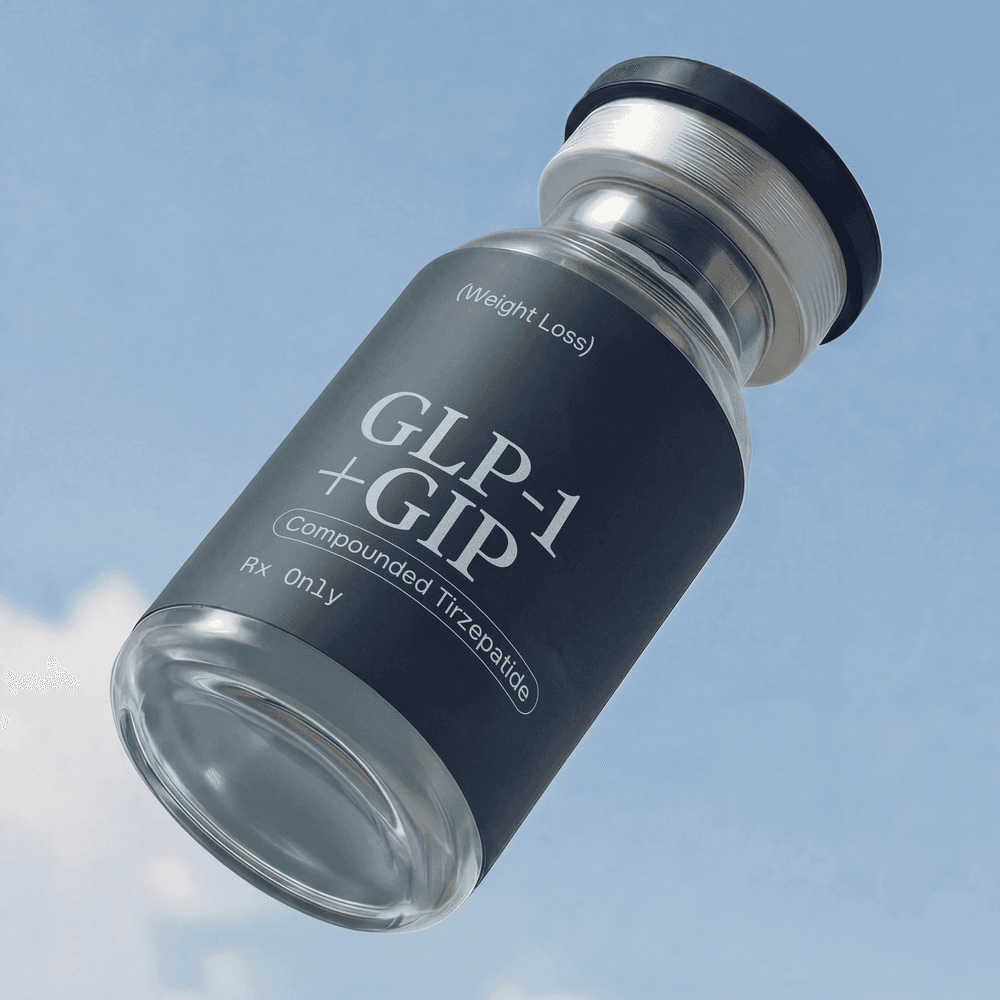
Every tirzepatide result in this article comes from the brand drugs Mounjaro and Zepbound. Tirzepatide shots through Harbor are a once-weekly compounded injection at home, with medication, clinician care and check-ins in one price, and a licensed clinician decides whether they fit you. Compounded tirzepatide is not FDA approved and was not studied in those trials.
Tirzepatide shots vs metformin side by side
Tirzepatide shots and metformin differ on five points: mechanism, trial results, approved uses, FDA status and cost. Related on the Harbor blog: semaglutide vs metformin compared.
How each one works on blood sugar
Metformin is a biguanide. Per its label, it lowers the glucose your liver makes, lowers the glucose your gut absorbs and improves insulin sensitivity, so tissues take up and use more glucose. Insulin secretion stays unchanged (metformin prescribing information). For a plain-language overview, see the MedlinePlus metformin drug facts page.
Tirzepatide activates two receptors, GIP and GLP-1. Per the Mounjaro label, it raises insulin release and lowers glucagon, both only when blood sugar is high, and it delays stomach emptying (Mounjaro prescribing information). Related posts: how tirzepatide works and GLP-1, insulin & metformin differences.
Insulin resistance means cells in your muscles, fat and liver do not respond well to insulin (NIDDK). On tirzepatide for insulin resistance, the Mounjaro label states that tirzepatide increases insulin sensitivity, shown in a clamp study after 28 weeks of treatment. That is a measured effect, not an approved use. Neither the Mounjaro label nor the Zepbound label lists insulin resistance as an indication.
Weight loss results in trials
Evidence on tirzepatide for weight loss comes from the SURMOUNT trials of Zepbound. SURMOUNT-1 enrolled 2,539 adults without diabetes who had obesity, or overweight plus a weight-related condition. At 72 weeks, average weight loss was 15.0%, 19.5% and 20.9% on 5, 10 and 15 mg, against 3.1% on placebo. In SURMOUNT-2, 938 adults with type 2 diabetes lost 12.8% and 14.7% on 10 and 15 mg, against 3.2% (Zepbound prescribing information).
Metformin's record is smaller, and it comes from a trial built to test diabetes prevention. The Diabetes Prevention Program assigned 3,234 adults with elevated blood glucose to metformin 850 mg twice a day, placebo or a lifestyle program. Over an average of 2.8 years, the metformin group lost 2.1 kg, against 0.1 kg on placebo and 5.6 kg with the lifestyle program (NEJM, 2002). In the long-term follow-up, weight loss stayed greater on metformin than on placebo, 2.0% against 0.2%.
On metformin's own label, adults with type 2 diabetes lost 1.4 lb over 29 weeks, while the placebo group lost 2.4 lb. The ADA's 2026 Standards of Care place metformin among drugs with under 5% weight loss (ADA, 2026). A trial average is not a personal forecast for either drug.
Who each one is prescribed for
Metformin's label covers one use: improving blood sugar control in type 2 diabetes, alongside diet and exercise. Beyond the label, the ADA advises considering it to prevent type 2 diabetes in adults at high risk, especially those aged 25 to 59 with a BMI of 35 or higher and higher fasting glucose or A1C, and people with prior gestational diabetes. It adds that no drug is FDA approved specifically for diabetes prevention (ADA, 2026).
Tirzepatide has two brand labels. Mounjaro is approved to improve blood sugar control in type 2 diabetes and to lower the risk of major heart events in adults with type 2 diabetes at high risk. Zepbound is approved, with a reduced-calorie diet and more physical activity, to reduce excess body weight and maintain the reduction in adults with obesity, or with overweight and at least one weight-related condition. It is also approved for moderate to severe obstructive sleep apnea in adults with obesity.
For people with diabetes and overweight or obesity, the ADA names semaglutide or tirzepatide as the preferred weight medication.
Prescription & FDA status
Both drugs need a prescription. Metformin has been FDA approved since 1995 and is sold as a generic. Its label lists no weight-loss use, so taking it for weight is off-label.
Tirzepatide was first approved in 2022 as Mounjaro, and Zepbound is the tirzepatide product approved for weight management. Compounded tirzepatide is neither. It is not FDA approved, and FDA does not review compounded drugs for safety, effectiveness or quality before they are marketed (FDA). Because the trials above tested the brand drugs, their results cannot be assumed for a compounded product.
Cost per month
Metformin is among the least expensive drugs in diabetes care. In the ADA's 2026 tables (prices as of July 2025), the median pharmacy acquisition cost of a month of generic immediate-release metformin is $1 to $2 at the maximum daily dose (ADA, 2026).
Brand tirzepatide sits on a different scale. A November 2025 White House fact sheet put Zepbound at $1,086 a month and announced an average of $346 through the federal TrumpRx program (White House, 2025).
The tirzepatide program starts at $119 a month (compounded, not FDA approved). The product page describes it as "Medication, clinician care, and check-ins in one price", with no insurance required and HSA and FSA eligibility.
| Attribute | Tirzepatide shots | Metformin |
|---|---|---|
| Drug class | GIP and GLP-1 receptor agonist | Biguanide |
| How it is taken | Injection under the skin, once a week | Tablet by mouth with meals, every day |
| FDA approved for type 2 diabetes | Yes, as Mounjaro | Yes |
| FDA approved for weight management | Yes, as Zepbound. Compounded tirzepatide is not FDA approved Brand approved | No |
| Mean weight change in trials | −20.9% at 72 weeks (Zepbound 15 mg, SURMOUNT-1) Larger loss | About −2.1% (Diabetes Prevention Program) |
| Glucose-lowering efficacy, ADA 2026 | Very high Rated higher | High |
| First FDA approval | 2022, as Mounjaro | 1995 Longer record |
| Cost per month | Zepbound $1,086 a month, with an average of $346 announced for TrumpRx (White House, November 2025). Compounded tirzepatide from $119 through Harbor (compounded, not FDA approved) | $1 to $2 median pharmacy acquisition cost, generic immediate-release tablets Lowest cost |
Scroll the table sideways to see both columns →
Who should choose tirzepatide or metformin for weight loss
The choice follows your goal, and a clinician makes it with you. It is not always one or the other, because the two can be prescribed together.
Tirzepatide may fit when:
- Weight is your main goal and your BMI is in the range a clinician treats
- You have type 2 diabetes with overweight or obesity, and your diabetes clinician agrees
- You already take metformin and want to add weight treatment under a clinician's review
Metformin may fit when:
- Blood sugar control in type 2 diabetes is the goal and cost decides it
- Your doctor is using it to lower diabetes risk, as the ADA advises for some adults at high risk
- Weight is not your main concern
Asking about metformin for weight loss makes sense if you already take it for blood sugar. Its record there is a modest average, about 2% in the Diabetes Prevention Program, with no FDA approval for that use.
If weight is the goal, Harbor tirzepatide shots are a weekly compounded program for adults seeking medically supervised weight loss, typically with a BMI of 27 or higher. Compounded tirzepatide is not FDA approved. A board-certified physician reviews your health history, goals and prior treatment response before deciding whether a dual-pathway option is appropriate. It arrives as a vial with U-100 syringes, not a pen.
This program is for weight management, not diabetes treatment. If you have type 2 diabetes, your own diabetes clinician stays in charge of that care, metformin included. List metformin and everything else you take at intake. In an August 20, 2026 Trustpilot review, member Leah Nadel wrote that "a medical provider is available to answer any questions about my medical health that might interfere with the medication."
Who should not take tirzepatide
Tirzepatide is not prescribed to anyone with a personal or family history of medullary thyroid carcinoma or MEN 2. Harbor's GLP-1 programs also do not enroll people who are pregnant, breastfeeding, planning pregnancy or under 18, or people with type 1 diabetes. For anything else, message your Harbor clinician.
Bottom line on metformin weight loss vs tirzepatide
Metformin weight loss is real but small: about 2% on average in the Diabetes Prevention Program, with no FDA approval for that use. Tirzepatide's brand trials showed average losses of 15.0% to 20.9% without diabetes, and Zepbound is the one approved for weight.
For blood sugar in type 2 diabetes, both drugs work. The ADA rates metformin's glucose lowering as high and tirzepatide's as very high, and metformin costs a few dollars a month. That decision belongs to the clinician who manages your diabetes.
If weight is why you are reading, Harbor's tirzepatide program pairs a weekly compounded shot, which is not FDA approved, with a clinician-guided taper when you reach your goal and registered-dietitian aftercare. Its product page calls it "A program designed to end, so the results last." The online quiz starts a physician review.
Medical disclaimer
This article is for general education and is not medical advice. It is not a substitute for evaluation, diagnosis, or treatment by a licensed clinician. Talk with a qualified clinician about your individual situation.
Compounded medications
Harbor is a technology platform. Medical evaluations are conducted by independent, licensed healthcare providers who determine whether treatment is appropriate. Providers may prescribe FDA-approved or compounded medications based on clinical judgment and patient needs. Compounded medications are not FDA approved and are not reviewed by the FDA for safety or effectiveness.
Frequently asked questions
It is a studied combination, and the decision is your prescriber's. In SURPASS-2, 1,879 adults with type 2 diabetes who were on stable doses of metformin added Mounjaro or semaglutide 1 mg for 40 weeks, per the Mounjaro label. Whether metformin and tirzepatide suit you together depends on your history, so tell every prescriber what you take.
A little, on average. In the Diabetes Prevention Program, people on metformin lost about 2.1% of their body weight, against almost none on placebo. In the ADA's 2026 Standards of Care, it sits among drugs with under 5% weight loss. Metformin is not FDA approved for weight loss.
Per the Mounjaro label, tirzepatide increases insulin sensitivity, measured in a clamp study after 28 weeks of treatment. NIDDK says you may prevent insulin resistance and prediabetes by reaching and maintaining a healthy weight and being physically active. Insulin resistance is not an approved indication for Mounjaro or Zepbound, and the label data come from the brand drug, not from compounded tirzepatide.
Sources
- DailyMed. Zepbound (tirzepatide) injection, prescribing information (revised August 2026).
- DailyMed. Mounjaro (tirzepatide) injection, prescribing information (revised August 2026).
- DailyMed. Metformin hydrochloride tablets and extended-release tablets, prescribing information (revised July 2026).
- ClinicalTrials.gov. SURMOUNT-1: tirzepatide in participants with obesity or overweight (NCT04184622), the Zepbound label's Study 1.
- Knowler WC, et al. Reduction in the Incidence of Type 2 Diabetes with Lifestyle Intervention or Metformin (Diabetes Prevention Program). N Engl J Med. 2002;346:393-403.
- Diabetes Prevention Program Research Group. Long-term safety, tolerability, and weight loss associated with metformin in the Diabetes Prevention Program Outcomes Study. Diabetes Care. 2012;35:731-737.
- American Diabetes Association. 3. Prevention or Delay of Diabetes and Associated Comorbidities: Standards of Care in Diabetes 2026. Diabetes Care. 2026;49(Suppl 1).
- American Diabetes Association. 8. Obesity and Weight Management for the Prevention and Treatment of Type 2 Diabetes: Standards of Care in Diabetes 2026. Diabetes Care. 2026;49(Suppl 1).
- American Diabetes Association. 9. Pharmacologic Approaches to Glycemic Treatment: Standards of Care in Diabetes 2026. Diabetes Care. 2026;49(Suppl 1).
- National Institute of Diabetes and Digestive and Kidney Diseases. Insulin Resistance & Prediabetes (last reviewed March 2025).
- MedlinePlus. Metformin. National Library of Medicine (last revised October 15, 2026).
- U.S. Food and Drug Administration. FDA's concerns with unapproved GLP-1 drugs used for weight loss (content current as of October 1, 2026).
- The White House. Fact sheet: most-favored-nation pricing developments (November 2025).
Keep reading
All 199 articles →- Tirzepatide
7 Mounjaro & Zepbound Alternatives, Including Compounded Tirzepatide Shots
Seven options when Mounjaro or Zepbound is out of reach, led by compounded tirzepatide, which is not FDA approved, then Zepbound vials, Wegovy, Foundayo and three more. What each is and how a clinician chooses.
By Harbor Health Team
- Tirzepatide
6 Signs Your Tirzepatide Shots Are Working & How Long It Takes
Six signs tirzepatide is working, what trials of the brand drug measured for each and when, where the evidence is thin, and what your clinician checks.
By Harbor Health Team
- Tirzepatide
Contrave vs Injectable Tirzepatide for Weight Loss
Contrave is a twice-daily tablet. Tirzepatide is a once-weekly injection. Here is how they compare on trial results, routine, FDA status and cost, and what a licensed clinician checks before prescribing either one.
By Harbor Health Team
