
Start for $99No results? No chargeSame-day approvalNo price increases — everBuy now, pay later

How to Increase NAD+ Levels: Food, Exercise, Sleep and When Injections Make Sense

No food, pill or shot resets NAD+ overnight. A handful of daily habits do move it, and for some adults a clinician-guided program adds support on top. Here is how Harbor’s clinicians think about both.

Clinically reviewed
Medically reviewed by Harbor Health TeamMedical Content Team8 min read

What you’ll need

Mostly things you already have
  • A walking planThree or more sessions you can keep every week
  • Two strength daysBodyweight or weights, 30 minutes is enough
  • A steady bedtimeWithin the same hour, weekends included
  • B3-rich staplesPoultry, fish, legumes, nuts or whole grains
  • An alcohol ceilingA number you decide before the week starts
  • Your supplement listEverything you take, for your clinician

Habits first, then support. Movement, sleep, food and alcohol are free and have the most evidence behind them. A prescription program is something a clinician adds after those, never instead of them.

What NAD+ is, and why it falls

No single food, supplement or injection restores NAD+ to the levels of early adulthood, and claims that one does are not supported by current research. What the research does support is quieter. Levels respond to how you move, sleep, eat and drink, and those levers are worth pulling before anything else.

NAD+ (nicotinamide adenine dinucleotide) is a coenzyme your cells use to turn food into usable energy. The NIH Office of Dietary Supplements notes that more than 400 enzymes depend on it, more than any other vitamin-derived coenzyme. Your body builds it largely from vitamin B3 (niacin) and from the amino acid tryptophan.

Levels drift down with age. A 2020 review in Oxidative Medicine and Cellular Longevity links that decline to inflammation, slower recycling through the NAMPT salvage pathway, and heavier use by DNA-repair enzymes. The same review describes lifestyle factors, including physical activity and meal timing, that nudge levels back up. For more background, see our explainer on what NAD+ therapy is.

Move most days: the best-supported lever

Regular exercise has the clearest human evidence of any NAD+ lever. It has the clearest human data of any NAD+ lever, and it happens to help nearly everything else too.

In a 2019 study in Physiological Reports, researchers measured NAMPT, the enzyme that limits how quickly muscle recycles NAD+, in younger and older adults before and after 12 weeks of training. NAMPT fell with age, and both aerobic and resistance training raised it, in older participants as well as younger ones. Aerobic training lifted it 12% in the younger group and 28% in the older group.

The practical reading is simple. A mix of cardio and strength work, kept up for months rather than weeks, is the version the study tested. You do not need a particular sport, and older adults responded, not just athletes in their twenties.

Keep a steady clock, and go easy on alcohol

NAD+ production runs on a daily rhythm. A 2009 study in Science showed that NAMPT and NAD+ levels rise and fall with the body clock, and that the clock and NAD+ regulate each other in a feedback loop. That work was done in mice, so it explains the biology more than it proves a human benefit.

Even so, it points in the same direction as ordinary sleep advice. A consistent bedtime and wake time, daylight in the morning, and meals kept to a regular window give that rhythm something steady to run on. The 2020 review above also lists fasting and caloric restriction among the approaches that raise NAD+ in research settings, though human evidence for fasting specifically is limited. If you have diabetes or take glucose-lowering medication, talk to your clinician before experimenting with fasting.

Alcohol draws on the same coenzyme

Alcohol uses up NAD+ directly. As a review in the NIAAA journal Alcohol Research and Health explains, both steps of breaking alcohol down in the liver reduce NAD+ to NADH, and heavy drinking shifts the balance between the two. Every drink hands your liver work that draws on the same coenzyme you are trying to support.

You do not have to quit to benefit. Setting a weekly number before the week begins, and keeping several alcohol-free days, is a realistic place to start. If cutting back is hard, that is a good conversation to have with your clinician.

Eat for B3, and be careful with supplements

Food is the everyday source of the raw materials. According to the NIH niacin fact sheet, poultry, beef and fish provide about 5 to 10 mg of niacin per serving, and nuts, legumes and grains about 2 to 5 mg. The adult RDA is 16 mg for men and 14 mg for women, and most people in the United States already get more than that from food.

That last point matters. If you already eat enough B3, more of it is not the missing piece. Supplements attract the most marketing claims. The table below summarizes what the evidence shows.

  • Food sources — What it is: Niacin and tryptophan in poultry, fish, legumes, nuts and grains; Evidence in people: Covers the RDA for most adults; Watch for: Nothing, beyond a balanced diet
  • Nicotinic acid (niacin) — What it is: The classic B3 supplement; Evidence in people: Raises NAD+ precursors; mainly studied for cholesterol; Watch for: Flushing from about 30 to 50 mg
  • Nicotinamide — What it is: Another B3 form in supplements; Evidence in people: Raises NAD+ precursors; Watch for: No flushing, but high doses can strain the liver
  • NR and NMN — What it is: Newer NAD+ precursor supplements; Evidence in people: Raise NAD+ metabolites; physical benefits still unclear; Watch for: Small, short trials so far

Summarized from the NIH Office of Dietary Supplements niacin fact sheet and a 2023 review of human NAD+ precursor trials.

A 2023 review in The Journals of Gerontology looked at human trials of nicotinamide riboside (NR) and nicotinamide mononucleotide (NMN). It found them safe and well tolerated, and able to raise NAD+ and related metabolites, but concluded that evidence they improve how the body actually functions is still unclear, with small studies and varied doses. A 2021 review in Frontiers in Endocrinology described results as heterogeneous for the same reason.

The upper limit for niacin from supplements and fortified foods is 35 mg a day for adults, set on the basis of flushing from nicotinic acid. Nicotinamide does not cause flushing, but high doses have been linked to liver problems, so keep either form on the list you share with your care team. Nicotinic acid at 30 to 50 mg or more commonly causes red, burning, itchy skin, and very high doses have been linked to liver problems. Stay under the limit unless a clinician is supervising, and put any B3 supplement on the list you share with your care team.

A week that supports NAD+

Put together, the habits above fit into an ordinary week. This is the routine we would start with.

  1. Step 1: Put three cardio sessions on the calendar

    Brisk walking, cycling or swimming, 30 minutes or more. Pick the days now, not on the day.

    Aerobic training raised NAMPT in both younger and older adults.

  2. Step 2: Add two short strength sessions

    Squats, pushes, pulls and carries with bodyweight or weights. Thirty minutes covers it.

    Resistance training helped too, and it protects muscle.

  3. Step 3: Fix your wake time first

    Choose a wake time you can hold seven days a week, then let bedtime follow it. Get outside light within the first hour.

  4. Step 4: Build meals around B3-rich staples

    Poultry, fish, beans, lentils, nuts and whole grains, at regular times of day. Food covers the RDA for most adults.

  5. Step 5: Set your alcohol number

    Decide the week’s ceiling on Sunday and plan the alcohol-free days around your plans.

  6. Step 6: Review supplements with your clinician

    Bring the full list, including any niacin, NR or NMN, and the doses. Ask whether each one is still worth taking.

    It keeps you under the niacin ceiling and avoids doubling up.

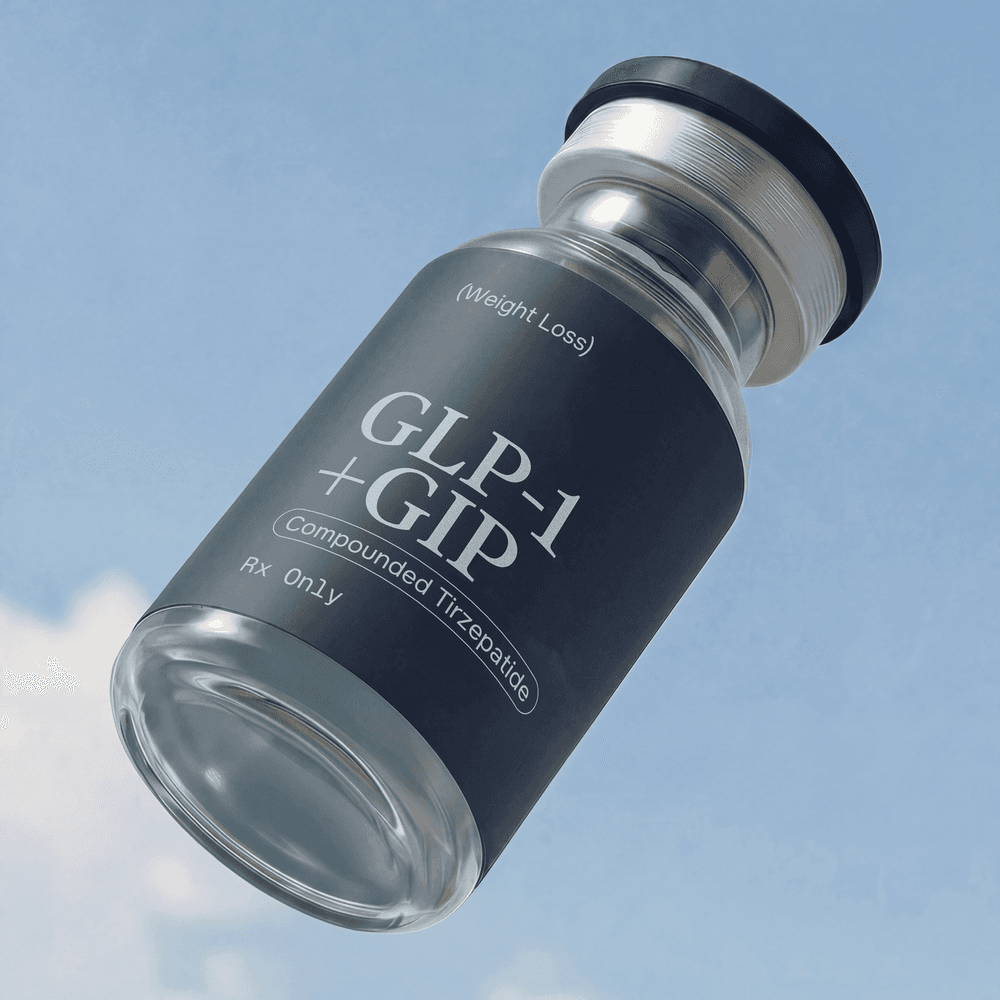
Tirzepatide vial
Weight lossTirzepatide

Dual-action GLP‑1/GIP for faster results

From
$149/mo
Taken
Once-weekly injection
Type
Dual GLP‑1/GIP agonist
Learn more

When injections make sense

A clinician-guided NAD+ program is for adults who have the basics in place and want medical support for energy, recovery and healthy aging on top of them. It is prescription-only. In an Harbor program, a board-certified physician reviews your health history and goals first, and if it is not the right fit, it is not prescribed. When it is, the medication is compounded by a licensed U.S. pharmacy and self-administered as a small injection under the skin at home, on a schedule your clinician sets.

Be clear-eyed about the evidence. Human research on giving NAD+ directly is still early. A small 2019 pilot in Frontiers in Aging Neuroscience tracked NAD+ during a six-hour intravenous infusion and found it was cleared from the blood quickly, which shows how much is still being worked out about dosing and delivery. Compounded medications are not FDA-approved, and the FDA does not review them for safety or effectiveness. A program supports your levels under clinician guidance rather than promising a specific result.

The most common side effects are mild injection-site reactions such as redness or soreness, and some people notice temporary nausea, headache or fatigue as their body adjusts. Your dose and schedule come from your clinician, never from a chart online. You can read more on the Harbor NAD+ program page, or take the 90-second quiz to see whether a physician thinks it fits.

Message us instead of guessing

Swelling of the face, lips or throat, trouble breathing, a spreading rash or chest pain after an injection means stop and seek emergency care. Anything else, including redness that lingers, nausea or a question about timing, is a message to your Harbor clinician, who is available around the clock.

Frequently asked questions

There is no fast, proven shortcut. The best-supported lever is regular aerobic and resistance exercise kept up over months, which raised NAD+ recycling capacity in a 12-week study of younger and older adults. Consistent sleep, B3-rich food and less alcohol add to it. Supplements and injections can raise NAD+ markers, but their physical benefits are still being studied.

Exercise most days with a mix of cardio and strength work, keep a steady sleep and meal schedule, eat foods that supply niacin and tryptophan such as poultry, fish, legumes, nuts and whole grains, and limit alcohol, which uses up NAD+ as your liver breaks it down.

No, but they are closely linked. Your body converts vitamin B3 (niacin) into NAD+, which is the active coenzyme cells use. That is why B3 forms such as nicotinic acid, nicotinamide and nicotinamide riboside are sold as NAD+ precursors. Most adults already get more than the B3 RDA from food.

Vitamin B3 is the main one, in its different forms. Keep supplemental niacin under the 35 mg adult upper limit unless a clinician is supervising, because nicotinic acid at 30 to 50 mg commonly causes flushing and much higher doses carry more serious risks. Review any B3 supplement with your care team.

When prescribed after a physician review, the most common effects are mild injection-site redness or soreness, with occasional temporary nausea, headache or fatigue. Compounded NAD+ is not FDA-approved, human research on direct NAD+ is early, and it is not right for everyone, which is why a clinician decides whether it fits your history.

Sources

  1. NIH Office of Dietary Supplements. Niacin: Fact Sheet for Health Professionals.
  2. Healthy Lifestyle Recommendations: Do the Beneficial Effects Originate from NAD+ Amount at the Cellular Level? Oxid Med Cell Longev. 2020.
  3. de Guia RM, et al. Aerobic and resistance exercise training reverses age-dependent decline in NAD+ salvage capacity in human skeletal muscle. Physiol Rep. 2019.
  4. Ramsey KM, et al. Circadian clock feedback cycle through NAMPT-mediated NAD+ biosynthesis. Science. 2009.
  5. Dietary Supplementation With NAD+-Boosting Compounds in Humans: Current Knowledge and Future Directions. J Gerontol A Biol Sci Med Sci. 2023.
  6. NAD+-Increasing Strategies to Improve Cardiometabolic Health? Front Endocrinol. 2021.
  7. Zakhari S. Overview: how is alcohol metabolized by the body? Alcohol Res Health. 2006.
  8. Grant R, et al. A Pilot Study Investigating Changes in the Human Plasma and Urine NAD+ Metabolome During a 6 Hour Intravenous Infusion of NAD+. Front Aging Neurosci. 2019.
  9. U.S. Food and Drug Administration. Compounding and the FDA: Questions and Answers.