

NAD+ vs CoQ10 verdict
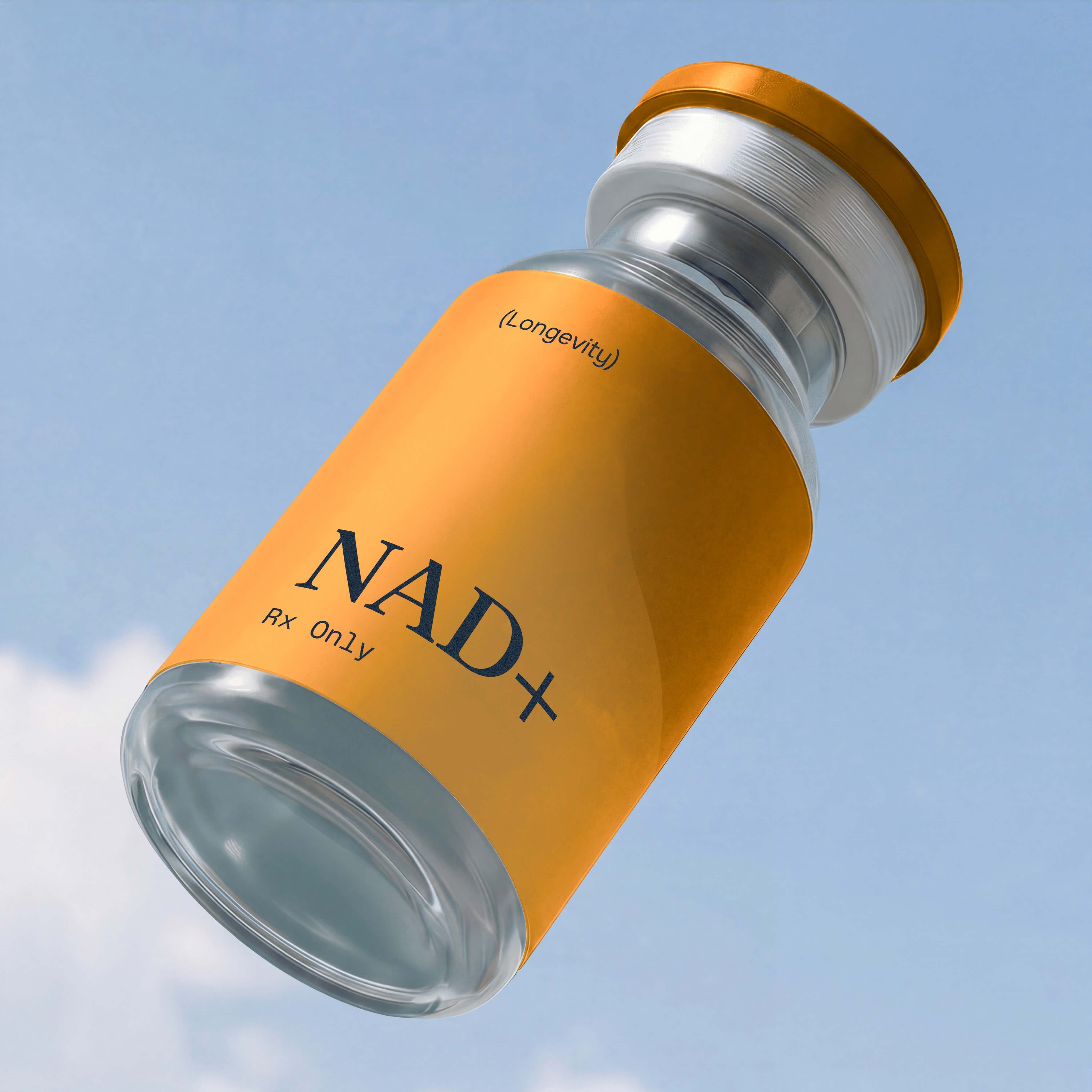
The NAD+ vs CoQ10 question comes down to who is guiding it. NAD+ shots are a prescription. In Harbor's NAD+ program, a board-certified physician reviews your health history and goals before anything ships, your clinician sets the schedule, and licensed clinicians are available 24/7 for medical questions. CoQ10 is sold over the counter, so you pick the product and the dose yourself.
On evidence, both have limits. CoQ10 has more human trials, including a 2022 meta-analysis of 13 randomized trials on fatigue (Front Pharmacol, 2022). A 2026 systematic review found no eligible outcome trials of intravenous or intramuscular NAD+ for wellness (Ageing Res Rev, 2026). Compounded NAD+ is not FDA approved, and a program supports your levels under clinician guidance rather than promising a specific result.
NAD+ shots vs CoQ10 supplements side by side
NAD shots and CoQ10 capsules get grouped together because both molecules work inside the cell's energy machinery. They are different molecules, taken in different ways, with different kinds of evidence behind them.
What each molecule does in cells
NAD+ is the main active form of niacin, vitamin B3. More than 400 enzymes require it, and its central job is in the reactions that transfer the energy in carbohydrates, fats and proteins to ATP, the cell's primary energy currency (NIH Office of Dietary Supplements). It is a coenzyme, not a peptide.
CoQ10 belongs to the same energy story. Cells use it in aerobic respiration, the process through which mitochondria produce energy, and the body also uses it as an antioxidant. It is found in most tissues, with the highest concentrations in the heart, liver, kidneys and pancreas, and tissue levels decrease as people age (National Cancer Institute).
A role in energy production is not the same as more energy from taking extra. That second claim needs trials, and the trials are where these two part ways.
How each one is taken
CoQ10 is usually taken by mouth as a pill, either a gel bead or a capsule, and it is absorbed best with fat. Doses in human studies have usually ranged from 90 to 390 mg a day, according to the National Cancer Institute. Those are study doses, not a recommendation. With a supplement, you set the amount from the label.
NAD+ comes by more than one route. The oral human trials reviewed in 2026 tested precursors such as NR and NMN, which is why an NAD+ supplement and an NAD+ shot are different products. That is a separate comparison: NAD+ injections vs NMN pills.
The NAD+ shots compared here are a self-administered injection under the skin at home, on a schedule your clinician sets. No FDA-approved NAD+ injection exists, so there is no established dose. A 2019 pilot infused 750 mg into a vein over 6 hours in 8 healthy men, a study dose given in a clinic and not a guide for home use (Front Aging Neurosci, 2019). The guide to how a clinician sets an NAD+ shot schedule explains why the number comes from your prescriber.
What the evidence shows
CoQ10 has the larger human record. A 2022 meta-analysis pooled 13 randomized trials with 1,126 participants and found a statistically significant reduction in fatigue scores against placebo. The trials ran 4 to 24 weeks at 30 to 500 mg a day, 10 of the 13 enrolled people with a diagnosed condition, and the results varied from study to study (Front Pharmacol, 2022).
That is a result on fatigue questionnaires, not a measurement of cellular energy. On larger questions the federal summary is cautious. The NCCIH coenzyme Q10 facts page calls the research on heart disease prevention and on heart failure inconclusive.
For NAD+, the human evidence is earlier. A 2026 systematic review of 113 studies, 33 of them in people, found that oral precursors consistently raised NAD-related markers in blood, while effects on function were mixed and often absent. It found no eligible outcome trials of intravenous or intramuscular NAD+ itself for anti-aging or wellness (Ageing Res Rev, 2026).
In the 2019 infusion pilot, plasma NAD+ did not rise for the first 2 hours, then reached about 400% above baseline at 6 hours. That shows infused NAD+ reaches the blood, and little more. A separate post lists nine NAD+ benefits, graded.
CoQ10 has more trials. NAD+ shots come with a physician's review. Neither body of data adds up to a promised result.
Prescription & FDA status
Neither one is an FDA-approved drug. CoQ10 is sold in the United States as a dietary supplement, and under federal law FDA does not have the authority to approve dietary supplements before they are marketed (FDA). No prescription is needed, so no clinician has to review your health history before you buy.
NAD+ injections are compounded prescription drugs. A search of Drugs@FDA on November 13, 2026 returned no approved NAD+ product, and NAD+ sits in Category 1 of FDA's 503A bulk substances, the group still under evaluation for compounding, while a separate beta-NAD nomination sits in Category 3 (FDA 503A categories). Compounded drugs are not FDA approved, which means FDA does not verify their safety, effectiveness or quality before they are marketed (FDA). A licensed clinician has to prescribe them.
Cost per month
CoQ10 is priced by the bottle, and what you pay depends on the product, the dose and the form. That price covers the capsules alone.
Harbor's NAD+ program starts at $99 a month. That is one flat price with the medication, clinician care and check-ins included, and it does not increase as your dose changes. No insurance is required, the program is HSA and FSA eligible, and you can cancel anytime with no long-term contract.
Compare like with like. One price buys a product you manage yourself. The other buys a program with a physician in it.
| Attribute | NAD+ shots | CoQ10 supplements |
|---|---|---|
| What it is | Nicotinamide adenine dinucleotide, a coenzyme made from niacin (vitamin B3) | Coenzyme Q10, a compound the body makes, also called ubiquinone |
| Main job in cells | Transfers energy from food to ATP, required by more than 400 enzymes | Used by mitochondria to produce energy, also an antioxidant |
| How it is taken | Self-injected under the skin at home, on a schedule your clinician sets | By mouth as a capsule or gel bead, absorbed best with fat |
| Review before you start | A board-certified physician reviews your health history & goals Physician review | None required, sold without a prescription |
| Who sets the dose | Your clinician, adjusted as needed Clinician-set | You, from the product label |
| Ongoing support | Clinician check-ins & licensed clinicians available 24/7 Care included | None built in |
| Human trial evidence | No eligible outcome trials of IV or intramuscular NAD+ for wellness in a 2026 review | 13 randomized trials pooled on fatigue in 2022, results varied More trial data |
| FDA status | Compounded prescription, not FDA approved | Dietary supplement, not FDA approved |
| What the price covers | From $99 /mo: medication, clinician care & check-ins Care in the price | The product only, priced by the bottle |
Scroll the table sideways to see both columns →
Who should choose NAD+ shots or a CoQ10 supplement
Start with how much guidance you want. A physician reviews your history before NAD+ shots are prescribed, while a CoQ10 supplement is a choice you make on your own.
NAD+ shots may fit better when:
- You want a medically guided approach to energy and healthy aging
- You want a clinician to set the dose and adjust the program as you go
- You are comfortable with a simple injection routine at home
- You want licensed clinicians available 24/7 for medical questions
A CoQ10 supplement may fit better when:
- You prefer a capsule to an injection
- You want an over-the-counter product with no prescription
- Your own doctor or pharmacist has checked it against your medicines
Harbor NAD+ shots are prescribed only after a board-certified physician confirms the program is appropriate for you. If it is not the right fit, it is not prescribed. After that, your clinician reviews how you are responding and adjusts the program as needed.
That access is the part a bottle cannot include. In an August 20, 2026 Trustpilot review, Harbor GLP-1 member Leah Nadel wrote that she was "happy that a medical provider is available to answer any questions about my medical health that might interfere with the medication."
Tell your clinician what you take
CoQ10 may interact with the blood thinner warfarin and with insulin, and it may not be compatible with some types of cancer treatment, according to NCCIH. List every supplement on your intake, CoQ10 included, so the physician reviewing it sees the full picture. For anything about NAD+, message your Harbor clinician.
Bottom line on NAD supplements & CoQ10
An oral NAD supplement, a CoQ10 capsule and an NAD+ shot are three different products, and only the shot comes with a prescriber.
CoQ10 has the longer list of human trials and a measurable effect on fatigue scores in pooled data. NAD+ shots are earlier in the research, with no outcome trials in the 2026 review, and they come with a licensed clinician who decides whether the program is appropriate, sets the schedule and stays available.
If that oversight is what you want, the online quiz takes about 90 seconds and is the first step toward a physician review. The program aims to support your NAD+ levels under clinician guidance rather than promising a specific result. A related comparison is NAD+ vs glutathione.
Medical disclaimer
This article is for general education and is not medical advice. It is not a substitute for evaluation, diagnosis, or treatment by a licensed clinician. Talk with a qualified clinician about your individual situation.
Compounded medications
Harbor is a technology platform. Medical evaluations are conducted by independent, licensed healthcare providers who determine whether treatment is appropriate. Providers may prescribe FDA-approved or compounded medications based on clinical judgment and patient needs. Compounded medications are not FDA approved and are not reviewed by the FDA for safety or effectiveness.
Frequently asked questions
That is your clinician's call, not a general rule. One randomized trial tested the pair by mouth: 207 women with ME/CFS took 200 mg of CoQ10 plus 20 mg of NADH or a placebo daily, and fatigue scores moved in parallel in both groups ( Nutrients, 2021 ). The supplement's maker supplied the tablets, and the trial did not test NAD+ injections. NCCIH notes that CoQ10 may interact with warfarin and insulin, so tell the clinician who prescribes NAD+ about every supplement you take.
Ubiquinol is the reduced form of CoQ10, so ubiquinol vs CoQ10 really means ubiquinol against ubiquinone, the oxidized form. In a 2020 crossover trial of 21 healthy adults aged 65 to 74, the bioavailability of a single 100 mg ubiquinol capsule was 1.7 times that of a ubiquinone capsule, a difference that was not statistically significant. CoQ10 appeared in the blood mostly as ubiquinol whichever form was swallowed ( Nutrients, 2020 ). On that evidence, neither form is shown to be better.
The clearest CoQ10 benefits for energy come from fatigue research. A 2022 meta-analysis of 13 randomized trials found a statistically significant drop in fatigue scores against placebo, with larger effects at higher daily doses and longer use ( Front Pharmacol, 2022 ). Most of those trials enrolled people with a diagnosed condition, and the outcome was a questionnaire, not a measure of cellular energy. NCCIH calls the research on heart disease prevention and heart failure inconclusive.
Sources
- NIH Office of Dietary Supplements. Niacin fact sheet for health professionals (updated November 18, 2022).
- National Cancer Institute. Coenzyme Q10 (PDQ), health professional version (updated October 31, 2024).
- National Center for Complementary and Integrative Health. Coenzyme Q10 (last updated January 2019).
- Tsai IC, et al. Effectiveness of coenzyme Q10 supplementation for reducing fatigue: a systematic review and meta-analysis of randomized controlled trials. Front Pharmacol. 2022;13:883251.
- Gallagher C, Emmanuel OO. NAD+ supplementation for anti-aging and wellness: a PRISMA-guided systematic review of preclinical and clinical evidence. Ageing Res Rev. 2026;116:103057.
- Grant R, et al. A pilot study investigating changes in the human plasma and urine NAD+ metabolome during a 6 hour intravenous infusion of NAD. Front Aging Neurosci. 2019;11:257.
- Pravst I, et al. Comparative bioavailability of different coenzyme Q10 formulations in healthy elderly individuals. Nutrients. 2020;12(3):784.
- Castro-Marrero J, et al. Effect of dietary coenzyme Q10 plus NADH supplementation on fatigue perception and health-related quality of life in individuals with ME/CFS. Nutrients. 2021;13(8):2658.
- U.S. Food and Drug Administration. Questions and answers on dietary supplements (content current as of August 27, 2026).
- U.S. Food and Drug Administration. Compounding and the FDA: questions and answers (content current as of September 16, 2025).
- U.S. Food and Drug Administration. Bulk drug substances nominated for use in compounding under section 503A (updated May 14, 2026).
- U.S. Food and Drug Administration. Drugs@FDA: FDA-approved drugs (searched November 13, 2026).
Keep reading
All 199 articles →- Longevity
NAD+ vs NADH: What Each Form Does & Which One Injections Use
NAD+ and NADH are one coenzyme in two states. NAD+ is the empty carrier, NADH the loaded one. Here is what each does, what the evidence shows and why prescription injections use NAD+.
By Harbor Health Team
- Longevity
Sermorelin vs NAD+ Shots, Two Longevity Injections Compared
One is a peptide that signals a gland. The other is a coenzyme your cells already use. Both are prescription injections with a physician's review. Here is what each has shown, and where a clinician fits.
By Harbor Health Team
- Longevity
Sermorelin vs BPC-157: What Each Peptide Does & Which One Is Prescribed
Sermorelin is a prescription peptide with an FDA approval history. BPC‑157 has never been approved, and FDA and HHS both acted on it in 2026. Here is what each does and which one is prescribed.
By Harbor Health Team

