

Harbor is now
Start for $99No results? No chargeSame-day approvalNo price increases — everBuy now, pay later

Retatrutide vs Semaglutide: A Drug Still in Trials vs One You Can Start Now

One is a triple-hormone drug with striking phase 3 results and no approval date. The other is an approved GLP-1 with years of label data behind it. Here is the honest comparison.

Clinically reviewed
Medically reviewed by Harbor Health TeamMedical Content Team8 min read

At a glance

TRIUMPH-1 (NEJM 2026) and STEP 1 (NEJM 2021), separate trials

Retatrutide

Investigational triple agonist

−25.0%Key numberMean weight change, 80 weeks

  • ReceptorsGIP + GLP-1 + glucagon
  • FDA statusNot approved
  • Can be compoundedNo
  • Through HarborNot available
Available now
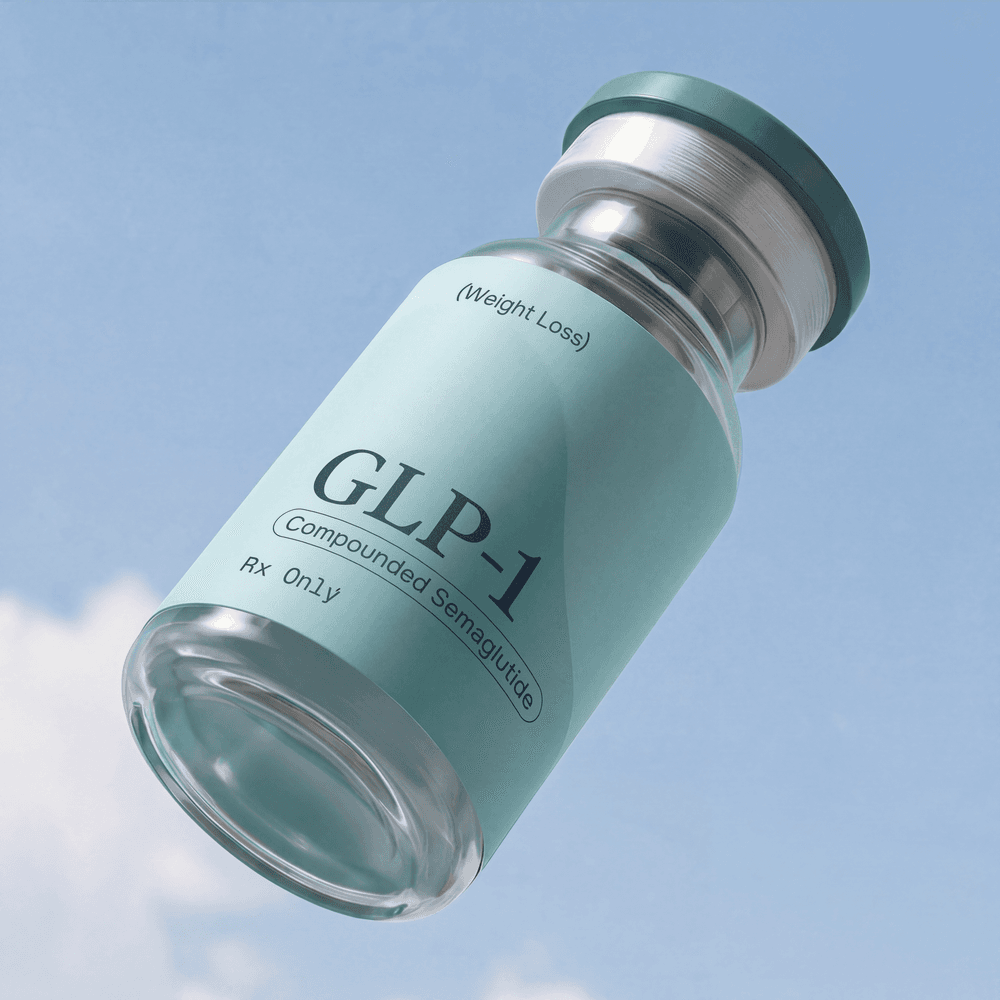
Compounded semaglutide vial

Semaglutide

GLP-1 receptor agonist

  • ReceptorsGLP-1
  • FDA statusApproved (Wegovy, Ozempic)
  • Can be compoundedYes, SELECT
  • Through HarborFrom $99 /mo

The verdict: Retatrutide has produced larger average weight loss in trials so far, but it is not approved, cannot be compounded and has no approval date. Semaglutide is approved, has a proven heart benefit, and is available today. Harbor prescribes compounded semaglutide, which is not itself an FDA-approved product.

The short answer

On trial numbers alone, retatrutide vs semaglutide is not close. In TRIUMPH-1, the first phase 3 obesity trial of retatrutide to reach a peer-reviewed journal, adults on the 12 mg dose lost an average of 25.0% of their body weight over 80 weeks (NEJM, 2026). In STEP 1, adults on semaglutide 2.4 mg lost 14.9% over 68 weeks.

Access runs the other way. Retatrutide is not FDA-approved for any use, federal law bars pharmacies from compounding it, and no application for approval had been filed as of October 2026. Semaglutide is approved as Wegovy for weight management and as Ozempic and Rybelsus for type 2 diabetes, and a licensed clinician can prescribe it today.

The trade, then: a larger trial number with no approval date, or an approved medication you can start now.

How each one works

Both drugs copy hormones the gut releases after a meal: they slow how fast the stomach empties, turn down appetite signals in the brain and help the pancreas release insulin when blood sugar rises. The difference is how many receptors each one targets.

Semaglutide: one receptor

Semaglutide works through the GLP-1 receptor alone, and that one receptor carries the appetite effect many patients describe as food noise going quiet. It comes as a weekly injection (Wegovy, Ozempic) and as a daily tablet (Wegovy tablets for weight, Rybelsus for diabetes). Our guide to how semaglutide works for weight loss covers the mechanism in depth.

Retatrutide: three receptors

Retatrutide activates three: GIP, GLP-1 and glucagon. GIP is the second receptor tirzepatide uses. Glucagon is what sets retatrutide apart from both semaglutide and tirzepatide, and it is also the receptor with the shortest track record in people. In trials it is a once-weekly injection studied at 4, 9 and 12 mg.

If you are weighing all three, our tirzepatide vs retatrutide comparison covers the middle option.

What the trials show

No completed trial has compared the two drugs for weight loss. Read the gap as a direction, not a measurement.

Semaglutide on the label

In STEP 1, adults without diabetes on 2.4 mg a week lost an average of 14.9% of body weight at 68 weeks, against 2.4% on placebo. The daily 25 mg Wegovy tablet produced 13.6% at 64 weeks, and the 7.2 mg weekly dose approved in March 2026 produced 18.8% at 72 weeks against 3.9% (Wegovy prescribing information).

Then there is SELECT, in which 17,604 adults with heart disease and overweight or obesity had a 20% lower risk of cardiovascular death, heart attack or stroke on semaglutide than on placebo. Our article on what the SELECT trial means for you explains who that applies to.

Retatrutide in phase 3

TRIUMPH-1 randomized 2,339 adults with obesity and no diabetes. At 80 weeks, mean weight change was 17.6% on 4 mg, 23.7% on 9 mg and 25.0% on 12 mg, against 3.9% on placebo. TRIUMPH-2, in 1,152 adults with obesity and type 2 diabetes, reported 11.9%, 16.8% and 18.8% against 5.1% (The Lancet, 2026). Headlines often quote bigger numbers, and those come from the manufacturer's analysis of people who stayed on treatment, which runs higher than the published figures.

The one head-to-head trial

TRANSCEND-T2D-2 compares the two drugs in about 1,250 adults with type 2 diabetes already taking metformin, and its main measure is HbA1c at 80 weeks, not weight. Primary data collection ended in August 2026. No results have been reported (ClinicalTrials.gov).

Side by side

Separate placebo-controlled trials with different populations and durations, not a head-to-head comparison. Weight change is mean percent of body weight from the published or labeled intention-to-treat analysis. Harbor's semaglutide is compounded and not FDA-approved, and its price varies by plan.
AttributeRetatrutideSemaglutide
Receptors targetedGIP, GLP-1 and glucagonGLP-1
FDA statusInvestigational, not approvedApproved: Wegovy for weight, Ozempic and Rybelsus for diabetes Approved
Weight change, phase 3, no diabetes−25.0% at 80 weeks, 12 mg (TRIUMPH-1) Larger in trials−14.9% at 68 weeks on 2.4 mg (STEP 1), −18.8% at 72 weeks on 7.2 mg
FormsWeekly injection, in trials onlyWeekly injection or daily tablet More options
Cardiovascular outcomesOutcomes trial running, estimated to finish in 202920% lower risk of major heart events (SELECT) Proven benefit
Most common side effectsDiarrhea, nausea and vomiting, plus dysesthesia in 4% to 7%Nausea, diarrhea, vomiting, constipation
CompoundingNot allowed under federal lawCompounded versions exist and are not FDA-approved
Through HarborNot availableCompounded, from $99 /mo Available now

Scroll the table sideways to see both columns →

Side effects & safety

The side-effect profiles look more alike than the weight-loss numbers do.

What they share

Both are mainly gastrointestinal, both depend on dose, and both are worst in the weeks after a dose increase. On Wegovy 2.4 mg, 44% of adults reported nausea and 30% diarrhea, against 16% each on placebo, and 6.8% stopped treatment because of side effects. In TRIUMPH-2, diarrhea affected 27% to 34% of people on retatrutide and nausea 14% to 28%, against 13% and 8% on placebo.

Where the signals differ

Dysesthesia, an abnormal skin sensation such as tingling or tenderness, was reported by 4% to 7% of people on retatrutide in TRIUMPH-2, against 1% on placebo, and up to 6% had low blood pressure. The phase 2 trial also found a dose-dependent rise in resting heart rate that peaked around week 24 and eased afterward.

Neither signal is retatrutide's alone. The Wegovy label lists dysesthesia in 22% of adults on the 7.2 mg dose, and heart-rate increases averaging 1 to 4 beats per minute across semaglutide's weight trials. Semaglutide's effects are printed on a label. Retatrutide's are still being mapped.

A boxed warning sits on semaglutide for thyroid C-cell tumors seen in rodents, and it is not prescribed to anyone with a personal or family history of medullary thyroid carcinoma or MEN 2.

Severe stomach pain that does not ease, vomiting that keeps you from holding down fluids, a racing heartbeat at rest, or swelling of the face or throat needs emergency care. Anything else, including a side effect you are unsure about, is a message to your Harbor clinician.

Why retatrutide is not available yet

Retatrutide is not on FDA's list of new drugs approved in 2026 (FDA). The manufacturer said in its August 2026 earnings filing that it plans to submit an application in the first quarter of 2027. Approval would follow FDA's review, and no date has been set.

FDA states that retatrutide cannot be used in compounding under federal law and has not been found safe and effective for any condition (FDA). Vials sold online as retatrutide, often labeled "research peptide" or "not for human consumption," are unapproved products of unknown quality, and FDA has sent warning letters to the companies selling them.

If retatrutide caught your eye because semaglutide did not do enough for you, there is an approved drug that hits two of its three receptors. Tirzepatide, the GIP and GLP-1 drug sold as Zepbound and Mounjaro, produced 20.2% average weight loss against 13.7% for semaglutide in the head-to-head SURMOUNT-5 trial (NEJM, 2025).

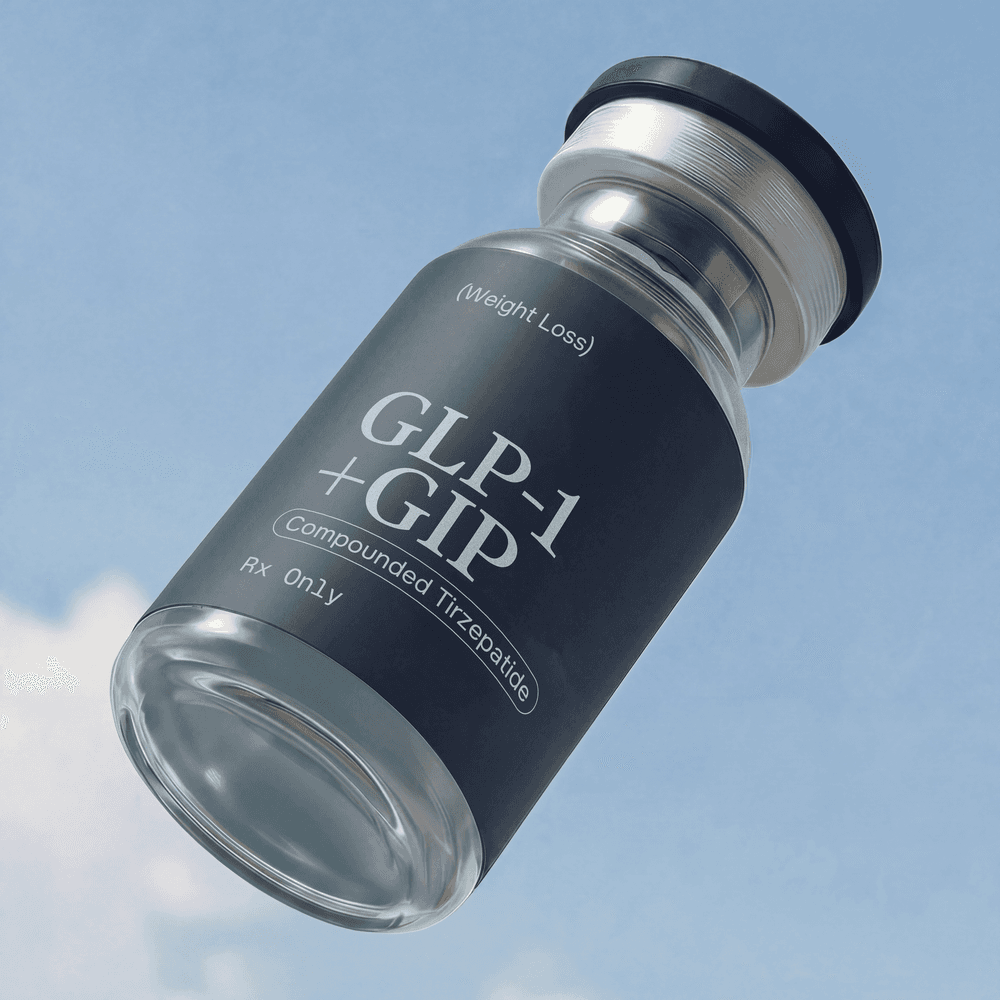
Tirzepatide vial
Weight lossTirzepatide

Dual-action GLP‑1/GIP for faster results

From
$149/mo
Taken
Once-weekly injection
Type
Dual GLP‑1/GIP agonist
Learn more

How Harbor clinicians choose

Until FDA approves retatrutide, no clinician can write a regular prescription for it, Harbor's included. So the real choice today is between approved molecules, and the first plan is rarely the last.

Start semaglutide now when

  • You want to begin now rather than wait on a drug with no approval date
  • Cost matters, since semaglutide is the lower-priced of Harbor's two GLP-1 programs
  • You have heart disease, where the SELECT evidence sits behind semaglutide
  • This is your first GLP-1 and a gentler start matters more than the largest average result

Ask about tirzepatide when

  • You have tried semaglutide and progress stalled short of your goal
  • Your starting weight is high enough that a larger average effect changes what is realistic
  • You were drawn to retatrutide for its GIP action and want the approved molecule that has it

Starting semaglutide now closes no door. If retatrutide is approved, moving to it would be a clinical decision like any other switch between GLP-1 medications, based on your dose, response and history.

The trial results above come from FDA-approved brand products. Compounded semaglutide and tirzepatide are prepared by licensed U.S. pharmacies for individual patients and are not FDA-approved, as our explainer on compounded semaglutide vs Ozempic and Wegovy sets out. A licensed clinician reviews your history first, and if it is not the right fit, it is not prescribed.

This article is for general education and is not medical advice. It is not a substitute for evaluation, diagnosis, or treatment by a licensed clinician. Talk with a qualified clinician about your individual situation.

Harbor is a technology platform. Medical evaluations are conducted by independent, licensed healthcare providers who decide whether treatment is appropriate. Compounded medications are prepared by licensed U.S. pharmacies for individual patients and are not reviewed by the FDA for safety or effectiveness.

Frequently asked questions

No. As of October 2026, retatrutide is investigational, is not on FDA's list of 2026 novel drug approvals, and cannot be used in compounding under federal law. Semaglutide has been FDA-approved since 2017 for type 2 diabetes as Ozempic and since 2021 for weight management as Wegovy.

No one can give you a date. The manufacturer plans to submit an application to FDA in the first quarter of 2027, and approval would depend on FDA's review of the TRIUMPH data. Until then, retatrutide cannot be prescribed or filled at a pharmacy.

In trials so far, it has produced larger average weight loss: 25.0% at 80 weeks on 12 mg in TRIUMPH-1, against 14.9% at 68 weeks on semaglutide 2.4 mg in STEP 1. Those were separate trials, with no head-to-head weight-loss trial between them. Individual results vary widely on both.

Partly. Retatrutide activates the GLP-1 receptor, as semaglutide does, plus the GIP and glucagon receptors. It is a different molecule rather than a stronger version of semaglutide, so doses and side effects from one do not carry over to the other.

No. Retatrutide is not approved, no trial has tested the combination, and the Wegovy label advises against pairing semaglutide with any other GLP-1 receptor agonist, which retatrutide is.

Only if retatrutide is approved, and then with a clinician setting the starting dose. Retatrutide vs semaglutide doses do not convert one to one, since retatrutide's trials stepped up on their own schedule. If semaglutide has stopped working well for you today, ask your Harbor clinician about tirzepatide.

Sources

  1. Jastreboff AM, et al. Retatrutide, a Triple Hormone Receptor Agonist, for Treatment of Obesity (TRIUMPH-1). N Engl J Med. 2026.
  2. Bellido V, et al. Retatrutide in adults with obesity and type 2 diabetes (TRIUMPH-2). Lancet. 2026;408:1455-1472.
  3. Jastreboff AM, et al. Triple-Hormone-Receptor Agonist Retatrutide for Obesity: A Phase 2 Trial. N Engl J Med. 2023;389:514-526.
  4. ClinicalTrials.gov. TRANSCEND-T2D-2: Retatrutide compared with semaglutide in type 2 diabetes (NCT06260722).
  5. ClinicalTrials.gov. TRIUMPH-Outcomes: Retatrutide and cardiovascular and kidney outcomes (NCT06383390).
  6. DailyMed. Wegovy (semaglutide) injection and tablets, prescribing information (June 2026).
  7. Wilding JPH, et al. Once-Weekly Semaglutide in Adults with Overweight or Obesity (STEP 1). N Engl J Med. 2021;384:989-1002.
  8. Lincoff AM, et al. Semaglutide and Cardiovascular Outcomes in Obesity without Diabetes (SELECT). N Engl J Med. 2023;389:2221-2232.
  9. Aronne LJ, et al. Tirzepatide as Compared with Semaglutide for the Treatment of Obesity (SURMOUNT-5). N Engl J Med. 2025;393:26-36.
  10. U.S. Food and Drug Administration. FDA's concerns with unapproved GLP-1 drugs used for weight loss (content current as of October 1, 2026).
  11. U.S. Food and Drug Administration. Novel Drug Approvals for 2026.
  12. U.S. Securities and Exchange Commission. Form 8-K, Exhibit 99.1, second-quarter 2026 results of the manufacturer of retatrutide (August 5, 2026).